
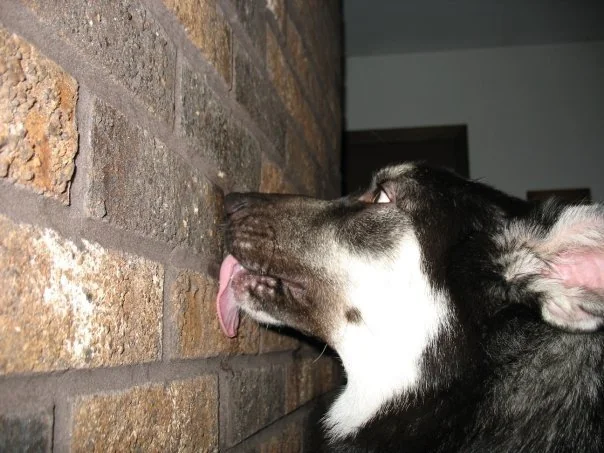
Seeing your dog lick walls, doors, or other hard surfaces can look strange—or even worrying. While occasional licking can be harmless curiosity, repeated or obsessive wall-licking usually has an underlying cause worth addressing.
Here’s how to understand why dogs lick walls, when it’s normal, and when it may signal a medical or behavioral issue.

Common Reasons Dogs Lick Walls
1. Residual Smells or Tastes (Very Common)
Walls can hold:
-
Food splashes or grease
-
Cleaning product residues
-
Salt from human sweat or hands
A dog’s nose is incredibly sensitive—what seems clean to you may still smell “interesting” to them.
2. Anxiety or Stress-Related Behavior
Licking releases calming endorphins. Dogs may lick walls when:
-
Left alone
-
Experiencing routine changes
-
Overstimulated or bored
This is a self-soothing behavior, similar to pacing or chewing.
3. Boredom or Under-Stimulation
Dogs lacking mental enrichment may fixate on repetitive behaviors:
-
Wall licking
-
Floor licking
-
Object staring
This is especially common in intelligent or high-energy breeds.
4. Gastrointestinal Discomfort
Dogs with mild nausea, acid reflux, or stomach irritation may lick surfaces excessively.
Other signs can include:
-
Lip licking
-
Swallowing repeatedly
-
Grass eating
-
Reduced appetite
5. Nutritional or Mineral Deficiencies (Less Common)
In rare cases, dogs lick non-food surfaces due to pica, a condition linked to:
-
Mineral imbalance
-
Poor nutrient absorption
-
Certain medical conditions
6. Neurological or Cognitive Issues (Uncommon but Important)
If wall licking is paired with:
-
Staring into space
-
Circling
-
Confusion
-
Sudden behavior changes
…it may warrant neurological evaluation, especially in senior dogs.
When Wall Licking Is Usually Harmless
✅ Happens briefly
✅ Stops with redirection
✅ Dog is otherwise playful and normal
✅ No appetite, behavior, or energy changes
In these cases, management and enrichment are often enough.
When to Be Concerned
🚩 Call your vet if wall licking:
-
Happens daily or obsessively
-
Is new and escalating
-
Comes with vomiting, lethargy, or appetite loss
-
Appears alongside confusion or pacing
-
Interferes with sleep or normal behavior
What You Can Do Right Now
1. Clean Surfaces Thoroughly
-
Use pet-safe, scent-free cleaners
-
Remove food or residue odors
2. Increase Mental Enrichment
-
Sniff walks
-
Puzzle feeders
-
Short training sessions
-
Food-stuffed toys
A tired brain licks less.
3. Redirect Calmly
When licking starts:
-
Offer a chew or toy
-
Ask for a simple command
-
Avoid scolding or startling
4. Observe Patterns
Track:
-
Time of day
-
Before/after meals
-
When alone vs with people
Patterns help identify triggers.
Final Takeaway
Wall licking isn’t random—it’s communication. Most often, it’s driven by stress, boredom, or mild stomach discomfort, but persistent or obsessive licking deserves attention to rule out medical causes.
🐾 If your dog keeps licking the wall, they’re not being weird—they’re telling you something.