
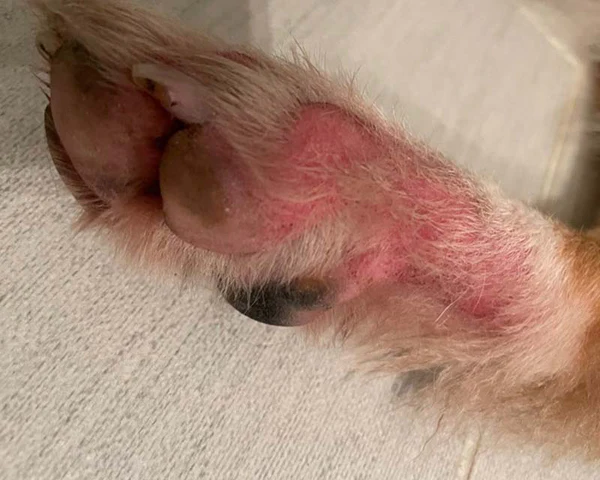
Have you noticed your dog’s paws slowly turning brown, red, or rust-colored—especially between the toes?
This is a very common condition and usually happens when dogs lick their paws excessively.
The discoloration occurs because dog saliva contains porphyrin, a natural pigment that leaves a brownish-red stain when it dries.
But the real question is:
Why is your dog licking so much?
Here are the most common causes and what you can do to help.
1️⃣ Allergies (Environmental or Food)


Allergies are the #1 cause of paw licking.
Dogs often react to pollen, dust mites, grass, mold, or certain foods.
Signs include:
• Brown or red paw staining
• Chewing or nibbling the paws
• Itchy ears or belly
• Recurring skin issues
What you can do:
• Rinse paws after outdoor walks
• Try a hypoallergenic or limited-ingredient diet
• Ask your vet about allergy testing
2️⃣ Yeast Infection


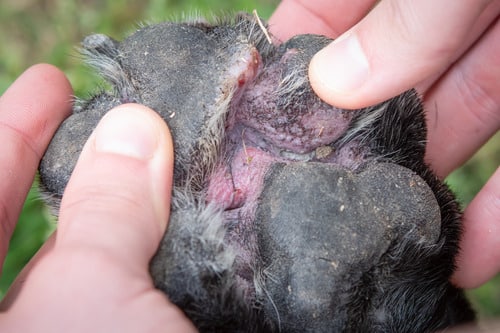
Warm, moist paws can become a perfect breeding ground for yeast.
Excessive licking makes it even worse.
Symptoms:
• Brown staining
• Musty or sweet odor
• Redness between toes
• Sticky or greasy skin
What you can do:
• Medicated wipes or shampoo
• Improve airflow by keeping paws dry
• Vet-prescribed antifungal treatment if needed
3️⃣ Boredom, Anxiety, or Habit
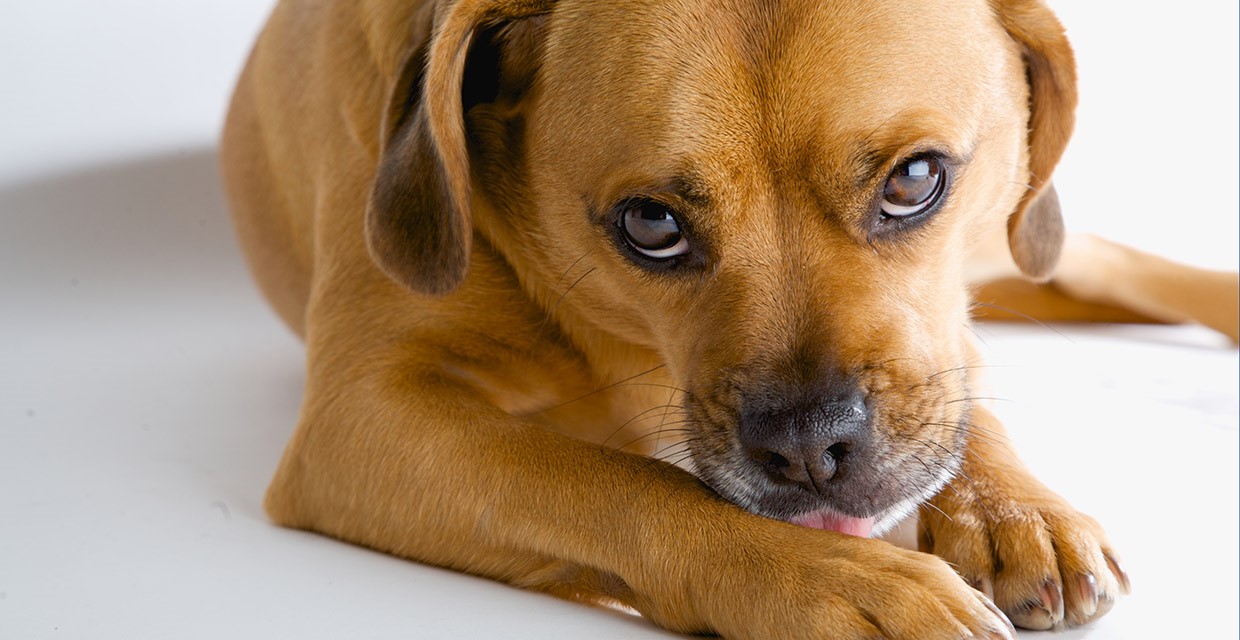
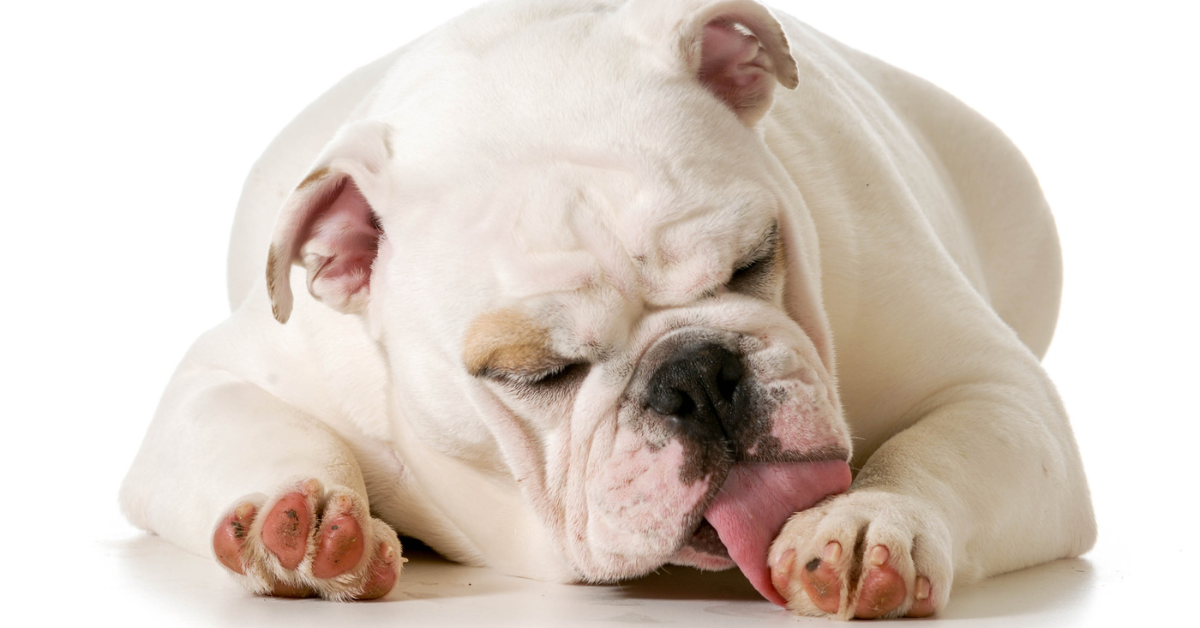

Some dogs lick simply because it becomes a soothing routine—especially when they feel stressed or bored.
What you can do:
• Provide more exercise and stimulation
• Use lick mats, puzzles, toys
• Address anxiety if present
4️⃣ Pain or Injury

Your dog may be licking to soothe discomfort from:
• A thorn or splinter
• Nail issues
• Cuts or irritation
• Arthritis or joint pain
Always check the paws closely.
📌 When Should You Visit the Vet?
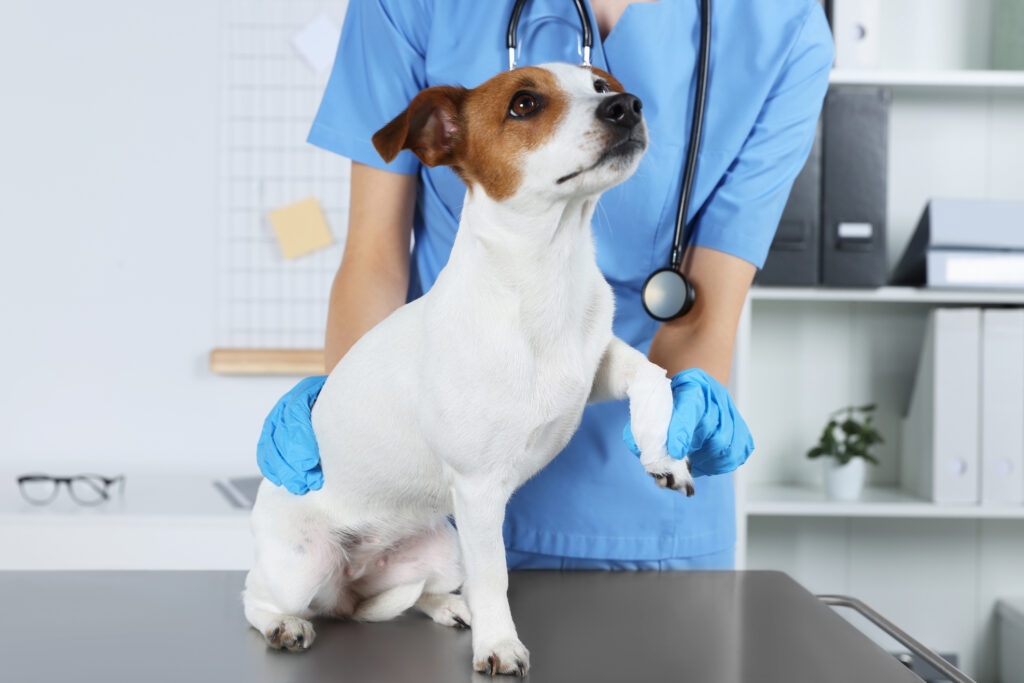


Seek professional help if:
✔ The licking becomes constant
✔ The paws smell bad or look swollen
✔ You see blood, pus, or severe redness
✔ Your dog seems uncomfortable or in pain
Early treatment prevents infections and helps break the licking cycle.