
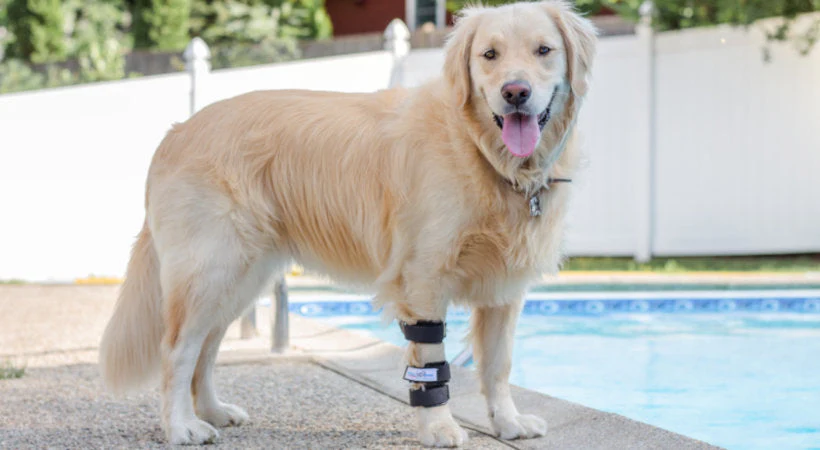
Golden Retrievers are active, joyful dogs, so when one keeps limping, it’s a sign something isn’t right—even if they still seem happy or playful. Limping that comes back again and again is never normal and should always be investigated.
This article explains the most common causes of recurring limping in Golden Retrievers, when it’s serious, and what you should do next.
What Does “Keeps Limping” Usually Look Like?
You might notice your Golden:
-
Limping after exercise but “fine” later
-
Favoring one leg consistently
-
Stiffness when getting up
-
Slowing down on walks
-
Sitting or lying down more often
Recurring limping often means the issue has not fully healed or is getting worse.
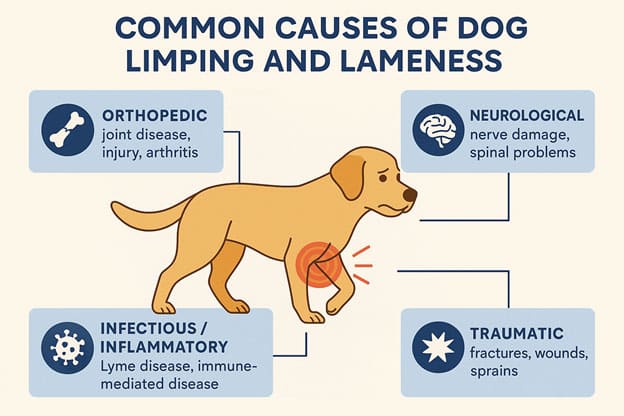
Common Causes of Limping in Golden Retrievers

1. Joint Dysplasia (Hip or Elbow)
Very common in Goldens.
-
Poor joint formation
-
Leads to arthritis and chronic pain
-
Limping may worsen after activity
Early signs are often subtle and easy to miss.
2. Arthritis (Osteoarthritis)
Can affect even middle-aged dogs.
-
Stiffness after rest
-
Limping improves slightly with movement
-
Gradually worsens over time
Pain may be present even if your dog doesn’t cry.
3. Ligament or Tendon Injuries
Such as partial ACL/CCL tears.
-
Limping that comes and goes
-
Often worse after running or jumping
-
May suddenly worsen
Without treatment, partial tears often become complete ruptures.
4. Paw, Nail, or Pad Injuries
-
Cracked pads
-
Broken or torn nails
-
Foreign objects between toes
These injuries can be easy to overlook but very painful.
5. Bone Cancer (Osteosarcoma)
⚠️ Rare but serious—especially in large breeds
-
Persistent, worsening limp
-
Swelling on a limb
-
Pain that increases over weeks
Early diagnosis is critical.
When Limping Is a Red Flag

🚨 See a vet immediately if your dog:
-
Limping lasts more than 2–3 days
-
Limping keeps returning
-
Has swelling, heat, or visible pain
-
Refuses to bear weight
-
Shows personality or appetite changes
Golden Retrievers often hide pain until it becomes severe.
What You Can Do at Home (Short Term)
✅ Limit running, jumping, and stairs
✅ Check paws and nails carefully
✅ Use rugs on slippery floors
✅ Apply cold packs (10 minutes, 2–3x/day)
❌ Do NOT give human pain medications
❌ Do NOT force exercise to “test” the leg
If limping persists, veterinary care is essential.
How Vets Diagnose Recurrent Limping
Your vet may perform:
-
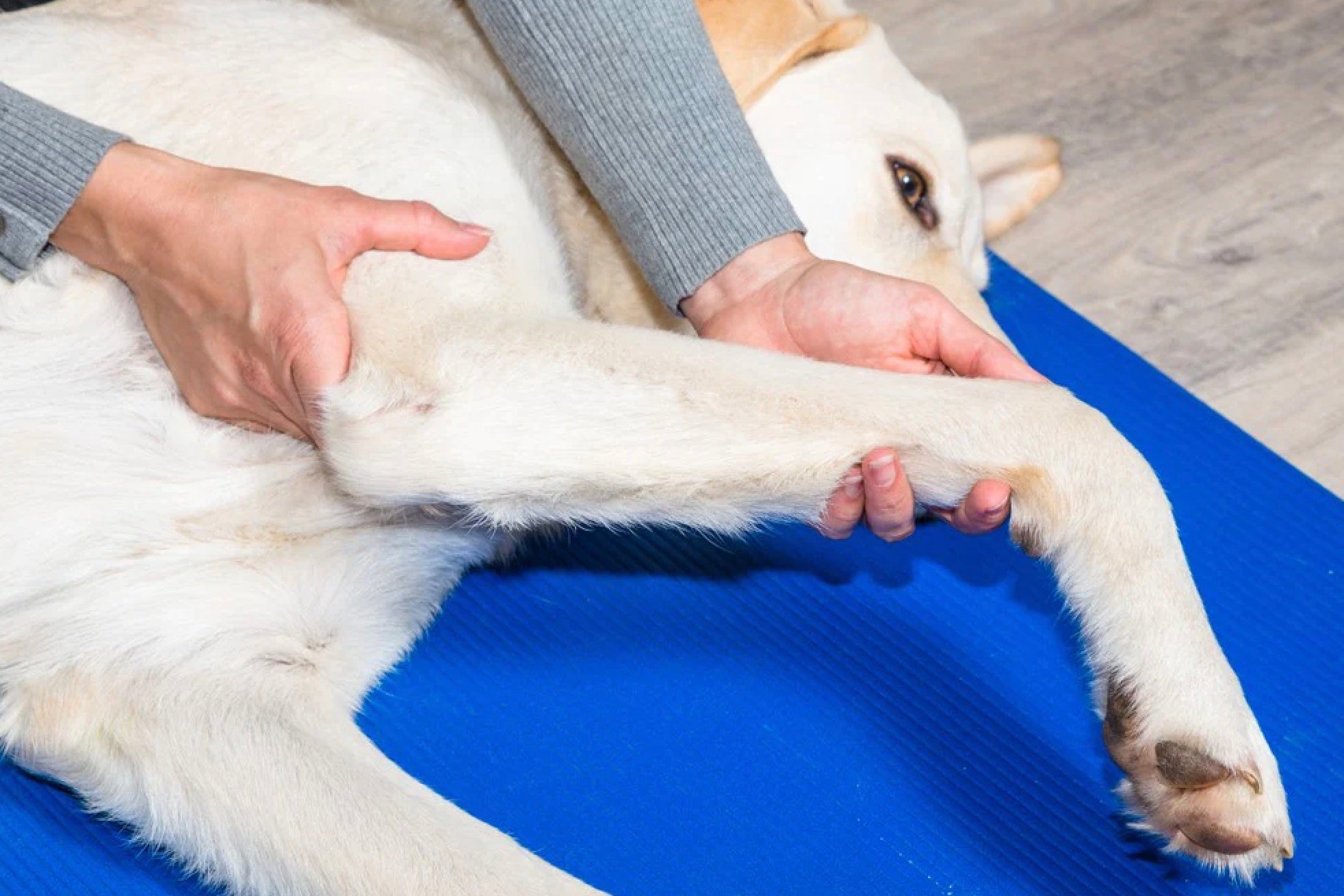
Orthopedic examination
-
X-rays or imaging
-
Joint manipulation
-
Blood tests (if systemic illness suspected)
Accurate diagnosis leads to effective treatment.
Treatment Options
Depending on the cause, treatment may include:
-
Rest and activity modification
-
Pain relief and anti-inflammatory meds
-
Physical therapy or hydrotherapy
-
Joint supplements
-
Surgery (for severe cases)
Early treatment can slow disease progression and improve quality of life.
Final Takeaway
If your Golden Retriever keeps limping, it’s their way of telling you something hurts—even if they’re still wagging their tail. Recurrent limping deserves attention, not time.
🐾 The sooner you act, the better your dog’s comfort and mobility will be.