
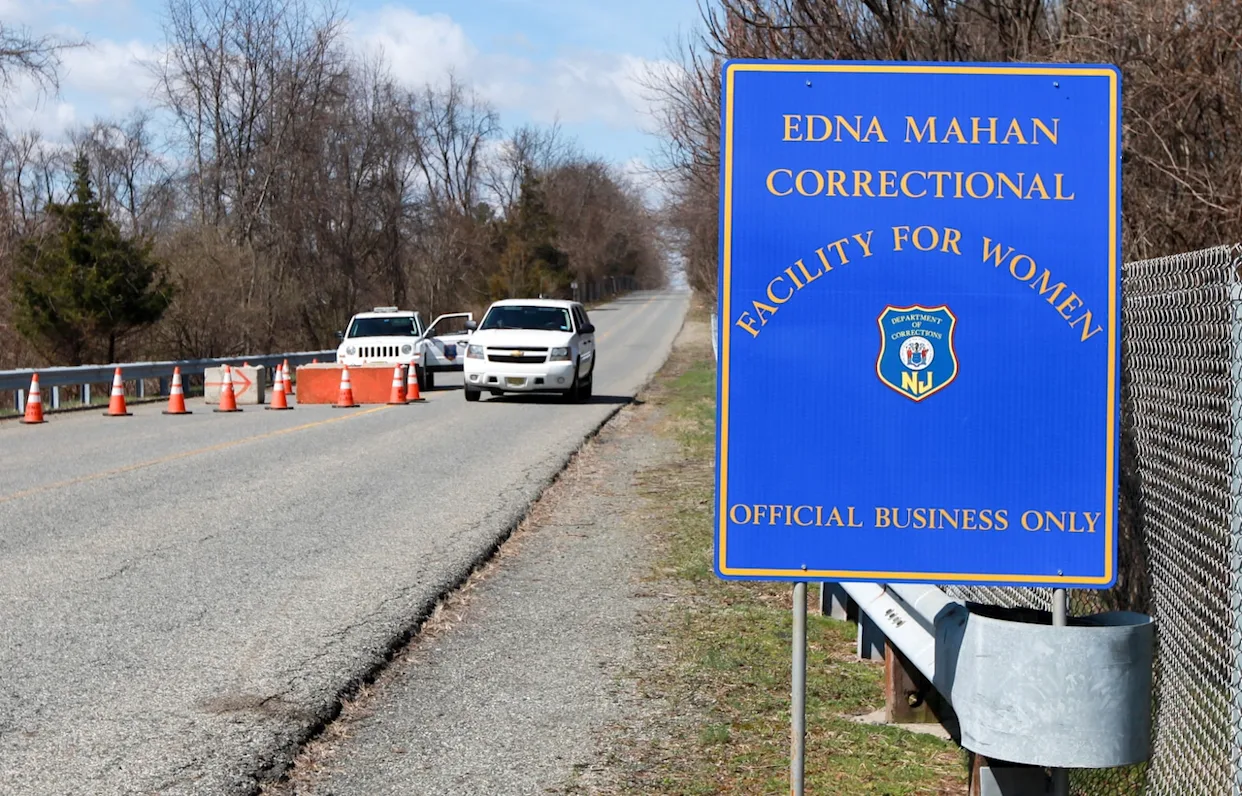
Savannah Davenport started work at Rutgers University Correctional Healthcare in mid-December 2024 as a registered nurse. She told the company, which provides healthcare for the state prison system, that she has autism and post-traumatic stress disorder.
Not a month into her role at the Edna Mahan Correctional Facility for women in Hunterdon County, Davenport said nursing supervisors and corrections sergeants pressured her to dole out drugs to inmates that were not prescribed, she claims in a discrimination lawsuit filed in February.
In one instance, in mid-January 2025, a corrections officer told Davenport to just give the inmates whatever medication they wanted because they’re “all drug users.”
Another pressured her to give inmates medication even if they did not have an order for the drugs, asking her why she “wouldn’t just give them ibuprofen and Tums to shut them up?”
Davenport, of Phillipsburg, reported loose handling of narcotics and opened drug packaging that should have been discarded. She also alleged that supervisors screamed at her and created a hostile environment, ultimately leading to her termination in February 2025, according to the suit.
She informed her supervisor, after a manager was aggressive toward her, that she cannot “read between the lines” for social cues due to her autism and that the employee’s behavior exacerbated her PTSD symptoms.
A short time later, a supervisor told Davenport the company had received “multiple reports” of her being rude and disrespectful.
Davenport says in her suit she’d never been warned or disciplined about such complaints, and her supervisor “was using symptoms of her disabilities against her as the stated reason for termination.”
She complained through Rutgers correctional healthcare’s human resources department and was told that a “state investigation” was opened against her, and in April 2025 was informed she would not be hired back.
Her suit, in Superior Court of Hunterdon County, seeks protection under the state’s Law Against Discrimination and the whistleblower law, the Conscientious Employee Protection Act.
Rutgers University Correctional Healthcare and the state Department of Corrections did not immediately return messages seeking comment.
Davenport’s lawyer, David Koller, said Davenport was brave for reporting what she believes was illegal conduct in a new job. “She alleges that unfortunately, doing so cost her a job.”
“This law known as CEPA is a very important law — it considers the challenges employees face when navigating a workplace where the employee thinks the law is being violated, and also considers that sometimes, speaking up might result in punishment or termination,” Koller said.
New Jersey is building a new prison for women in Burlington County following years of scandal and sexual abuse at Edna Mahan, in Union Township, outside of Clinton, which will eventually be closed.