
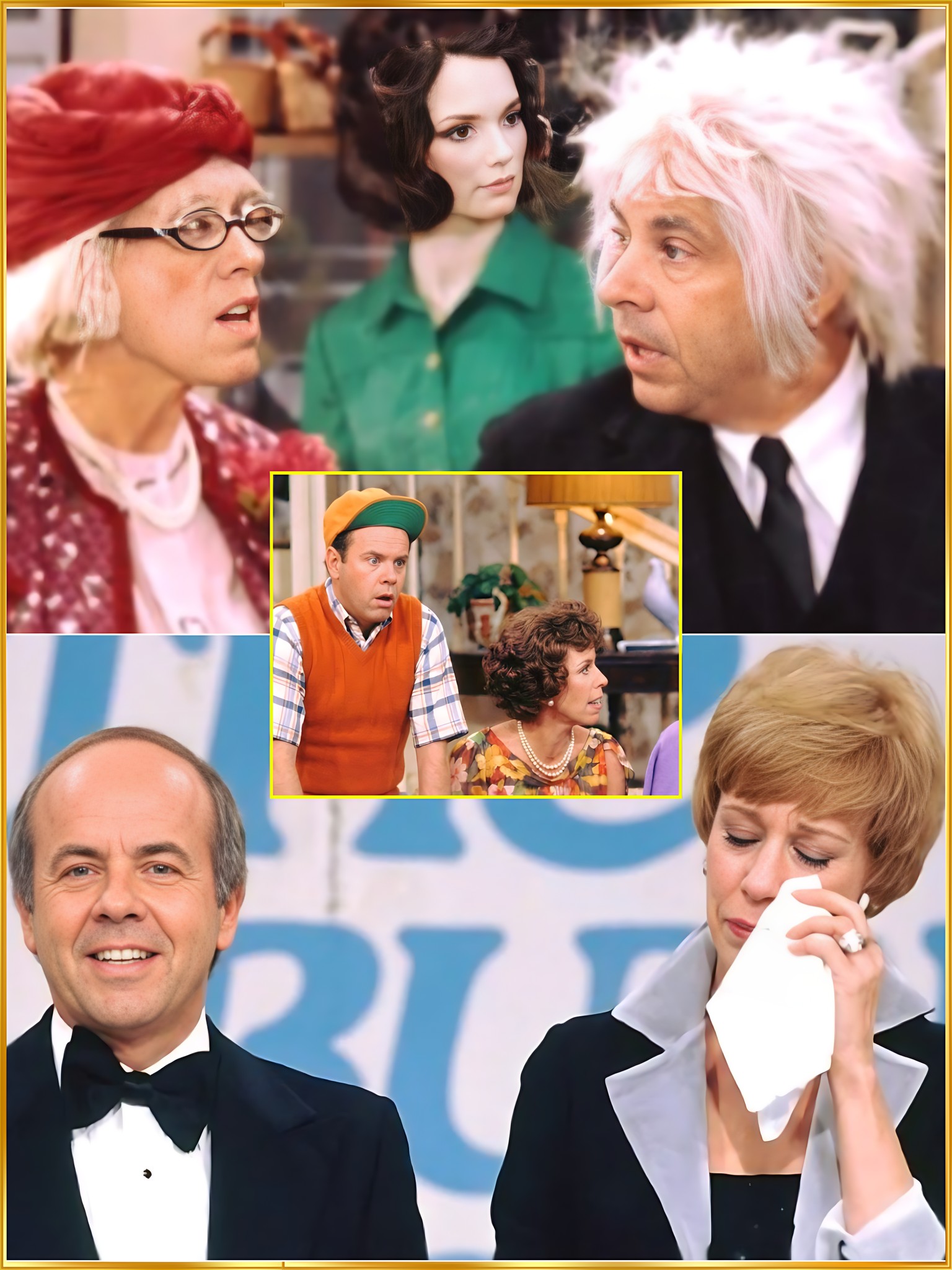
HE MADE HER LAUGH FOR 50 YEARS — AND SHE ONLY CRIED ONCE
For more than half a century, one of television’s most extraordinary friendships unfolded not behind closed doors, but in front of millions.
At the center of it were Tim Conway and Carol Burnett — two performers whose chemistry didn’t just entertain audiences, it defined an era of comedy that still feels alive today.

Conway possessed a rare and almost mystical gift: he could make Burnett laugh when she least expected it — and when she most needed to keep a straight face.
On The Carol Burnett Show, where professionalism demanded composure, Conway turned restraint into a losing battle.
A single sideways glance, a slow-burn improvisation, or that signature mischievous grin was often enough to unravel the entire scene.
For 11 seasons, audiences tuned in not just for the sketches, but for the unpredictable magic that happened within them.
Scripts were merely suggestions when Conway was involved.
He would stretch moments beyond their limits, adding absurd details, unexpected pauses, and perfectly timed detours that no one — not even his fellow cast members — could anticipate.

Burnett, a consummate professional, often found herself fighting a losing war.
You could see it happen in real time: the trembling lips, the shaking shoulders, the desperate attempts to stay in character.
Sometimes she would turn away, covering her face, silently pleading for Conway to move on. He never did.
And that was precisely why it worked.
Their on-screen dynamic became legendary. It wasn’t just about jokes — it was about trust.
Burnett trusted Conway enough to let go, to surrender control in a medium where control is everything.
Conway, in turn, trusted Burnett to follow him into the chaos, knowing she would meet him there with equal brilliance.
Offstage, their bond ran even deeper.
While audiences saw the laughter, what they didn’t always see was the quiet understanding between two artists who had spent decades navigating the highs and lows of show business together.

They weren’t just colleagues; they were, in every meaningful sense, family.
As the years passed and the spotlight dimmed, their friendship remained unchanged.
They stayed connected through life’s transitions — the triumphs, the losses, and the inevitable passage of time.
Even as new generations discovered their work, for them, it was never about legacy. It was about each other.
But time, as it always does, began to shift the rhythm of their story.
When Conway’s health began to decline, the laughter that had once filled studios and living rooms softened into something more intimate.
The man who had once commanded rooms with effortless humor now faced a quieter, more fragile reality.
And Burnett was there — not as a co-star, not as a comedy partner, but as a friend.
In those final days, there were no cameras capturing the moment, no scripts guiding what came next.
Just two people who had shared a lifetime of memories, sitting side by side.
Fingers intertwined, conversations reduced to the simplest, most meaningful exchanges — the kind that don’t need an audience to matter.
Burnett would later reflect on Conway with the same admiration she had always carried.
She once called him the funniest person she had ever known — a statement that, coming from one of comedy’s greatest icons, carried immeasurable weight.
Yet for all the laughter he inspired, there was one moment he could not control.

The day Conway passed away marked the end of a chapter that had spanned decades.
For audiences, it was the loss of a comedic legend. For Burnett, it was something far more personal — the quiet absence of someone who had been a constant presence in her life.
For fifty years, he had made her laugh.
Not just in rehearsals or performances, but in the in-between moments — the small, unrecorded fragments of time that define true friendship.
He had turned even the most ordinary situations into something joyful, something unforgettable.
And when he was gone, that laughter — at least for a moment — gave way to something else.
Burnett cried.
It wasn’t the kind of grief that demands attention or explanation.
It was the kind that exists in silence, in memories, in the spaces left behind.
The kind that comes from loving someone deeply enough that their absence feels impossible to fully accept.
But even in that loss, something remained.
Because friendships like theirs don’t truly end. They evolve.
They settle into quieter forms, living on in recollections, in shared history, in the echoes of laughter that never quite fade.

Burnett has often spoken about how certain memories stay with you — how a voice, a gesture, or even a simple expression can return in an instant, as vivid as ever. For her, Conway’s presence still lingers in those fleeting moments.
A look. A pause. A perfectly timed beat.
And, of course, that unmistakable laugh.
It’s the kind of laugh that once brought entire studios to a standstill — and one that, even now, continues to resonate far beyond the stage where it first made its mark.
Some friendships are defined by time. Others are defined by what they leave behind.
Theirs was both.
And somewhere, in the quiet spaces between memory and reality, Carol Burnett still hears Tim Conway — just before everything falls apart, just before the laughter becomes uncontrollable — reminding her, one more time, that the best moments are often the ones you never planned.