

Introduction
Burnout doesn’t happen overnight. It builds slowly—through chronic stress, emotional exhaustion, and relentless pressure to keep going despite feeling depleted. For many people, caffeine and nicotine become the silent coping tools that help them push through fatigue, brain fog, and emotional numbness. What starts as a harmless habit can quietly turn into dependence, masking burnout rather than healing it.
What Burnout Really Does to the Body and Brain
Burnout affects far more than motivation—it disrupts the nervous system.
-
Chronic stress keeps cortisol levels elevated
-
The brain’s reward system becomes less responsive
-
Energy regulation breaks down
-
Focus, mood, and emotional resilience decline
As the brain struggles to maintain alertness and motivation, it begins seeking fast, artificial boosts.


Image caption: Chronic stress from burnout alters brain chemistry, making quick stimulants more appealing.
Why Caffeine Feels Like a Lifeline During Burnout
Caffeine temporarily blocks adenosine—the chemical responsible for signaling tiredness. In burnout, where fatigue feels constant, this effect can feel lifesaving.
However:
-
The relief is short-lived
-
Tolerance builds quickly
-
Crashes become more intense
-
Sleep quality worsens, deepening burnout
Over time, caffeine stops restoring energy and simply prevents withdrawal symptoms.


Image caption: Caffeine provides short-term alertness while silently worsening long-term exhaustion.
Nicotine and the Illusion of Calm
Nicotine doesn’t just stimulate—it briefly calms the nervous system by releasing dopamine and reducing perceived stress. During burnout, this can feel like emotional relief.
But nicotine:
-
Increases baseline anxiety
-
Trains the brain to expect frequent stimulation
-
Deepens dependence through rapid dopamine spikes
-
Worsens restlessness when absent
What feels like stress relief is often the temporary easing of nicotine withdrawal.
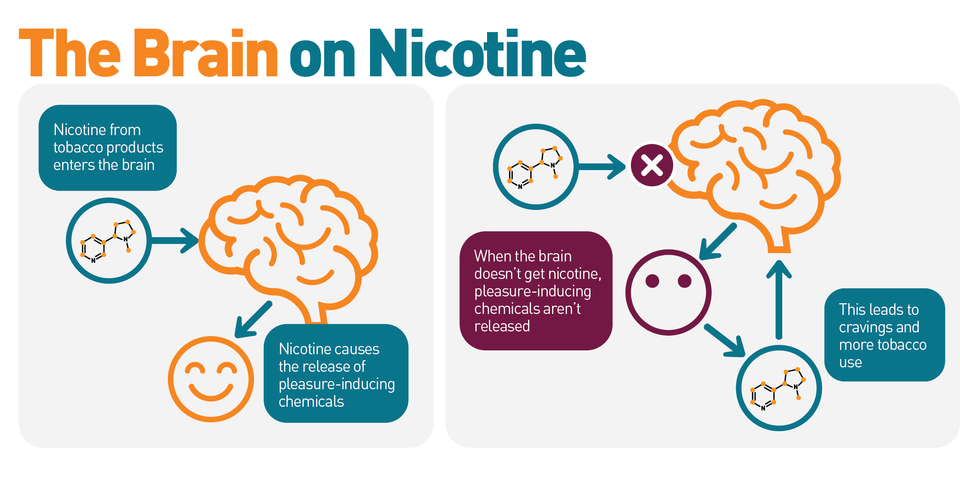


Image caption: Nicotine briefly soothes stress while reinforcing the cycle of dependency.
Burnout, Dopamine, and Habit Loops
Burnout lowers natural dopamine production—the chemical tied to motivation and reward. Caffeine and nicotine artificially replace what the brain can no longer produce efficiently.
This creates a loop:
-
Burnout reduces energy and motivation
-
Stimulants provide quick relief
-
The brain adapts and reduces natural dopamine
-
Dependence increases
Eventually, functioning without stimulants feels impossible.
Warning Signs Burnout Is Driving Dependence
-
Needing caffeine or nicotine just to feel “normal”
-
Increased irritability without them
-
Using stimulants even when exhausted or anxious
-
Sleep disruption but continued use
-
Feeling emotionally flat despite stimulation
These are not failures of willpower—they are signals of nervous system overload.
Breaking the Cycle: Healing Burnout, Not Just Quitting
Reducing caffeine or nicotine alone rarely works if burnout remains untreated. Real recovery focuses on restoring the nervous system.
Helpful steps include:
-
Improving sleep consistency before reducing stimulants
-
Lowering overall stress load
-
Rebuilding natural energy through nutrition and movement
-
Addressing emotional exhaustion, not just fatigue
-
Gradual tapering instead of abrupt elimination
Healing burnout allows the brain to regain its natural balance—making dependence unnecessary.


Image caption: Recovery begins when rest, balance, and nervous system healing replace constant stimulation.
Conclusion
Burnout and addiction to caffeine or nicotine are deeply intertwined. These substances are not the root problem—they are survival strategies for an exhausted brain. True recovery doesn’t come from pushing harder or stimulating more, but from restoring balance, safety, and sustainable energy. When burnout heals, dependence often fades naturally.