
Introduction
Attention-Deficit/Hyperactivity Disorder (ADHD) is often misunderstood as simply a problem of attention or hyperactivity. In reality, ADHD is deeply connected to how the brain regulates dopamine—a key neurotransmitter involved in motivation, reward, learning, and pleasure.
Understanding dopamine-seeking behavior in ADHD helps explain impulsivity, risk-taking, procrastination, and even vulnerability to addiction.
This article breaks down the science behind dopamine and ADHD in a clear, evidence-based way.
What Is Dopamine and Why Does It Matter?
Dopamine is a chemical messenger in the brain that plays a central role in:
-
Motivation and goal-directed behavior
-
Reward anticipation and satisfaction
-
Focus and sustained attention
-
Learning from consequences
Rather than being the “pleasure chemical,” dopamine is more accurately the “motivation-to-act” chemical. It helps the brain decide what is worth paying attention to and pursuing.


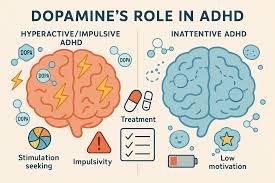
Image caption: Dopamine pathways connect motivation, attention, and reward processing in the brain.
The Dopamine Deficit in ADHD
Research shows that people with ADHD often have lower baseline dopamine activity, particularly in brain regions responsible for:
-
Executive function
-
Impulse control
-
Reward evaluation
This doesn’t mean the brain can’t produce dopamine—it means dopamine signaling is less efficient. As a result, everyday tasks may feel boring, unrewarding, or even physically uncomfortable.
Key scientific findings include:
-
Reduced dopamine receptor availability
-
Altered dopamine transporter function
-
Lower stimulation of reward circuits during routine activities
Why ADHD Brains Seek Dopamine
Because baseline dopamine levels are low, the ADHD brain constantly looks for ways to boost dopamine quickly. This explains many common ADHD behaviors.
Common Dopamine-Seeking Behaviors
-
Impulsivity and thrill-seeking
-
Procrastination followed by last-minute pressure
-
Excessive screen use or gaming
-
Emotional overeating or sugar cravings
-
Risk-taking or novelty chasing
These behaviors are not moral failures—they are neurological coping strategies.
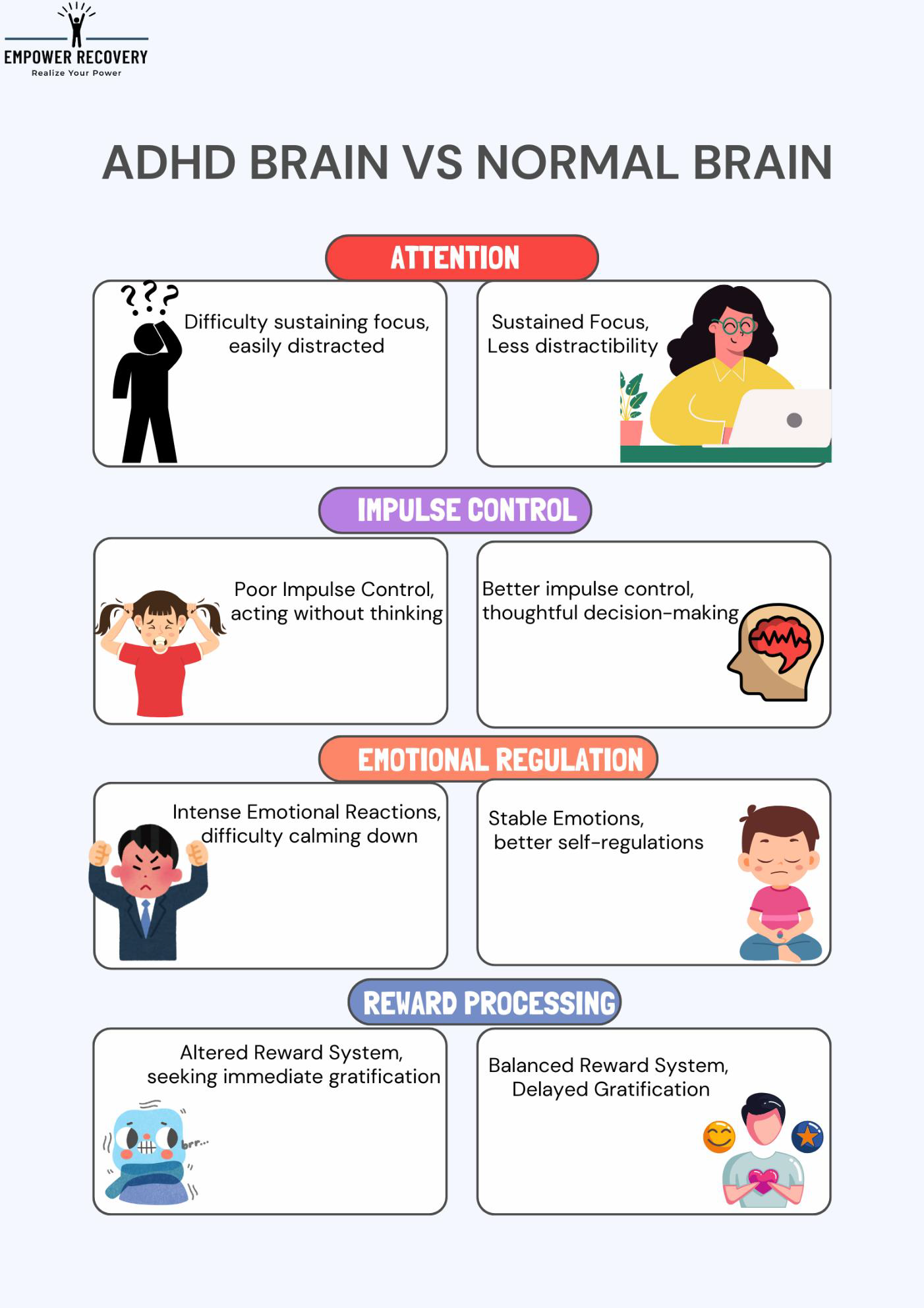


Image caption: Brain imaging studies show differences in reward processing between ADHD and non-ADHD brains.
The Role of Immediate Rewards
ADHD brains are highly sensitive to immediate rewards and less responsive to delayed gratification.
This is why tasks with long-term benefits (studying, saving money, routine work) are especially difficult, while fast rewards (notifications, snacks, excitement) are extremely compelling.
Scientifically, this is linked to:
-
Reduced activation in the prefrontal cortex
-
Stronger pull from the brain’s reward centers
Dopamine, ADHD, and Addiction Risk
Because substances and certain behaviors can artificially spike dopamine, individuals with untreated ADHD may face a higher risk of addictive patterns, including:
-
Substance misuse
-
Gambling
-
Compulsive internet or social media use
This is not about weak willpower—it is about neurochemical imbalance combined with environmental access.
How ADHD Treatments Target Dopamine
Medication
Stimulant medications (like methylphenidate or amphetamines) work by:
-
Increasing dopamine availability
-
Improving dopamine signaling efficiency
This helps normalize motivation, focus, and impulse control.
Non-Medication Strategies
-
Structured routines
-
Short-term rewards for long-term goals
-
Physical exercise (naturally boosts dopamine)
-
Behavioral therapy and ADHD coaching
Living With ADHD: Reframing Dopamine Seeking
Dopamine-seeking in ADHD is not a flaw—it’s a biological response to a differently wired brain.
When properly understood and supported, people with ADHD can channel this drive into creativity, innovation, and high-energy problem solving.
The goal is not to suppress dopamine seeking—but to redirect it in healthy, sustainable ways.
Thumbnail Suggestion (For Social Media or Blog Cover)


Thumbnail text idea:
“DOPAMINE SEEKING IN ADHD”
The Science Behind Impulsivity & Motivation
Final Thought
Understanding dopamine is key to understanding ADHD.
When science replaces stigma, individuals with ADHD gain not just treatment—but clarity, self-compassion, and control.ST.