
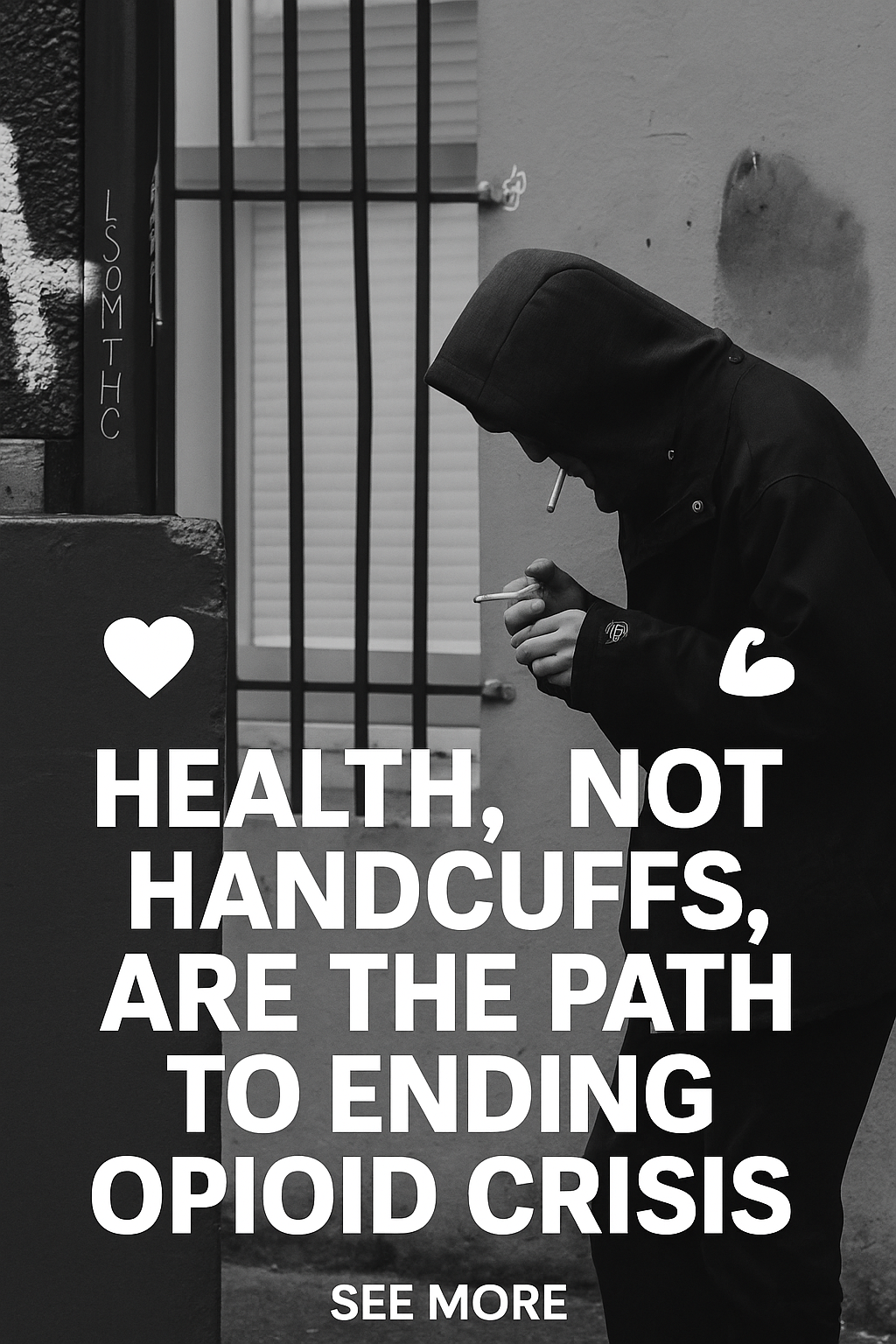
There’s reason to be optimistic about America’s drug overdose crisis. Recent CDC data show that drug overdose deaths declined by 27 percent last year.
This dramatic drop in overdose deaths offers hope, but it must be a catalyst, not a conclusion. To keep making progress, we must expand what is working: increasing access to harm reduction tools and investing in proper treatment. We cannot afford to fall back on punitive policies that have consistently failed to address the underlying causes of addiction.
While it’s impossible to say exactly what caused the significant decrease in drug overdose deaths in 2024, we do know that punitive methods are demonstrably ineffective at combating drug use.
The criminal justice system has been the federal government’s main avenue for tackling drug addiction since President Richard Nixon effectively launched the “War on Drugs” in 1971. But drug overdose deaths have rapidly increased since the 1970s—precisely because we have been punishing drug use instead of treating it.
Drug addiction does not exist in a vacuum. It stems from underlying trauma and mental health issues, which require proper treatment to manage. Unfortunately, while the majority of people in jail and prison have a substance use disorder, few receive clinical treatment.
In fact, incarceration tends to make substance use disorders worse. It is often traumatic and can isolate people from health and social support systems, along with resources like naloxone and medication-assisted treatment.
Drug overdose is the third leading cause of death in American jails, and the leading cause of death among those recently released from prison. A recent study from Minnesota found that the rate of overdose deaths for people released from prison was more than 28 times that of the state’s general population. These results mirror those of studies from Washington state and North Carolina.
On the other hand, data show that health-centered programming and harm reduction tools, such as naloxone and fentanyl testing strips, are effective at saving lives.

Despite concerns that access to naloxone would contribute to riskier drug use, no recent studies have found that expanding naloxone access has actually increased overdose deaths. Multiple studies have shown, on the contrary, that naloxone reduces overdose mortality.
A 2025 meta-analysis evaluating the effectiveness of community-based naloxone distribution programs in Chicago, Massachusetts, San Francisco, North Carolina, and Scotland found reductions in overdose mortality—sometimes as high as 46 percent. Another recent study found that distributing naloxone among the general community and people leaving jail could reduce opioid-related deaths by 11 to 25 percent.
Fentanyl testing strips are newer to the market, but early evidence also suggests that legalizing fentanyl test strips decreases overdose mortality and can lead to positive behavior changes. One recent analysis found that fentanyl test strip legalization corresponded with a 7 percent decrease in overdose deaths.
Community-based, health-focused treatment centers have long been considered much more effective for managing drug addiction than incarceration, and they have been growing in recent years. Community treatment centers should continue to act as major distributors of naloxone and fentanyl test strips, so more people can access them without fear of punishment or financial barriers.
Alternative crisis response programs, which send mental health specialists to people suffering from mental health distress and substance use disorders instead of law enforcement, are also offering promising results.
These types of interventions should become the national norm for fighting substance use disorders.
Every overdose death is preventable. It’s time to end the war on drugs and begin a new chapter grounded in the unwavering belief that recovery is possible when people are met with help instead of handcuffs.
Christina Dent is the author of Curious, the founder of End It For Good, and is passionate about health-centered solutions to drugs and addiction.
The views expressed in this article are the writer’s own.