
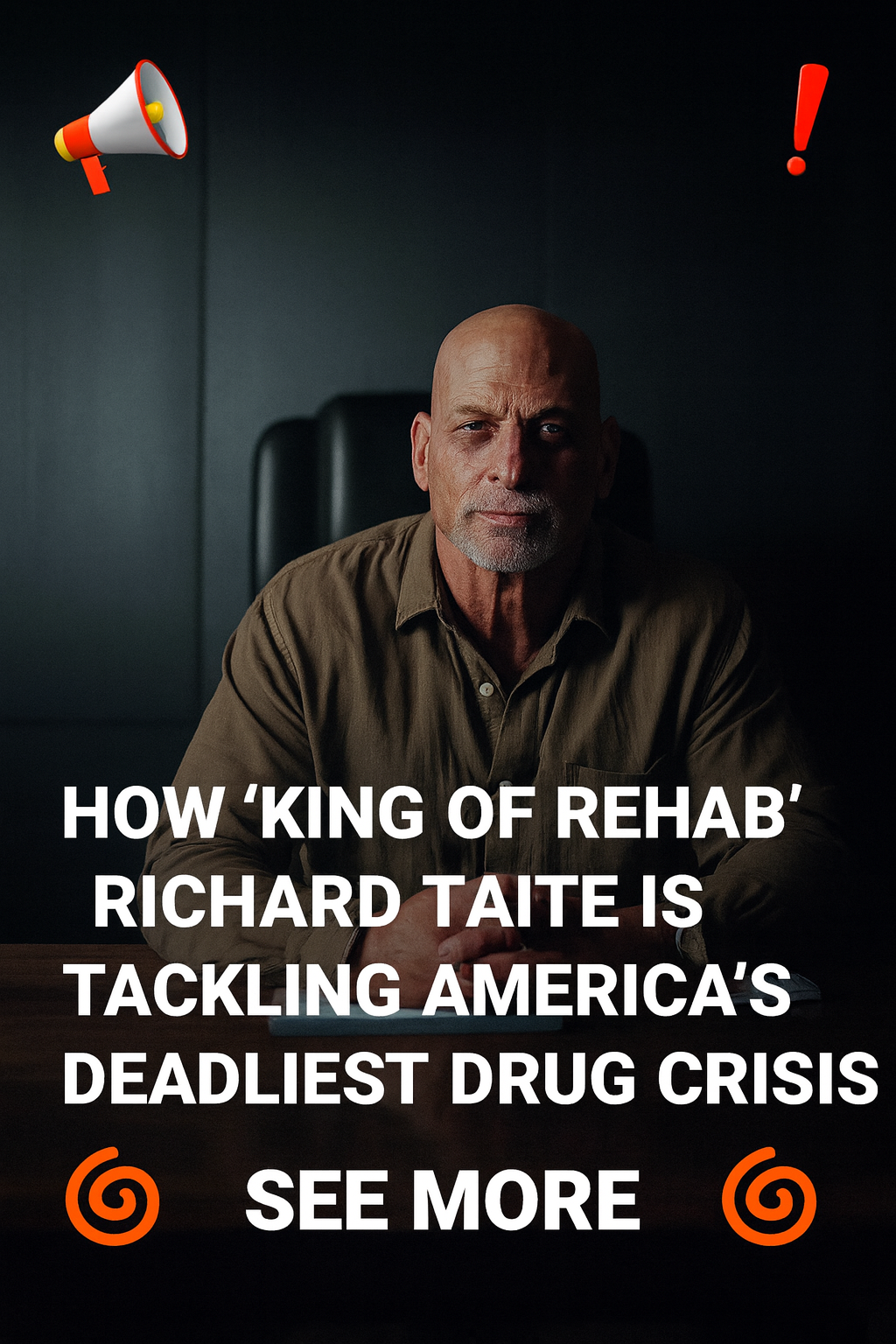
Richard Taite has lived enough lives for 10 men. Once a homeless addict who lost 25 years to drugs, he’s now a multimillionaire entrepreneur determined to rebuild the recovery world from the ground up.
Known as “The King of Rehab,” Taite, 59, is the founder of Cliffside Malibu, the luxury treatment center that became synonymous with celebrity recovery. After selling it for a record-breaking nine-figure sum in 2018, Taite could have disappeared quietly into a comfortable Malibu retirement. Instead, he’s back with two new treatment centers, a podcast and a book, all fueled by purpose, faith and his commitment to what he considers is unfinished business: America’s fentanyl crisis.
“I lost 25 years of my life to drug addiction and have treated people for 22,” Taite told Newsweek. “That’s 47 years. I am the biggest miracle in history and this is the best life I’ve ever known.”
Taite grew up in Encino, California, in a home that seemed idyllic from the outside—but that was not the case. “You’d think it was a great childhood because we had enough,” he said. “But -the beatings were really bad. Every day, all of us. When we weren’t being beaten, we were being told, ‘What are you, stupid?’ or, ‘I wish you weren’t born.’”
By 17, his father had left, his family got evicted and his beloved grandfather had died—all within 90 days. “That was it. It broke me,” he said. “I spent the next 25 years killing myself with drugs and alcohol.”
Crack cocaine became his drug of choice. “I’d smoke an ounce of cocaine every single day, no matter what,” he said. “It took me three years just to get 30 days sober. I probably had more sobriety dates than there are dates in the calendar.”
Ultimately, Taite’s recovery came from years of trying and failing, from therapists who refused to give up on him, and from the people who believed he could change even when he didn’t believe it himself.

“It took me 15 months of therapy before the light went on,” he said, crediting Perspectives on Addiction author Margaret Fetting for setting him on the right path. Between therapy, Alcoholics Anonymous and sober living, Taite finally got clean. “I needed all of it,” he said. Even before he was fully stable, Taite began helping others. He’d take newcomers from AA to breakfast, then for a haircut and new clothes, before dropping them off at sober living facilities—paying for their first 30 days himself. “I always had more respect for your sobriety than mine,” he said. That instinct eventually became his life’s work.
When Taite opened Cliffside Malibu in 2005, he had no experience in treatment administration—but he had lived experience in addiction. What started as a modest sober living home evolved into the country’s most prestigious luxury rehab, attracting celebrities, executives and elite clients seeking privacy and compassionate care.
For years, Taite wrestled with the morality of making money from recovery. “I couldn’t get my head around making money off people being sick,” he said. “But then a swami [Hindu religious teacher] I met told me, ‘Wouldn’t the world be a better place if everyone could help people for a living?’ He said it three years in a row before it finally sank in.”
The lesson released him from guilt and gave him a new compass. “Once I understood that helping people could be my purpose and my profession, everything changed,” Taite said. “There’s nothing to get, only to give. That’s how I teach my kids—and how I try to live.”
Once he embraced that truth, Cliffside flourished—eventually selling in 2018. But success didn’t bring peace. Bound by a five-year noncompete clause, Taite suddenly found himself adrift. “I was living the aimless life of a Malibu housewife,” he said. “Completely depressed, watching the fentanyl crisis explode and feeling like I couldn’t do anything.” When the noncompete expired, Taite came back swinging. He launched Carrara Treatment Wellness & Spa, a next-generation facility he describes as “the first ultra-luxury treatment and wellness experience.”
“Think Four Seasons hotel meets evidence-based recovery,” he said. “Every client has their own suite, their own temperature controls and a juice bar downstairs. They get 40 hours of treatment and three mandatory spa sessions a week. You can literally be there for 30 days and not get the same spa treatment twice.”
While it might sound indulgent, for Taite there’s a proven rationale behind the prescribed luxury. “I realized self-care turns into self-esteem, which turns into self-love,” he explained. “In all the years I’ve been treating people, I’ve never met anybody who truly loved themselves trying to kill themselves with drugs and alcohol.”
Leaving No One Behind
At the same time, Taite began scaling a second brand, 1 Method Center, his most ambitious project yet. Its mission is to treat 10,000 people in two years, with a focus on veterans and the unhoused—the people most often left behind in conversations about recovery. “A buddy of mine called and said his treatment center was about to miss payroll,” Taite recalled. “It was called 1 Method. I walked in and bought it in three hours—that’s how I do due diligence.”
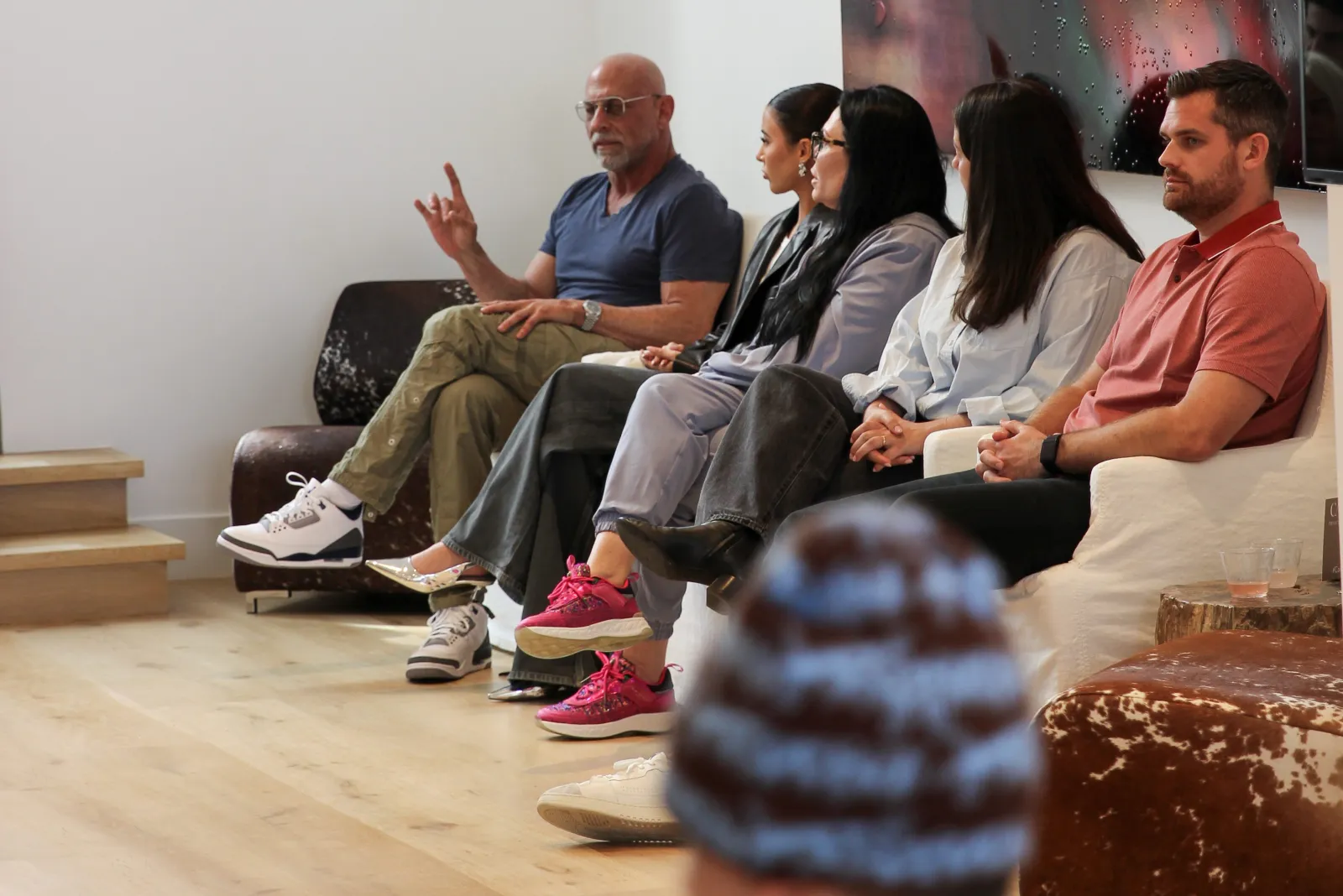
Within days, he called 10 of his best former Cliffside employees and told them, “Sorry for the late notice, but everybody comes home today.” Ten people quit their jobs on the spot to join the cause and two-dozen more followed. “I realized 1 Method could be the bridge between the ultra-luxury world and the people who have nothing,” he said.
“I came back to treat the military,” he said. “I’m pulling veterans right off the street and putting them in treatment. They’re the easiest to treat—self-starters, soldiers. We’re scaling this to a thousand beds so we can treat veterans, their spouses and their kids.”
Taite has been personally underwriting much of the effort. “I sold my last business for nine figures, no debt and no partners,” he said. “I can do anything I want—and what I want is to help people.” His urgency stems from a crisis he calls “the deadliest epidemic in American history.” “The fentanyl issue is worse than anything we’ve ever seen,” Taite said. “It kills 100,000 people a year—probably more, because if someone dies in a car accident with fentanyl in their system, it’s marked as a car accident. People don’t realize how bad it is.”
As well as walking the walk, Taite’s talking the talk with his podcast, We’re Out of Time, which started as a platform to raise awareness about fentanyl but has since evolved into a hub for conversations about recovery, mental health and resilience. In less than a year, it’s become a breakout hit—peaking at number one in Mental Health and number 20 overall on Apple Podcasts. His most memorable guest? The rapper Xanman, who broke down in tears mid-episode. “I talked him into treatment right on the show,” Taite said. “It was the most beautiful moment I’ve had.”
Taite has treated everyone from billionaires and royalty to people living on the street, and he’s seen how both privilege and poverty can complicate recovery.
“Fame and wealth don’t make recovery easier,” he said. “It’s harder because of the enablers—the agents, the managers, the lawyers, the assistants. These people don’t make money unless their clients are working, so they keep pushing them back out before they’re ready. They ruin a good thing.”
Yet, he says, most high-profile clients surprise him. “Almost without exception, the more famous or wealthy someone is, the nicer they are,” he told me. “They have humility, gratitude. It’s the ones pretending who are miserable.”

Now 20-plus years sober, Taite’s life runs on discipline and devotion. He wakes up between 3:30 and 4 a.m. for quiet reflection before the day begins. He prays constantly, meditates to center his mind, eats simply, works out daily and sees his therapist three times a week. “My connection to God is the only thing that’s ever worked for me,” he said. “Even when I was using, my prayers were, ‘God, I know I’m a disappointment. Please keep me safe. No hospitals, no cops. I’ll start again when this run is over.’”
Taite is open about the trauma that drove his addiction and how healing it requires reparenting the child he once was. “There are no bad five-year-olds,” he said. “But if you’re constantly beaten by the people who are supposed to love you, you think you’re bad. Pretty soon, you’ve got a 45-year-old man being run by a five-year-old. Therapy helped me see the truth: I was perfect just the way I was.”
“My legacy is to make certain my children are OK in the world when I’m gone,” he added. “That they understand their station in life comes with responsibility—and that they leave this place better than they found it.”
Taite’s new book, Experiencing Transcendence: The Freedom of Recovering from Addiction and Trauma (October 2025, Wheatmark), co-authored with addiction researcher Constance Scharff, expands on that philosophy. “This isn’t a death sentence,” he said. “It’s a speed bump. Sobriety isn’t its own gift. You have to have an equal or better life in recovery. If you can help people joyfully, with the heart of a servant, it always works.”