
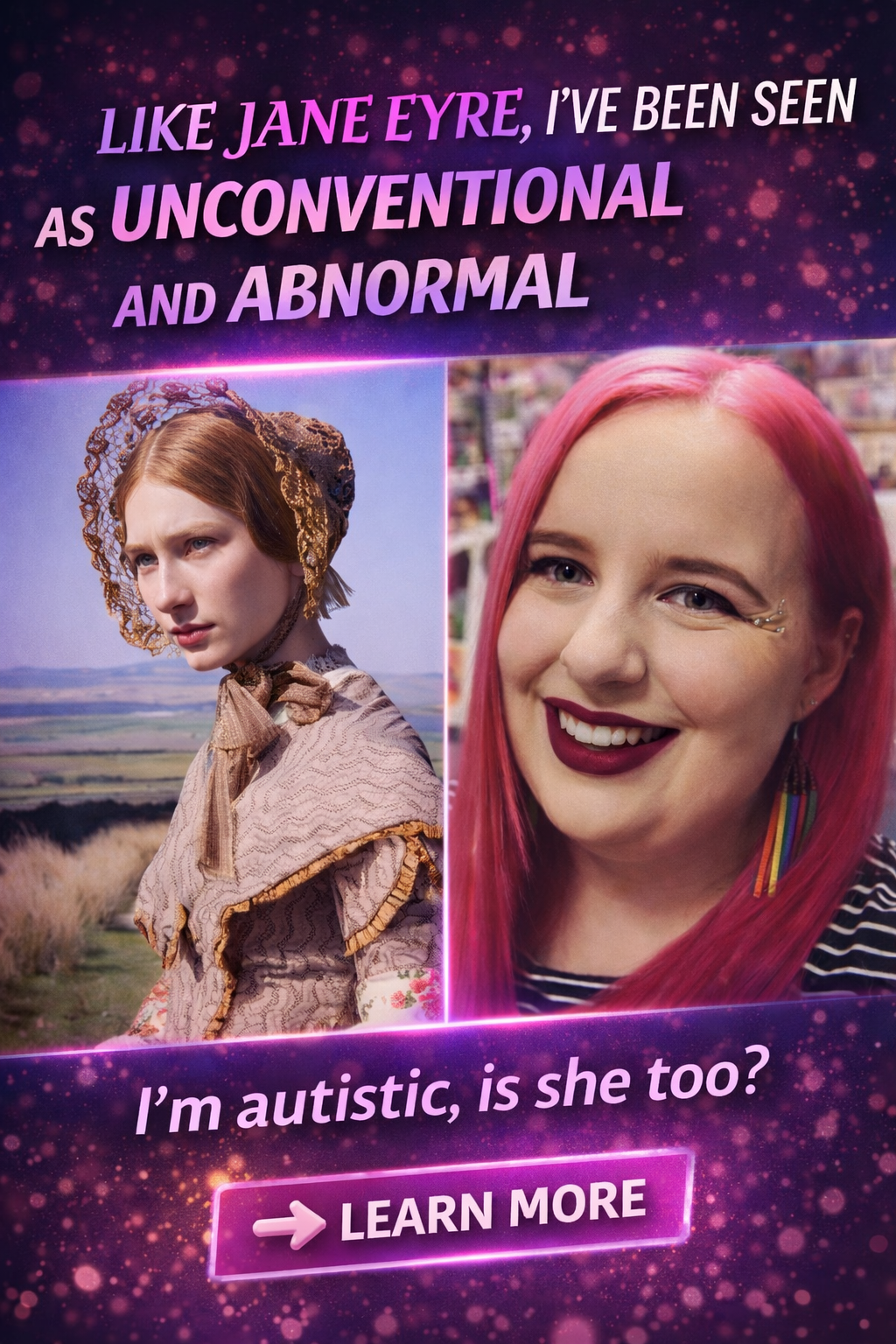
Nearly 200 years since Charlotte Brontë published Jane Eyre, her unconventional orphan Jane – with her intense emotions and sense of injustice – continues to captivate and intrigue readers.
It’s the story of a girl who rises above her social station by becoming the governess (later, wife) to her wealthy Byronic master, Edward Fairfax Rochester. Brontë’s heroine “horrified the Victorians” with her “hunger, rebellion, and rage”. Today, she is hailed as a feminist icon for those same qualities.
As an autistic woman*, I have long felt a particular affinity to the character of Jane Eyre. Like Jane, I have been perceived as unconventional and abnormal. I, too, experienced a childhood of unintentional error, in which “I dared commit no fault: I strove to fulfil every duty”.
But despite my efforts, I frequently found myself getting into trouble. I would speak directly and honestly, causing offence without intention. I would ask clarifying questions which were perceived as personal attacks. I, too, was perceived as “naughty and tiresome”. I often felt I was “not like other girls”.
As an adult, writing my master’s thesis on Jane Eyre, I was haunted by my undiagnosed autism. It threatened to escape at any moment – much like Bertha, Rochester’s mad wife imprisoned in the attic. A family secret. Through a lifetime of learning to mask – to conceal my “externally noticeable” autistic traits – I built a kind of attic within myself. Inside it, my autism, like Bertha, fought against its incarceration, threatening to reveal itself.
After I received my diagnoses of autism and ADHD in 2022, I began to see Brontë’s novel in a different light. Then, I discovered that reading Jane Eyre as autistic is not new.
Jane Eyre, autism, and madness
In 2008, literary studies scholar Julia Miele Rodas first showed how Jane Eyre can be interpreted as autistic. Specialising in disability studies and Victorian fiction, Rodas later wrote that Charlotte Brontë’s narrative voice “resonates with autism”.
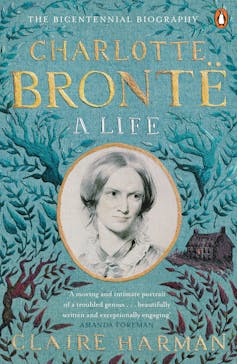
Charlotte Brontë’s biographer Claire Harman has suggested various members of the Brontë family, including Charlotte’s sister Emily (author of Wuthering Heights) and their father Patrick, might have been autistic.
In addition to autism, other forms of “neurodivergence” have been explored in the novel, from ADHD to complex trauma, mental illness and disability. (Although “neurodivergence” is commonly associated with autism and ADHD, the term’s true meaning is much broader.) Feminist disability studies scholar Elizabeth Donaldson pioneered interpreting Bertha’s madness as a form of mental illness and disability. Drawing from Rodas, disability and literary studies scholar Jill Marie Treftz interprets Jane’s childhood friend Helen Burns as having ADHD.
Opening up new ways of reading the text, the autistic Jane Eyre also transforms older interpretations, particularly of madness and gender. Most famously, Sandra M. Gilbert and Susan Gubar’s essay A Dialogue of Self and Soul: Plain Jane’s Progress (published in their collection of feminist literary criticism, The Madwoman in the Attic).
Gilbert and Gubar interpret Jane Eyre as the story of a woman who learns “to govern her anger” to survive Victorian patriarchal standards of femininity. In the process, Jane is “haunted” by her own repressed “hunger, rebellion, and rage”, represented through the literal haunting of Bertha, the “madwoman in the attic”.
This reading is transformed when Jane herself is interpreted as another kind of neurodivergent: autistic. Read this way, her story becomes more than that of a woman who learns to “govern” and eventually “kill” her unfeminine anger. It becomes the story of an autistic woman, learning to mask and stifle her autism to survive patriarchy’s ableist standards of womanhood. These standards are at odds with autism’s very nature.
Autism and gender
Autism and related conditions like ADHD are seen as masculine conditions. This perception is in part due to autism research’s heavy focus on boys and men.
But even more, it stems from the ways feminine gender stereotypes “stand in stark contrast” against “typically recognized autistic traits”. Autistic violence and justice researcher Jessica Fox and autism researcher Jessica Penwell Barnett have found gender-based discrimination towards autistic women regularly targets their autistic characteristics as not adhering to feminine gender norms.
The autistic Jane Eyre’s struggle to adhere to Victorian standards of femininity requires a constant suppression of her uniquely intense emotions. According to Gilbert and Gubar, none of the other women in the novel have “anything like” Jane’s “problem” of “her constitutional ire”, as the intensity of her anger and distress is rendered abnormal.
Jane’s emotions (especially negative emotions like anger) are more heightened and intense, a common characteristic of autism.
A lifetime of learning to mask
Jane first learns to mask her autism and suppress her intense emotions with a traumatic episode in her childhood at Gateshead.
Aged ten, Jane is punished for her violent retaliation to the bullying of her older cousin John. She is incarcerated in the “red room” – the bedchamber of her deceased uncle. Overwhelmed by anger at the injustice, she experiences a “species of fit”, which bears striking resemblance to an autistic meltdown.
Following this fit, Jane is sent to the boarding school Lowood to be “trained in conformity to her position and prospects”. In other words, to be “normalised” through processes of correcting and controlling her behaviour.
Lowood is the place that “offers” Jane the “chance to learn to govern her anger”, write Gilbert and Gubar. This process begins through her friendship with fellow orphan Helen Burns. A few years older than Jane, Helen acts as an older sister and mentor, encouraging Jane to harbour her intense anger and seek Christian salvation for her flaws.
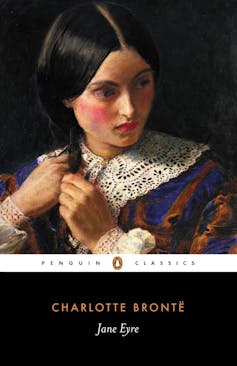
When Helen is interpreted as having ADHD, the nature of Helen’s mentorship changes. As a fellow neurodivergent figure, Helen’s role shifts from simply teaching feminine emotional restraint to encouraging Jane to mask her autism.
Unable to mask her own neurodivergence, Helen urges Jane to “forget” her “passionate emotions”. She encourages Jane to “endure patiently a smart which nobody feels but [her]self” and warns her of the “evil consequences” of acting on her emotions, especially anger.
By the time Jane leaves Lowood, she has learned to uphold an appearance of normalcy: “I believed I was content: to the eyes of others, usually even to my own, I appeared a disciplined and subdued character.”
When Jane finally assumes her role as a governess at Thornfield Hall, she demonstrates “extreme self-control” over her emotions. Rodas characterises this as masking.
This reserved behaviour is observed by Jane’s employer Rochester. As her love interest, he perceives her passions as stifled. Rochester compares her to a caged bird: “a vivid, restless, resolute captive […] were it but free, it would soar cloud-high”.
Jane also shows high regard for the “extreme self-control” displayed by others, especially women. This is particularly shown in Jane’s observations of Miss Mary Ingram, a potential suitor to Rochester and romantic competitor to Jane.
Jane regards the masterful way Miss Ingram navigates conversations and social interactions, comparing her “self-consciousness” to “genius”.
The threat of unmasking
While taking pains to mask at Thornfield, Jane is “haunted” by the presence of madness. For Gilbert and Gubar, Bertha is “Jane’s truest and darkest double”, representing Jane’s imprisoned “hunger, rebellion, and rage”.
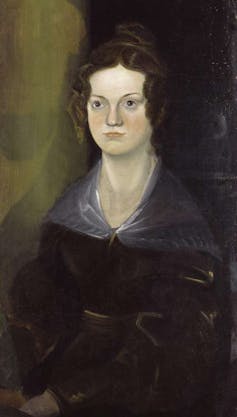
But if Jane is also neurodivergent, Bertha’s role as Jane’s “secret self” goes much deeper. Through her persistent “haunting”, Bertha enacts the psychological torment that comes with masking – the constant fight to suppress one’s natural characteristics.
If Jane is autistic, the neurodivergent “madwoman” Bertha is a physical reminder of the real “secret self” Jane represses behind her masking. She represents a plausible alternative life Jane might have lived had she not been able to mask, acting as a cautionary tale of the dangers of unmasking.
Bertha is incarcerated because she has been unable to conceal her neurodivergence and heightened emotional distress. Her only escape from imprisonment is through death – a fate shared by the other neurodivergent figure in the text, Helen Burns, also unable to mask. For Helen Burns, this fate is even welcomed, as she believes her life would have been one of “great sufferings” with her being “continuously at fault”.
Literary scholar Marta Caminero-Santangelo, author of The Madwoman Can’t Speak, argues “to achieve happiness, Jane must learn to separate herself in all ways from Bertha”. She must “stifle and finally kill the Bertha in her”.
It is not enough for the autistic Jane to conceal her neurodivergence. She must somehow destroy it. Not only is this impossible: it embodies the harmful idea that autism is something that can and should be “cured”.
Leaving behind the mask
It is hard to know if Charlotte Brontë believed this “secret self” should be killed.
Brontë was notorious for disrupting the “status quo”, yet was never “consciously” able “to define the full meaning of achieved freedom”, write Gilbert and Gubar. They suggest this may be because neither Brontë, nor her contemporaries, “could adequately describe” such “a society so drastically altered” from their own.
It would seem, in order to rescue Bertha from the attic – to liberate the “secret self” in a way other than death – a different world must first be made. One where neurodivergence can be accepted. Visible. Unmasked.
This world may be beyond the imagination of a mid-19th century writer, even a Brontë. But it is more conceivable in a world where neuro-affirming spaces have begun to emerge, along with the growth of a strengthening Autistic community.
Jane Eyre continues to speak to a shared experience among neurodivergent women: the collective struggle to survive a patriarchy that weaponises ableism against us.
Widely read as the story of a woman learning to “govern” and eventually “kill” her passionate, angry, “secret self”, Jane Eyre can be interpreted more strongly – more accurately, I believe – as an autistic woman’s story.
Note: My pronouns are they/she. I use the term “woman” loosely to describe my experience as someone who has encountered womanhood, rather than a (completely) accurate descriptor of my gender.