
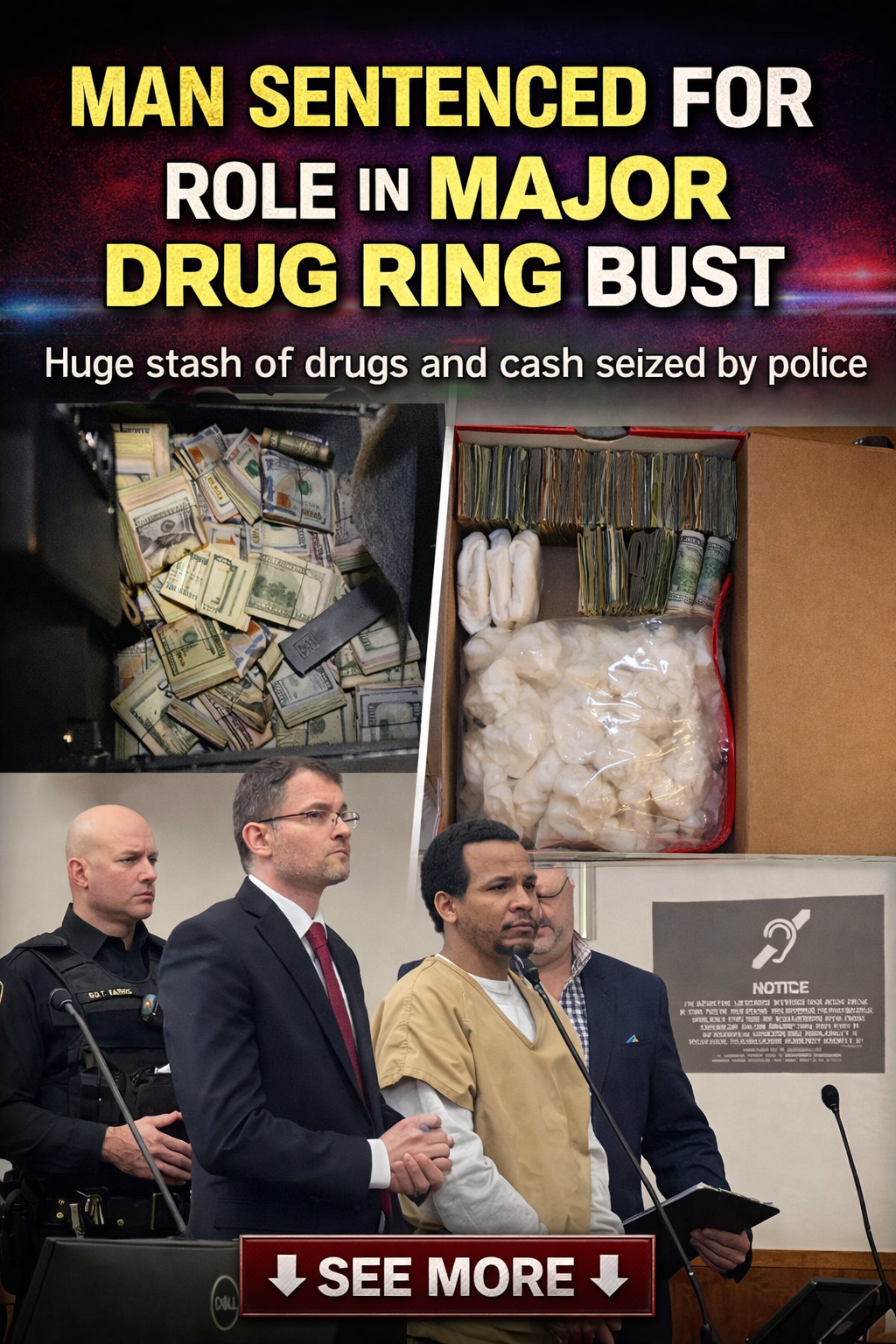

Syracuse, N.Y. — The first of six men charged in connection with an alleged drug ring operating out of Parkside Commons apartment complex in Syracuse was sentenced Tuesday.
Victor Medina-Parilla, 33, previously pleaded guilty to enterprise corruption, a state law similar to the federal Racketeer Influenced and Corrupt Organizations Act, also known as RICO, and third-degree criminal sale of a controlled substance.
Medina-Parilla admitted to aiding a criminal enterprise that sold drugs out of apartment 205 in the Parkside Commons 2119 apartment tower between February and May 2025.
He also admitted to selling fentanyl on May 7.
In exchange for his guilty pleas, he was sentenced to four years in state prison.
He is the first person to be sentenced and the second to plead guilty, prosecutor Alphonse Williams said. Julio Franco-Osorio pleaded guilty to second-degree criminal possession of a weapon in July. His sentencing has not been scheduled. Medina-Parilla pleaded guilty in November.
Williams said the group modeled their narcotics business after a legitimate business. They would have regular “hours of operation” when customers could come and purchase narcotics at any time, according to the indictment.
The operation had “employees” who would execute “shift changes” during operating hours, according to the indictment. He said that roles were clearly divided in the operation.
“You have one person providing the product,” Williams said, “you’ll have a person, for lack of a better word, in a managerial position that is overseeing what is going on with the lesser-ranked employee.”
The group disabled security systems in the apartment tower to allow non-residents to enter the building for purchases, according to the indictment.
The group also used apartment 307 as a “stash” room, according to the complaint. A majority of the drugs, cash and paraphernalia were found in apartment 307. The drugs were then brought to apartment 205 for sale, according to the complaint.

Jesus Berrios-Ortiz, Jean Carlos Calderon, Jorge Lacen-Pizarro and Eric Figueroa-Berrios still face a maximum of 25 years if convicted of the enterprise corruption charge.
To prove the allegations, prosecutors must outline a pattern of criminal activity.
A pattern is proven by three or more connected criminal acts, or “pattern acts”, committed by members or associates of the criminal enterprise to achieve a larger goal within five years.
In this case, the goal of the enterprise is alleged to be a large drug trafficking operation out of Parkside Commons.
