
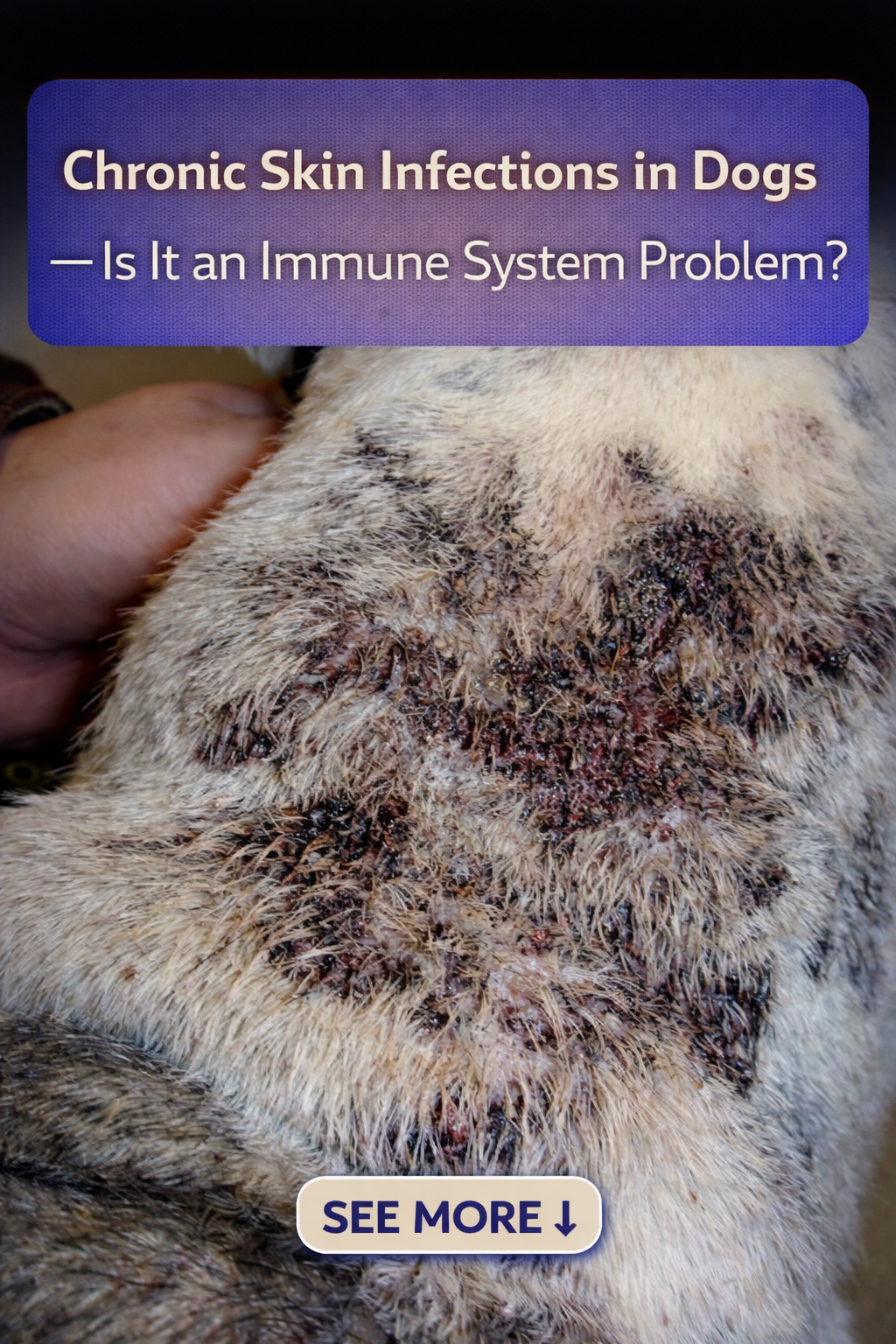
If your dog keeps getting skin infections over and over again—hot spots, rashes, scabs, oozing sores, or foul-smelling skin—you’re right to wonder whether there’s a deeper issue. While bacteria or yeast cause the infection itself, chronic or recurring skin infections almost always mean there’s an underlying problem, and immune dysfunction is one possible cause.
This article explains why skin infections keep coming back, when the immune system is involved, and what to do to stop the cycle.
What “Chronic Skin Infections” Look Like
You may notice:
-
Repeated hot spots or sores
-
Red, inflamed, itchy skin
-
Thickened or darkened skin
-
Hair loss or greasy coat
-
Yeasty or musty odor
-
Temporary improvement with antibiotics, then relapse
👉 The key clue is recurrence despite treatment.
Why Skin Infections Keep Returning
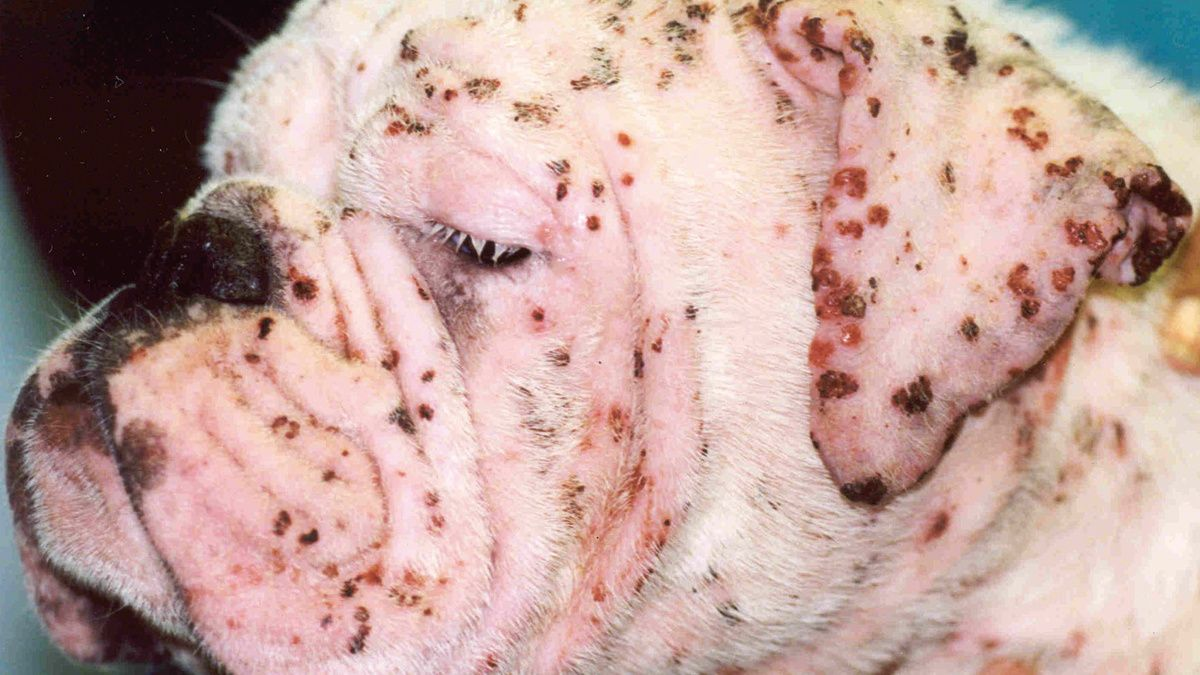
1. Allergies (Most Common Cause)
Chronic allergies damage the skin barrier.
-
Environmental allergies (pollen, dust mites)
-
Food allergies
Broken skin becomes a perfect home for bacteria and yeast.
2. Hormonal (Endocrine) Disorders
Hormones affect skin health.
-
Hypothyroidism
-
Cushing’s disease
These conditions mimic immune problems and cause recurrent infections.
3. Primary Immune System Disorders (Less Common)
True immune deficiencies are rare but real.
-
Congenital immune defects
-
Immune-mediated disease
Dogs may also have frequent ear, respiratory, or GI infections.
4. Long-Term Steroid or Antibiotic Use
Chronic medication can:
-
Suppress immune response
-
Alter skin microbiome
This can worsen recurrence over time.
5. Poor Skin Barrier Function
Some breeds are predisposed:
-
Bulldogs
-
Westies
-
Shar-Peis
Their skin allows microbes to overgrow easily.
6. Incomplete or Inappropriate Treatment
Stopping meds early or wrong therapy:
-
Doesn’t fully clear infection
-
Leads to resistant bacteria
When to Suspect an Immune System Issue
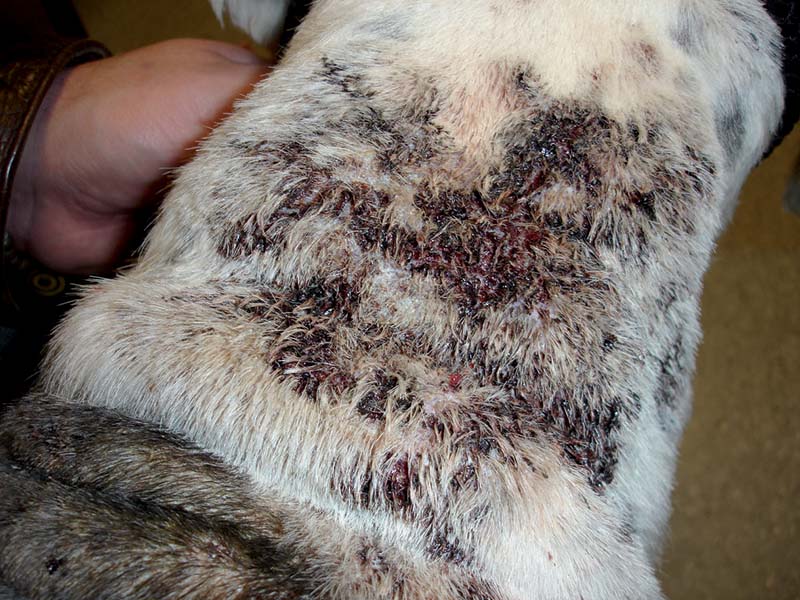
🚨 Red flags include:
-
Infections returning quickly after treatment
-
Multiple infection sites at once
-
Poor wound healing
-
Lethargy or weight loss
-
Frequent infections beyond the skin
These signs warrant deeper diagnostic testing.
What Tests Vets Use to Find the Root Cause
Your veterinarian may recommend:
-
Skin cytology (bacteria vs yeast)
-
Culture and sensitivity testing
-
Blood work (thyroid, cortisol, immune markers)
-
Allergy testing or food trials
-
Biopsies in severe cases
Treating only the infection without finding the cause leads to repeat flare-ups.
How Chronic Skin Infections Are Managed


1. Treat the Active Infection
-
Targeted antibiotics or antifungals
-
Medicated shampoos
2. Fix the Underlying Cause
-
Allergy management
-
Hormone treatment
-
Diet changes
-
Immune-modulating therapy if needed
3. Strengthen the Skin Barrier
-
Regular medicated baths
-
Omega-3 fatty acids
-
Skin-supportive diets
4. Long-Term Prevention Plan
-
Maintenance therapy
-
Early flare detection
-
Dermatology follow-up
Can Dogs With Chronic Skin Infections Improve?
Yes—many dogs dramatically improve once the root cause is identified and managed. True immune disorders require lifelong care, but most recurring infections are driven by treatable conditions like allergies or hormones.
Final Takeaway
Chronic skin infections aren’t just a skin problem—they’re a signal that something deeper is wrong. While immune issues are possible, allergies and hormonal disease are far more common and often overlooked.
🐾 Stop treating the surface. Find the cause—and your dog’s skin can finally heal.