
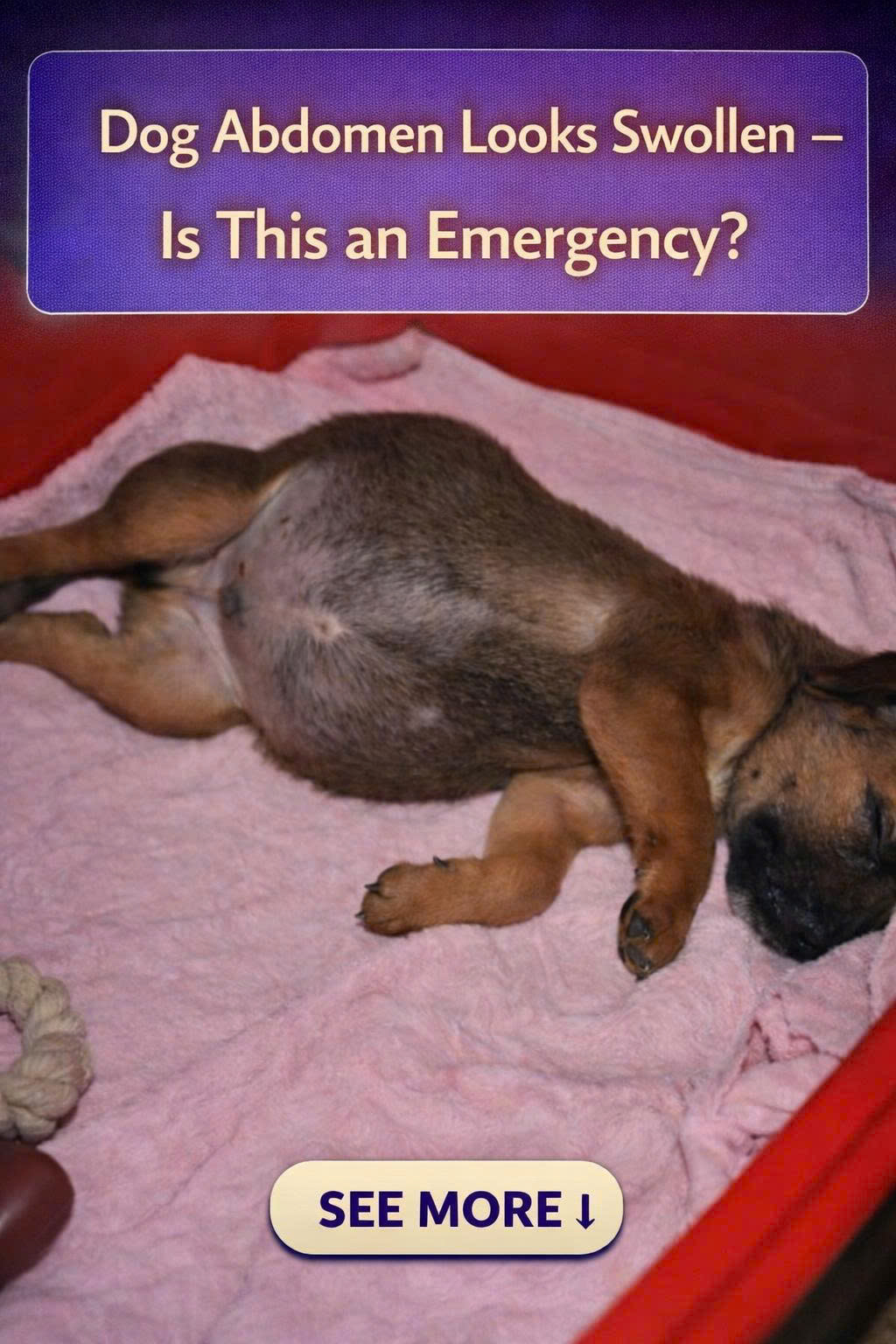
If your dog’s belly suddenly looks bigger, tight, or rounded, this can range from mild and temporary to life-threatening. A swollen abdomen is never something to ignore, especially if it appears quickly or is accompanied by behavior changes.
This guide helps you understand what causes abdominal swelling, how to tell what’s urgent, and what to do immediately.
What a Swollen Abdomen May Look Like
You might notice:
-
Belly looks round, tight, or stretched
-
Abdomen feels firm or drum-like
-
Sudden weight gain focused in the belly
-
Dog looks uncomfortable or restless
-
Difficulty lying down or breathing
👉 Rapid swelling is far more concerning than gradual change.
Most Common Causes of a Swollen Dog Abdomen
1. Bloat / GDV (EMERGENCY 🚨)
This is the most dangerous cause.
-
Belly becomes hard and swollen
-
Restlessness, pacing
-
Retching without vomiting
-
Drooling, panting, collapse
⚠️ This can be fatal within hours. Go to an emergency vet immediately.
2. Fluid Buildup (Ascites)
Fluid accumulation in the abdomen can be caused by:
-
Heart disease
-
Liver disease
-
Cancer
-
Low protein levels
Usually causes a round, heavy belly with low energy.
3. Weight Gain or Obesity
-
Gradual belly enlargement
-
Soft, not tight
-
Dog otherwise normal
Not urgent—but still important to address.
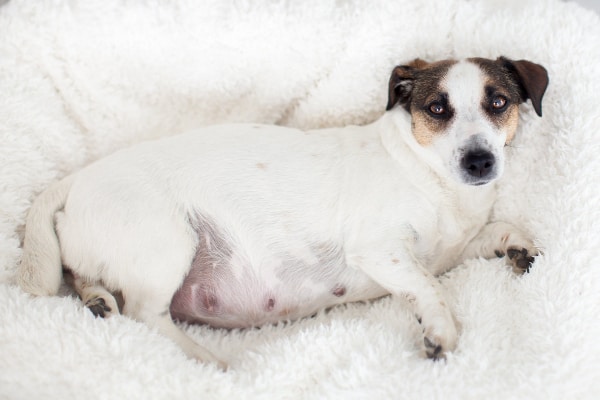
4. Pregnancy
In intact females:
-
Gradual belly growth
-
Nipple enlargement
-
Behavior changes
Confirm with a vet to rule out complications.
5. Enlarged Organs or Tumors
-
Liver or spleen enlargement
-
Abdominal masses
Often paired with lethargy, appetite loss, or pale gums.
6. Intestinal Blockage
-
Swollen or painful abdomen
-
Vomiting
-
No stool or diarrhea
-
Lethargy
🚨 Urgent veterinary care needed.

Red Flags — Seek Emergency Care NOW
🚨 Go to the vet immediately if your dog:
-
Has a hard, rapidly expanding belly
-
Is retching but not vomiting
-
Pants heavily or struggles to breathe
-
Can’t get comfortable
-
Collapses or seems weak
Do not wait to “see if it improves.”
What Your Vet May Do
-
Physical abdominal exam
-
X-rays or ultrasound
-
Blood work
-
Fluid analysis (if ascites is present)
Fast diagnosis saves lives.
What You Should NOT Do
❌ Do not massage the abdomen
❌ Do not give human meds
❌ Do not delay emergency symptoms
❌ Do not assume it’s “just gas”
If the Swelling Is Mild or Gradual
Schedule a vet visit if:
-
Belly is slowly enlarging
-
Dog is less active
-
Appetite has changed
-
Weight gain is unexplained
Early detection prevents serious outcomes.
Final Takeaway
A swollen abdomen in dogs can be harmless—or life-threatening. Speed, firmness, and behavior changes tell you which it is. When in doubt, treat abdominal swelling as urgent.
🐾 If your dog’s belly looks suddenly bigger or tight, it’s always safer to act fast.