
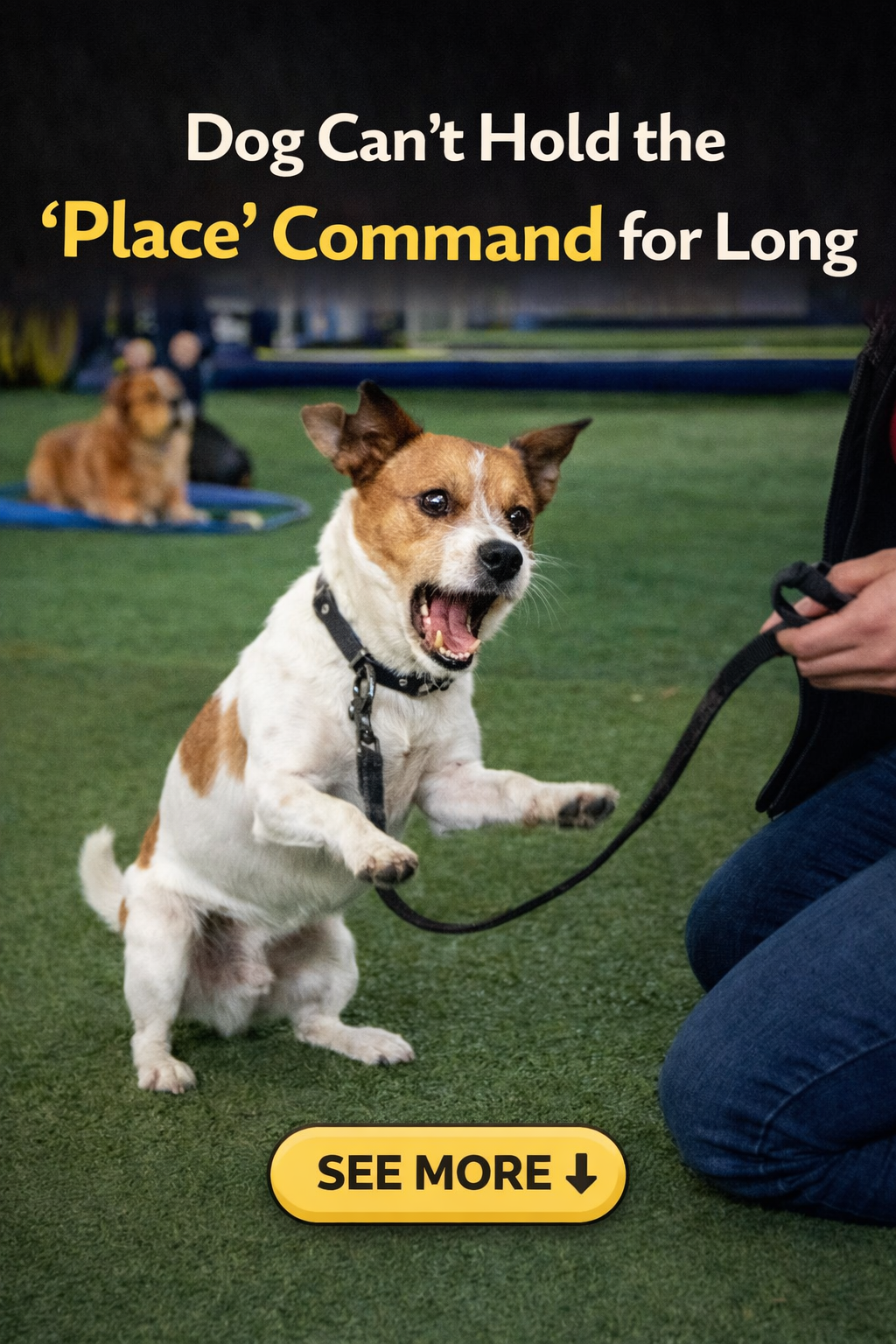
If your dog goes to “place” but pops up after a few seconds, this is extremely common. It does not mean your dog is stubborn or incapable. It means one simple thing:
👉 Duration hasn’t been trained yet.
“Place” is made of three separate skills:
-
Go to the spot
-
Stay on the spot
-
Stay calm while staying
Most dogs only learn #1 at first.
Why Dogs Break “Place” Quickly
1. Duration Was Never Taught (Most Common)
Many dogs are trained like this:
“Place” → dog goes to mat → treat → done
The dog learns:
“Place = touch mat briefly, then leave.”
They were never taught how long to stay.
2. Rewards Come Too Late
If treats are delayed:
-
Dog gets unsure
-
Leaves to “check in”
Leaving has accidentally been reinforced.
3. Distractions Are Too High
Dogs break “place” faster when:
-
People move
-
Food is present
-
Door opens
-
Guests arrive
Impulse control collapses under pressure.
4. Calm Is Harder Than Action
Movement is easy.
Stillness is hard, especially for:
-
Young dogs
-
High-energy breeds
-
Anxious dogs
What NOT to Do
❌ Don’t repeat “place” over and over
❌ Don’t scold when the dog breaks
❌ Don’t physically force them back
❌ Don’t expect minutes before seconds are solid
This creates frustration—not duration.
How to Build a Strong “Place” (Step by Step)
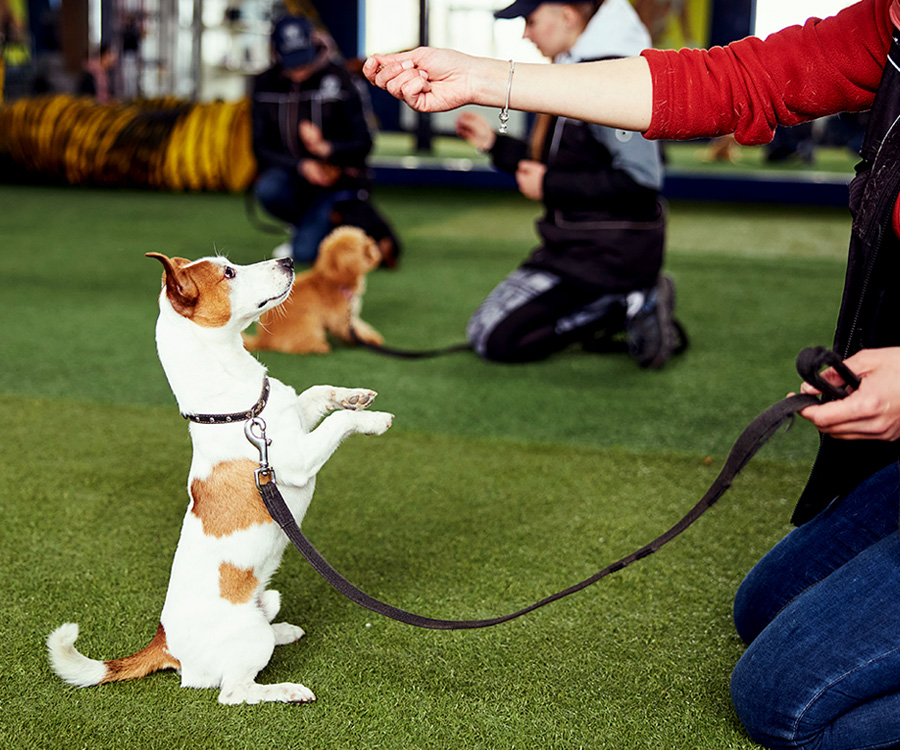
Step 1: Pay for Staying, Not Going
Once your dog is on the mat:
-
Treat every 1–2 seconds at first
-
Drop treats between their paws
-
Calm delivery, low excitement
The mat must feel profitable.
Step 2: Release Before the Dog Leaves
Always release with a word like:
-
“Okay”
-
“Free”
If the dog leaves before release:
-
Calmly guide them back
-
Reduce duration next rep
Release controls movement—not the dog.
Step 3: Increase Duration in Tiny Increments
Think:
-
2 seconds
-
3 seconds
-
5 seconds
-
8 seconds
❌ Not: 5 seconds → 30 seconds
Tiny wins build confidence.
Step 4: Reset Often
Short reps are better than long failures.
-
5–10 successful reps
-
Then a break
Success builds staying power.
Add Distance & Distractions (Later)
Rule of Thumb
Only add one challenge at a time:
-
Duration or distance or distraction
Never all three together.
Example Progression
-
You stand still nearby
-
You take one step away
-
You sit down
-
You turn your back
-
You walk past once
If the dog breaks → step back in difficulty.
Use “Place” in Real Life
Practice during:
-
TV time
-
Cooking
-
Emails
-
Calm moments
Don’t reserve “place” only for chaos.
How Long Until Improvement?
With daily practice:
-
Noticeable improvement in 3–5 days
-
Solid 1–3 minute holds in 2–3 weeks
-
Longer settles come naturally after that
Troubleshooting Common Problems
❓ Dog breaks when you move
➡️ Reward faster when you move
❓ Dog whines or crawls
➡️ Duration is too long — shorten it
❓ Dog only stays if you stare
➡️ Practice turning away briefly, then reward
Final Takeaway
“Place” isn’t about obedience—it’s about teaching calm endurance. Duration is a skill that must be built gradually and generously. When staying becomes rewarding, your dog will choose it.
🐾 Don’t ask for calm—pay for it, build it, and it will stay.