
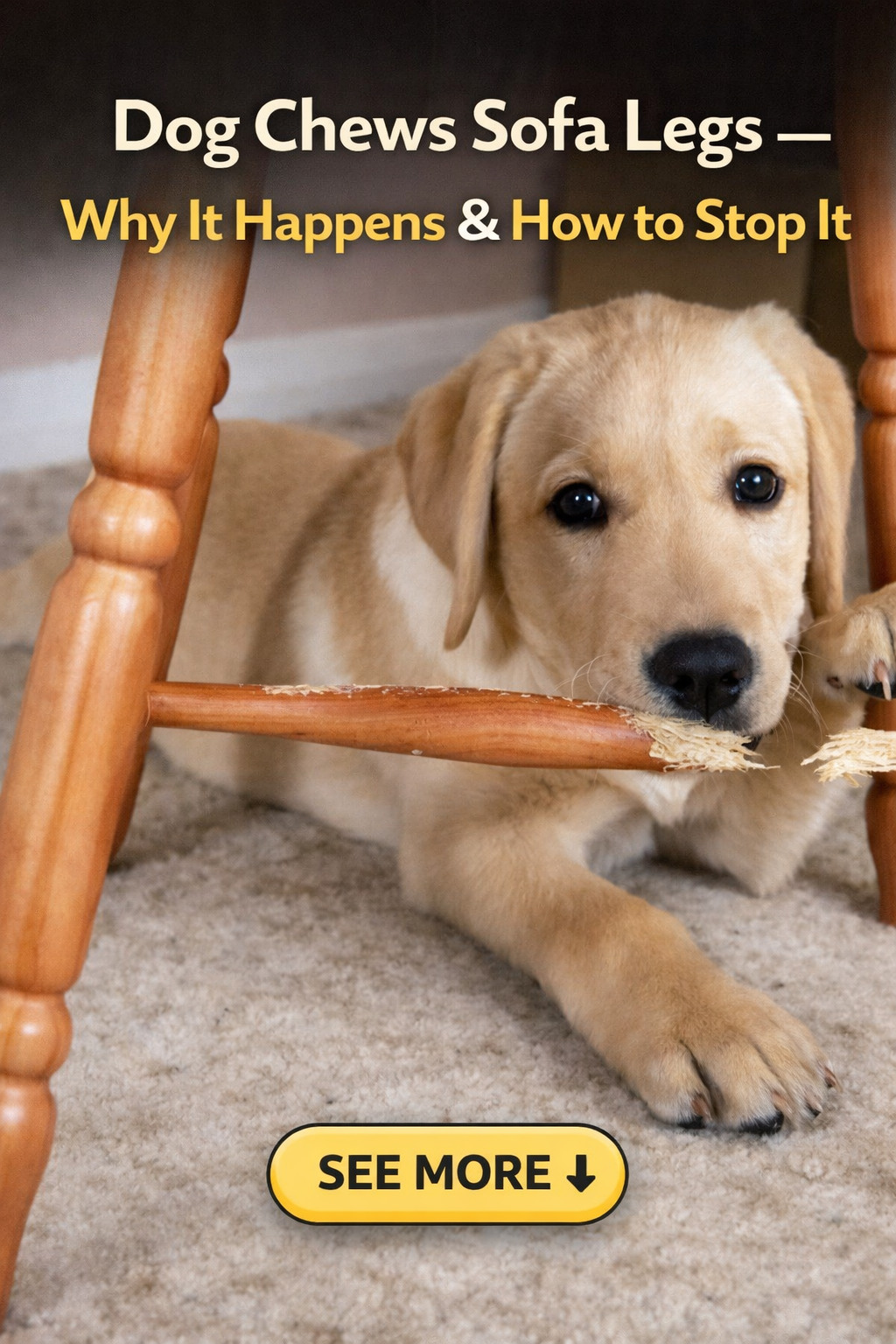
If your dog keeps chewing the legs of your sofa or couch, you’re not dealing with stubbornness—you’re seeing a very specific, very fixable behavior. Sofa legs are the perfect chew target: sturdy, textured, at mouth height, and soaked with household scents.
Here’s how to understand why dogs choose sofa legs and exactly how to stop it without punishment.
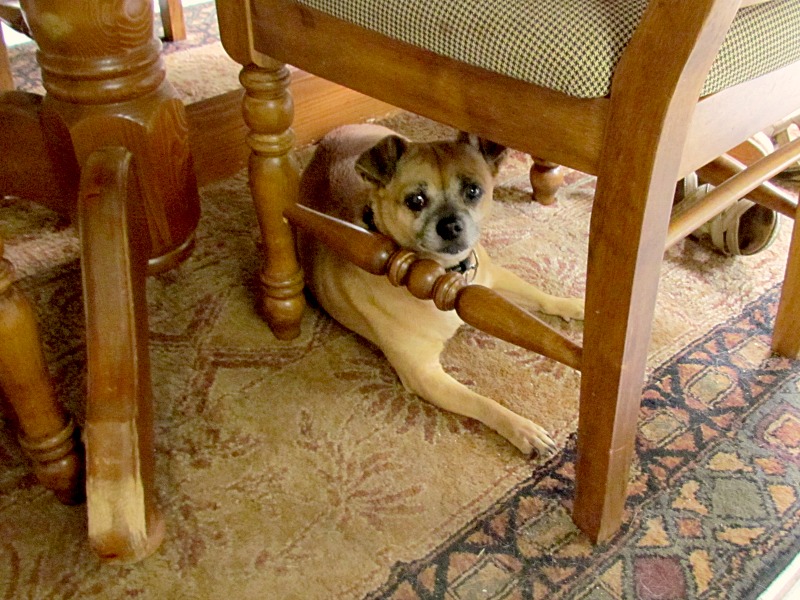
Why Dogs Chew Sofa Legs
1. Perfect Chew Texture (Most Common)
Wooden or fabric-wrapped legs:
-
Feel good on teeth and gums
-
Don’t move much (very satisfying)
-
Are easier than cushions
For puppies, this is teething heaven.
2. Stress & Self-Soothing
Chewing releases calming chemicals.
Dogs often chew furniture when:
-
Left alone
-
Overstimulated
-
Adjusting to change
Sofa legs are always available and comforting.
3. Boredom or Excess Energy
Under-stimulated dogs create their own outlets.
Chewing = entertainment.
4. Learned Habit
If chewing went unnoticed even a few times, your dog learned:
“This works and feels great.”
5. Separation Anxiety (If It Happens Only When You’re Gone)
Red flags include:
-
Chewing focused near exits or resting spots
-
Destruction only when alone
-
Drooling or pacing
This needs a different approach than basic chewing.
Why Sofa Chewing Is a Problem
🚨 Risks include:
-
Splinters in mouth or gut
-
Fabric ingestion
-
Costly furniture damage
Stopping early prevents long-term habits.
What NOT to Do
❌ Don’t yell or punish
❌ Don’t rub bitter paste on your dog
❌ Don’t give old furniture “as chews”
❌ Don’t expect them to “grow out of it” without guidance
Punishment increases anxiety—and more chewing.
How to Stop Sofa Leg Chewing (Step by Step)
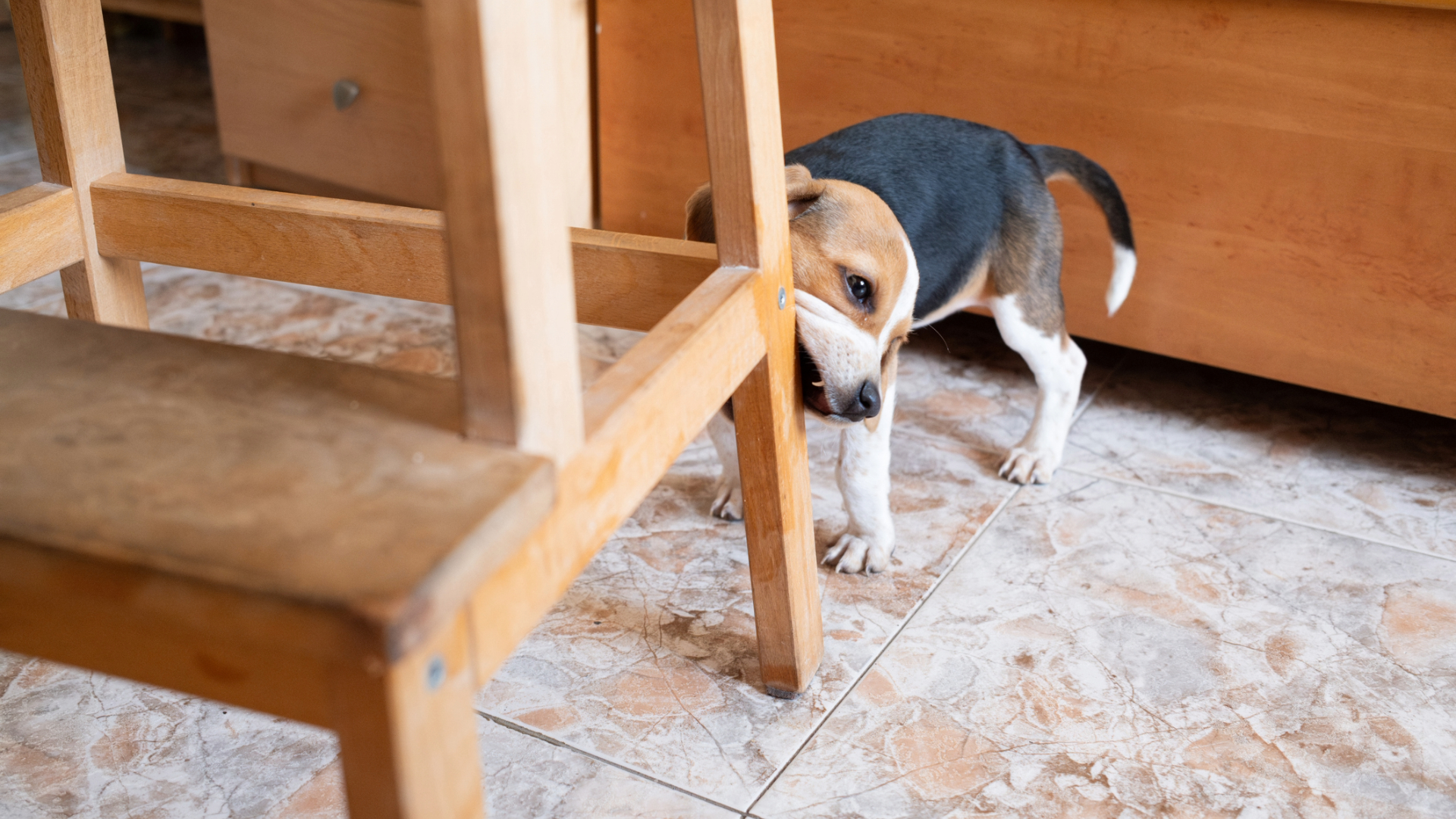
1. Block Access Immediately (Most Important)
-
Use furniture guards or corner protectors
-
Block with storage boxes or baby gates
-
Rearrange temporarily
No access = no rehearsal.
2. Apply Bitter Deterrent (Support Tool)
-
Use pet-safe bitter spray on legs
-
Reapply regularly
This helps—but never works alone.
3. Provide Better Legal Chews
Match the sofa leg’s appeal:
-
Firm rubber chews
-
Nylon chews (size-appropriate)
-
Frozen teething toys (puppies)
Place them right next to the sofa legs.
4. Redirect Immediately
If you catch it:
-
Calm “uh-uh”
-
Move your dog to a chew toy
-
Praise when they choose the toy
Timing is everything.
5. Supervise or Contain
When you can’t watch:
-
Crate or playpen (with safe chews)
-
Leash indoors for young dogs
Freedom comes after reliability.
6. Increase Mental Stimulation
A tired brain chews less:
-
Sniff walks
-
Puzzle feeders
-
Training games
Aim for daily mental work, not just exercise.
If the Dog Is a Puppy
-
This peaks at 3–6 months
-
Teething pain makes furniture irresistible
-
Consistency now prevents adult destruction
If the Dog Is an Adult
Chewing usually means:
-
Stress
-
Boredom
-
Anxiety
Address the emotion, not just the object.
When to Get Help
📞 Consult a trainer or vet if:
-
Chewing is intense or frantic
-
Happens only when alone
-
Includes doors, walls, or floors
This may be separation anxiety, not simple chewing.
Final Takeaway
Dogs chew sofa legs because they’re satisfying—not because they’re naughty. Remove access, provide better options, and meet your dog’s mental needs, and the behavior stops.
🐾 Dogs don’t choose furniture out of spite—they choose what feels right. Make the right choice easier.