
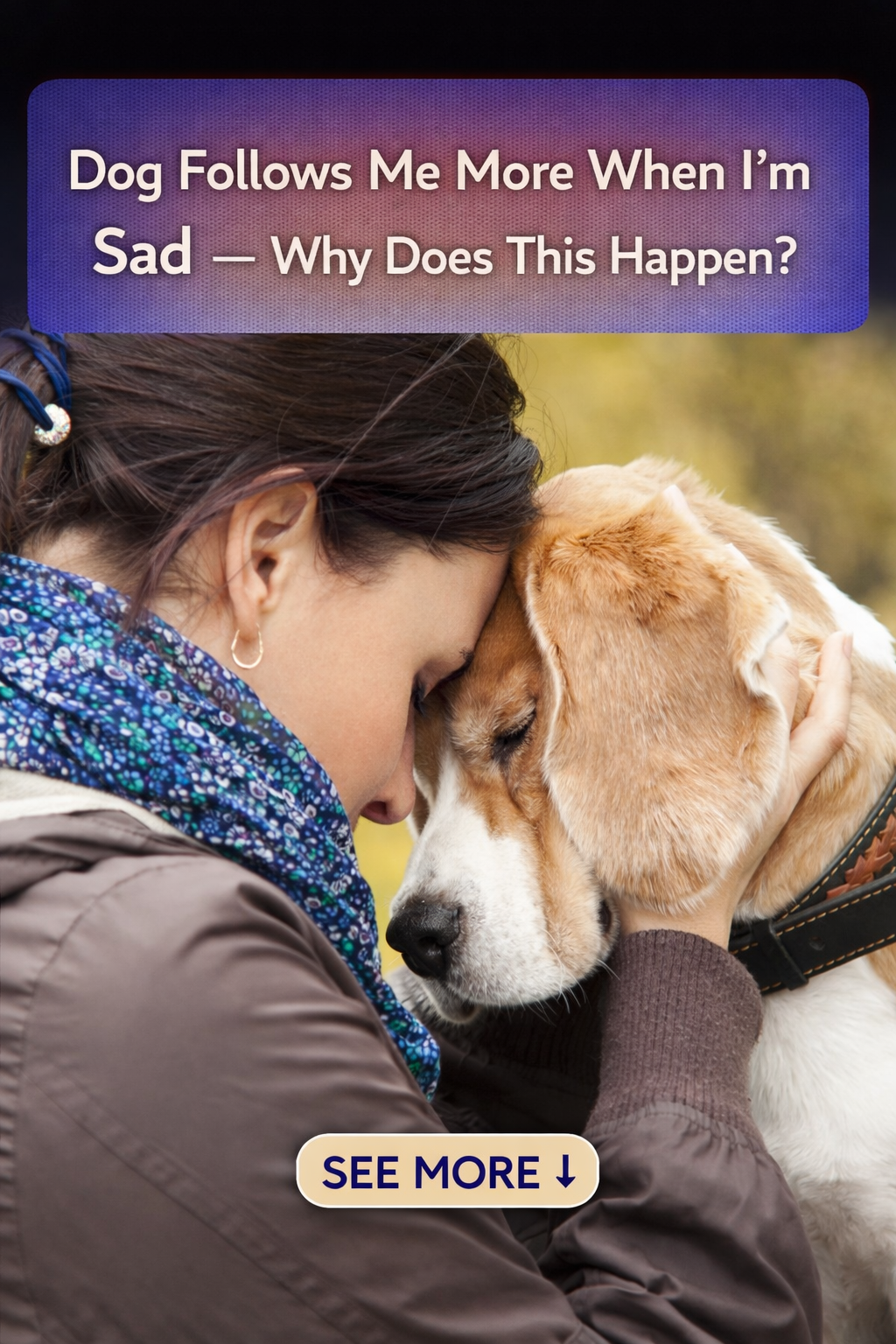
If you’ve noticed your dog sticks closer to you, watches you more, or won’t leave your side when you’re sad, you’re not imagining it. Dogs are remarkably sensitive to human emotions, and this behavior is often a sign of emotional awareness, bonding, and concern—not neediness or anxiety.
This article explains how dogs sense sadness, why they respond this way, and when extra following is loving vs. something to watch closely.
What This Behavior Looks Like
When you’re feeling down, your dog may:
-
Follow you from room to room
-
Sit or lie very close to you
-
Rest their head on you
-
Watch your face intently
-
Become quieter and calmer
-
Check on you more often
👉 The key pattern: the behavior increases specifically when your mood changes.
How Dogs Know You’re Sad
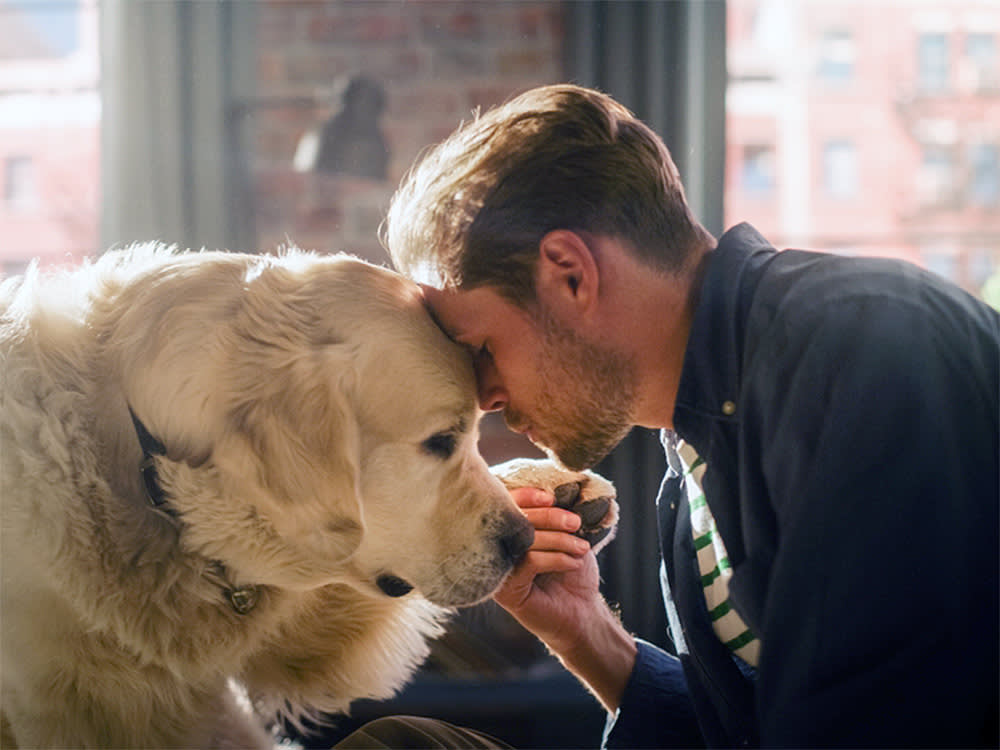
1. Dogs Read Body Language Extremely Well
When you’re sad, you may:
-
Move more slowly
-
Sit or lie down more
-
Avoid eye contact
-
Speak less or more softly
Dogs notice these subtle changes instantly.
2. Dogs Recognize Changes in Voice
Tone matters more than words.
-
Lower volume
-
Slower speech
-
Less variation
To your dog, this signals something is different.
3. Scent and Hormone Changes
When humans are stressed or sad:
-
Stress hormones change
-
Body scent changes slightly
Dogs’ noses are sensitive enough to detect this.
4. Emotional Contagion
Dogs often mirror emotions.
-
Calm sadness = calm closeness
-
Anxiety = heightened alertness
This is part of deep social bonding.
5. Learned Comforting Behavior
If your dog ever got:
-
Affection
-
Calm praise
for staying close when you were sad, the behavior was gently reinforced.
Is This Empathy or Attachment?
It’s usually both, and that’s healthy.
💖 Healthy Emotional Bond
-
Dog stays close but can still relax
-
No panic if you move briefly
-
Behavior fades when your mood improves
⚠️ When to Watch More Closely
-
Dog becomes distressed if you leave
-
Whining or pacing when separated
-
Follows compulsively even when you’re fine
That may suggest anxiety, not just empathy.
Why This Is Actually a Good Sign
Research shows dogs:
-
Are more likely to approach humans who appear upset
-
Offer proximity rather than play
-
Adjust their energy to match yours
Your dog isn’t trying to “fix” you—
he’s offering quiet companionship, which is exactly how dogs support their pack.
What You Should (and Shouldn’t) Do
✅ Do
-
Acknowledge your dog calmly
-
Allow closeness if it feels good
-
Keep routines stable
❌ Don’t
-
Push your dog away harshly
-
Encourage anxious clinging
-
Rely on your dog as your only emotional support
Balance keeps the bond healthy.
Can Dogs Feel Empathy?
Dogs don’t experience empathy exactly like humans, but they do show empathetic-like responses:
-
Comfort-seeking
-
Concerned attention
-
Behavioral adjustment
It’s one of the reasons the human–dog bond is so powerful.
Final Takeaway
When your dog follows you more while you’re sad, it’s usually a sign of connection, awareness, and care. Your dog senses that something is off and chooses to stay close—quietly saying, “You’re not alone.”
🐾 Sometimes comfort doesn’t come with words. Sometimes it has four legs and never leaves your side.