
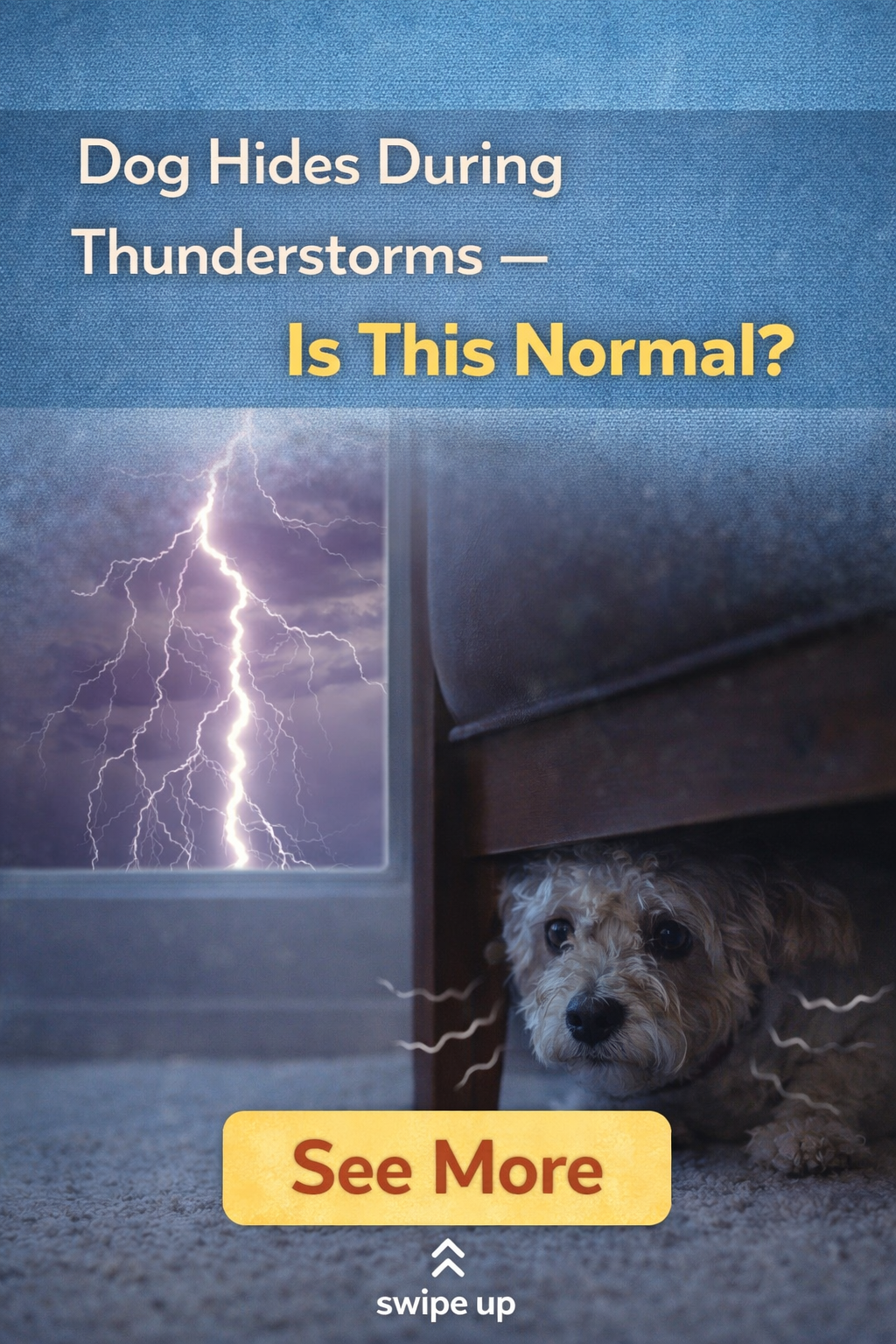
If your dog runs to hide under the bed, in closets, bathrooms, or tight corners during thunderstorms, you’re seeing a very common reaction. While mild fear can be normal, intense or escalating storm avoidance often signals noise anxiety or storm phobia—and it’s something you can help with.
This article explains why dogs hide during storms, when it’s normal vs. concerning, and how to support your dog safely and effectively.
What Storm Hiding Typically Looks Like
You might notice your dog:
-
Hiding in dark, enclosed spaces
-
Trembling, panting, or pacing
-
Clinging to you or avoiding contact
-
Whining or barking
-
Refusing food during storms
-
Starting to hide before thunder begins
👉 Anticipatory fear (hiding before the storm) is an important clue.
Why Dogs Hide During Thunderstorms
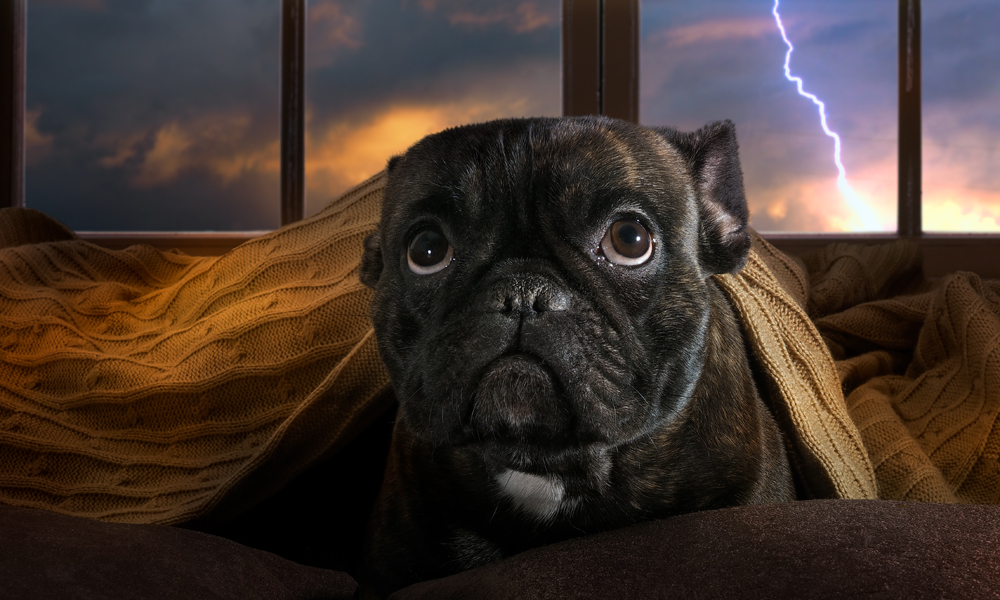
1. Loud, Unpredictable Noise (Most Common)
Dogs hear much better than humans.
-
Thunder is sudden and booming
-
Vibrations travel through floors and walls
-
Unpredictability makes it scarier
Hiding is a natural self-protective response.
2. Static Electricity & Pressure Changes
Storms create:
-
Static buildup in the coat
-
Barometric pressure changes
Some dogs are sensitive to these physical sensations, which start before thunder is audible.
3. Noise Anxiety or Storm Phobia
Repeated exposure can escalate fear.
-
Each storm reinforces anxiety
-
Fear responses grow stronger over time
Without help, mild fear can become severe phobia.
4. Past Traumatic Experiences
A bad storm experience can leave a lasting impression.
-
Power outages
-
Being left alone
-
Loud fireworks mixed with storms
Dogs often generalize fear across similar sounds.
5. Age-Related Changes
Senior dogs may:
-
Hear sounds differently
-
Feel more disoriented
-
Struggle to cope with stress
Storm fear can appear or worsen with age.
When Storm Hiding Is a Red Flag
🚨 Seek professional help if your dog:
-
Panics intensely or for hours
-
Tries to escape doors or windows
-
Destroys property during storms
-
Injures themselves
-
Refuses food for long periods
-
Gets worse with each storm
Severe storm anxiety is not something to wait out.
What You Can Do Right Now
Create a Safe Space
-
Quiet, enclosed area (closet, crate with door open)
-
Familiar bedding and toys
-
Dim lighting
Let your dog choose this space.
Reduce Sensory Input
-
Close curtains and windows
-
Use white noise, fans, or calming music
-
Turn on TV or radio
Stay Calm and Neutral
-
Speak softly
-
Move slowly
-
Avoid frantic reassurance
Your calm helps regulate your dog’s nervous system.
Don’t Force Exposure
❌ Don’t drag your dog out
❌ Don’t punish hiding
❌ Don’t force “bravery”
Forced exposure increases fear.
Long-Term Help That Works
Desensitization & Counterconditioning
-
Gradual exposure to storm sounds at low volume
-
Pairing with high-value rewards
-
Requires patience and consistency
Anxiety Management
-
Predictable routines
-
Mental enrichment
-
Calm walks before storms
Medication (When Needed)
For moderate to severe cases:
-
Short-acting anti-anxiety meds
-
Long-term anxiety support
Medication doesn’t replace training—it makes learning possible.
How Vets Help Storm-Anxious Dogs
Your veterinarian may:
-
Assess anxiety severity
-
Rule out pain or sensory issues
-
Recommend behavior plans
-
Prescribe medication if appropriate
Early help prevents fear from becoming entrenched.
Can Dogs Outgrow Storm Fear?
Rarely—most dogs need guidance and support. The good news: many dogs improve dramatically with the right combination of management, training, and (if needed) medication.
Final Takeaway
If your dog hides during thunderstorms, it’s often normal fear—but intense, escalating, or life-disrupting fear isn’t. Hiding is your dog’s way of coping with something overwhelming.
🐾 By respecting their fear and helping them feel safe, you can turn storms from a crisis into a manageable event.