
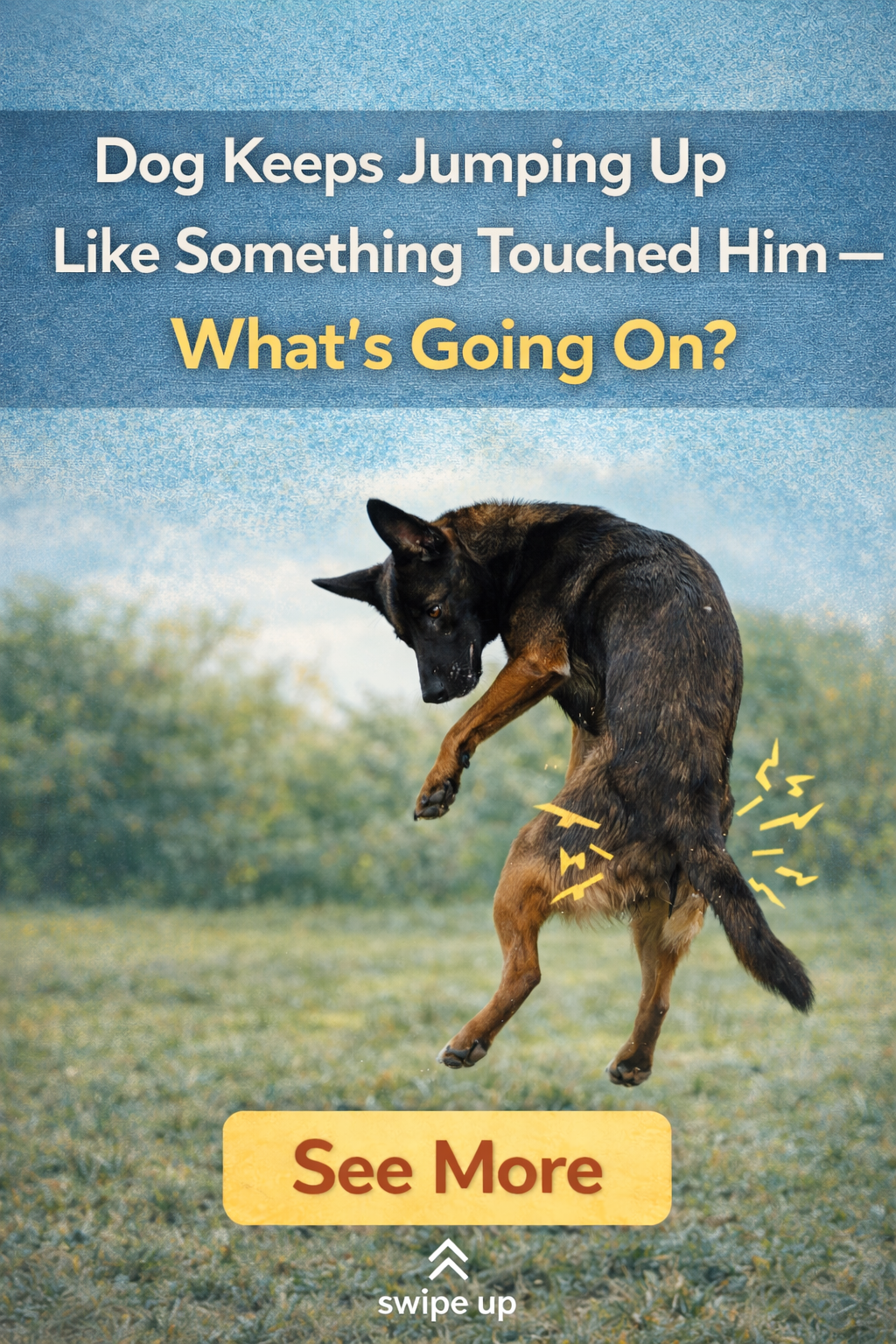
If your dog suddenly jumps, flinches, spins, or bolts as if something brushed against him—but nothing is there, it can be unsettling to watch. This behavior isn’t playful and usually isn’t random. Repeated “phantom touch” reactions often point to skin sensitivity, nerve pain, anxiety, or a neurological issue that deserves attention.
This article explains why dogs jump as if touched, when it’s harmless vs. concerning, and what you should do next.
What Does This Behavior Look Like?
You might see your dog:
-
Jump straight up or sideways suddenly
-
Spin to look at his flank or back
-
Bite or lick at the air or his skin
-
Startle while resting or walking calmly
-
React more when lightly brushed or when nothing touches him
-
Seem tense or on edge between episodes
The key concern is sudden, involuntary reactions—especially if they repeat.
Most Common Causes of “Phantom Touch” Reactions
1. Skin Irritation or Hypersensitivity (Very Common)
Even mild irritation can feel intense to dogs.
-
Fleas or flea allergy dermatitis
-
Dry skin or allergies
-
Contact irritation (grass, detergents)
Dogs may jump or twitch as nerves fire from irritated skin.
2. Pain or Muscle Spasms
Sudden movements can trigger pain.
-
Back or neck pain
-
Muscle spasms
-
Early arthritis
Pain-related jumping often worsens with movement or touch.
3. Canine Hyperesthesia Syndrome (Skin Twitching Syndrome)
⚠️ A recognized condition.
-
Sudden jumping or flinching
-
Rippling skin along the back
-
Tail chasing or frantic behavior
-
Episodes that come and go
Often linked to neurological sensitivity, anxiety, or seizures.
4. Anxiety or Heightened Startle Response
Stressed dogs may be hypervigilant.
-
Sudden movements feel threatening
-
The nervous system is “on edge”
These dogs often have other anxiety signs: pacing, panting, restlessness.
5. Allergies or Inflammation
Chronic inflammation increases nerve sensitivity.
-
Food allergies
-
Environmental allergies
Reactions may be worse at certain times of day or seasons.
6. Neurological Issues (Less Common, More Serious)
⚠️ Consider if episodes are intense or worsening.
-
Focal (partial) seizures
-
Nerve compression
-
Spinal or brain disease
Often paired with staring spells, loss of awareness, or other odd behaviors.
When This Behavior Is a Red Flag
🚨 Contact your vet promptly if your dog:
-
Jumps or startles repeatedly every day
-
Cries, yelps, or shows pain
-
Has skin twitching, tail chasing, or frantic episodes
-
Becomes aggressive or panicked during episodes
-
Shows weakness, limping, or balance changes
-
Has sudden onset with no obvious skin issue
Persistent startle reactions are not something to ignore.
What You Can Do Right Now
-
Check the skin carefully (fleas, redness, sores)
-
Note triggers (time of day, movement, touch, stress)
-
Avoid sudden handling until evaluated
-
Keep your dog calm and rested
-
Record a short video of an episode for your vet
❌ Don’t punish the reaction
❌ Don’t force touching sensitive areas
How Vets Diagnose Sudden Jumping Episodes
Your veterinarian may:
-
Perform a full skin and pain exam
-
Check spine and muscle tenderness
-
Evaluate for allergies
-
Run blood tests
-
Consider neurological screening if needed
Pinpointing the cause leads to targeted, effective treatment.
Can This Be Treated?
Yes—treatment depends on the cause:
-
Skin/allergies: parasite control, anti-inflammatories
-
Pain/muscle issues: pain management, rest
-
Anxiety: routine, behavior support, medication if needed
-
Hyperesthesia/neurological causes: medical management
Many dogs improve significantly once the underlying trigger is addressed.
Final Takeaway
If your dog keeps jumping like something touched him, it’s usually a sign of heightened nerve sensitivity, pain, or anxiety—not imagination. Repeated startle reactions are your dog’s way of saying “something doesn’t feel right.”
🐾 Listening early and getting the right help can bring your dog back to comfort—and calm.