
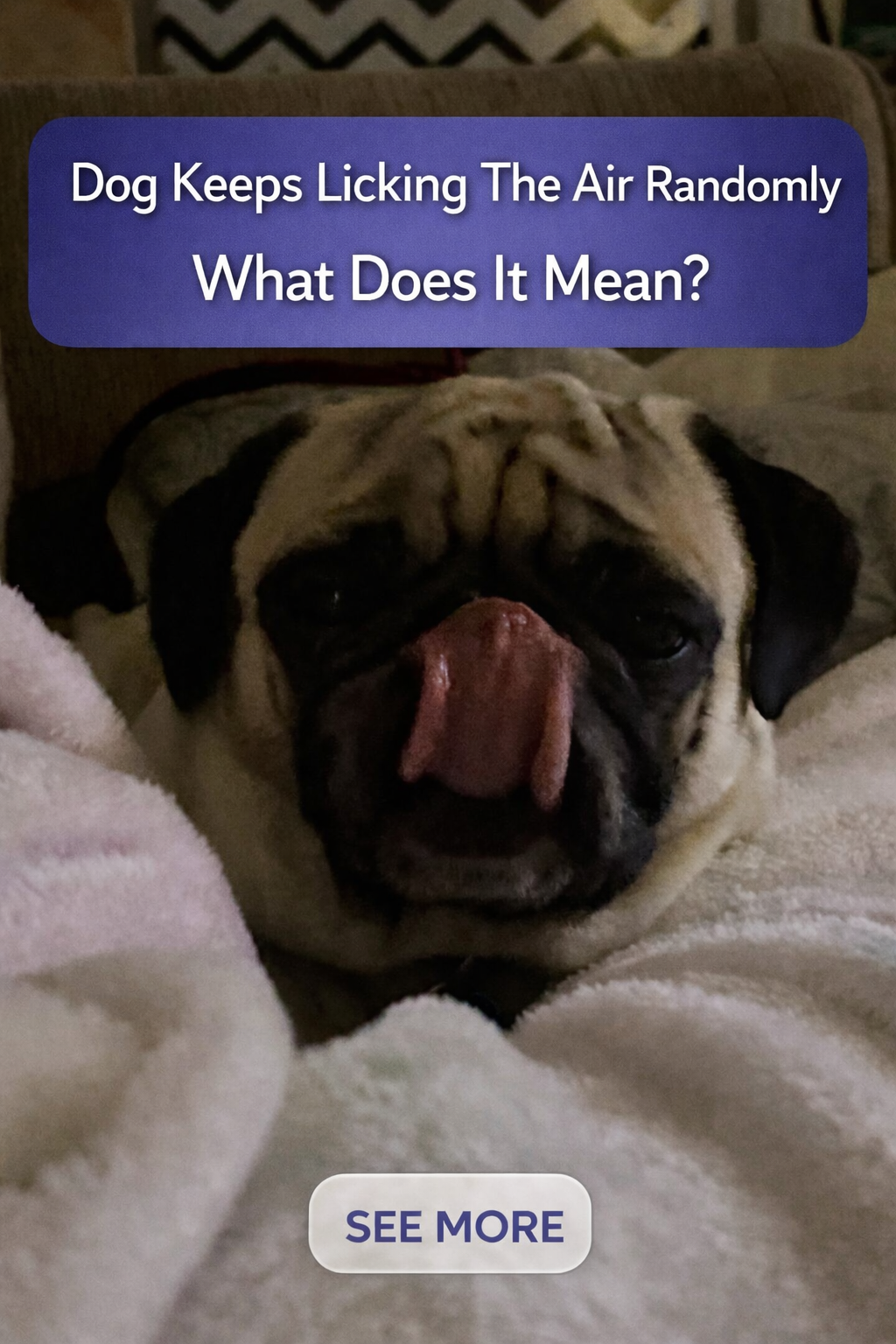
If your dog repeatedly licks the air for no obvious reason, it can look strange—and a little concerning. Occasional lip-licking is normal dog behavior, but frequent, random air licking often signals discomfort, nausea, anxiety, or an underlying medical issue that deserves attention.
This article explains why dogs lick the air, when it’s harmless, when it’s a warning sign, and what you should do next.
What “Air Licking” Usually Looks Like
You may notice your dog:
-
Flicking their tongue in and out repeatedly
-
Licking the air with no food present
-
Smacking lips or swallowing frequently
-
Licking more during rest or at night
-
Stopping suddenly, then starting again
👉 Repetition and randomness are the biggest clues that something isn’t right.
Common Reasons Dogs Lick the Air
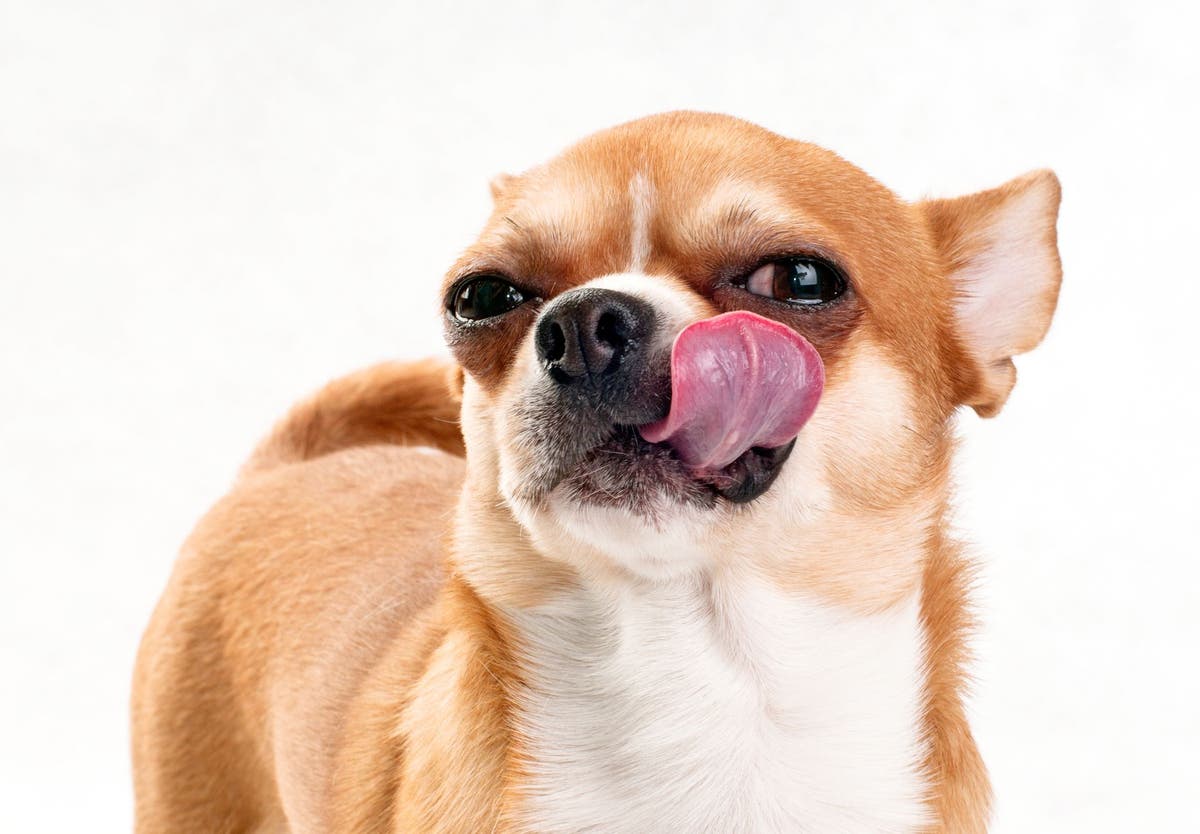
1. Nausea or Acid Reflux (Very Common)
Air licking is a classic sign of stomach upset.
-
Acid reflux
-
Empty stomach nausea
-
Motion sickness
Often paired with:
-
Swallowing
-
Drooling
-
Grass eating
2. Anxiety or Stress
Dogs lick lips to self-soothe.
-
Loud noises
-
New environments
-
Separation anxiety
This type of licking often appears during or after stressful situations.
3. Dental or Oral Discomfort
Pain in the mouth can trigger licking.
-
Tooth decay
-
Gum disease
-
Foreign objects stuck in the mouth
Dogs may lick even when nothing is visible.
4. Gastrointestinal Pain
GI discomfort doesn’t always cause vomiting.
-
Gas
-
Mild inflammation
-
Food intolerance
Air licking may be the only visible symptom.
5. Focal (Partial) Seizures
⚠️ Less common but important.
-
Repetitive licking
-
Staring spells
-
Brief unresponsiveness
Episodes may last seconds to minutes and repeat.
6. Learned or Compulsive Behavior
In some dogs:
-
Licking becomes habitual
-
Often linked to chronic stress
This is more likely if medical causes are ruled out.
When Air Licking Is a Red Flag

🚨 Contact your vet promptly if your dog:
-
Licks the air frequently every day
-
Has episodes that are increasing
-
Seems disoriented or unresponsive
-
Vomits, loses appetite, or loses weight
-
Has bad breath or visible dental issues
-
Is a senior dog with sudden onset
Sudden behavior changes often have a medical cause.
What You Can Do Right Now
Observe Patterns
Note:
-
Time of day
-
Relation to meals
-
Stressful triggers
-
Duration of episodes
Patterns help narrow down the cause.
Check the Mouth (If Safe)
-
Look for redness, swelling, or debris
-
Smell for unusually bad breath
Don’t force the mouth open if your dog resists.
Support the Stomach
-
Feed smaller, more frequent meals
-
Avoid fatty or rich foods
-
Don’t let the stomach stay empty too long
Only change diet with vet guidance.
Reduce Stress
-
Maintain routine
-
Provide calm environments
-
Use enrichment to lower anxiety
How Vets Diagnose Air Licking
Your veterinarian may:
-
Perform oral and dental exams
-
Evaluate GI health
-
Review diet and medications
-
Assess for neurological issues
-
Recommend bloodwork or imaging
Diagnosis focuses on finding the root cause, not just stopping the behavior.
Can This Be Treated?
Yes—treatment depends on cause:
-
Nausea/reflux: diet changes, medication
-
Dental pain: cleaning or treatment
-
Anxiety: behavior plans or medication
-
Neurological issues: further testing and management
Many dogs improve quickly once the issue is identified.
Final Takeaway
If your dog keeps licking the air randomly, it’s not just a quirky habit—it’s often a subtle signal of discomfort or stress. Paying attention early can prevent bigger problems later.
🐾 When behaviors change without explanation, your dog is trying to tell you something. Listening makes all the difference.