
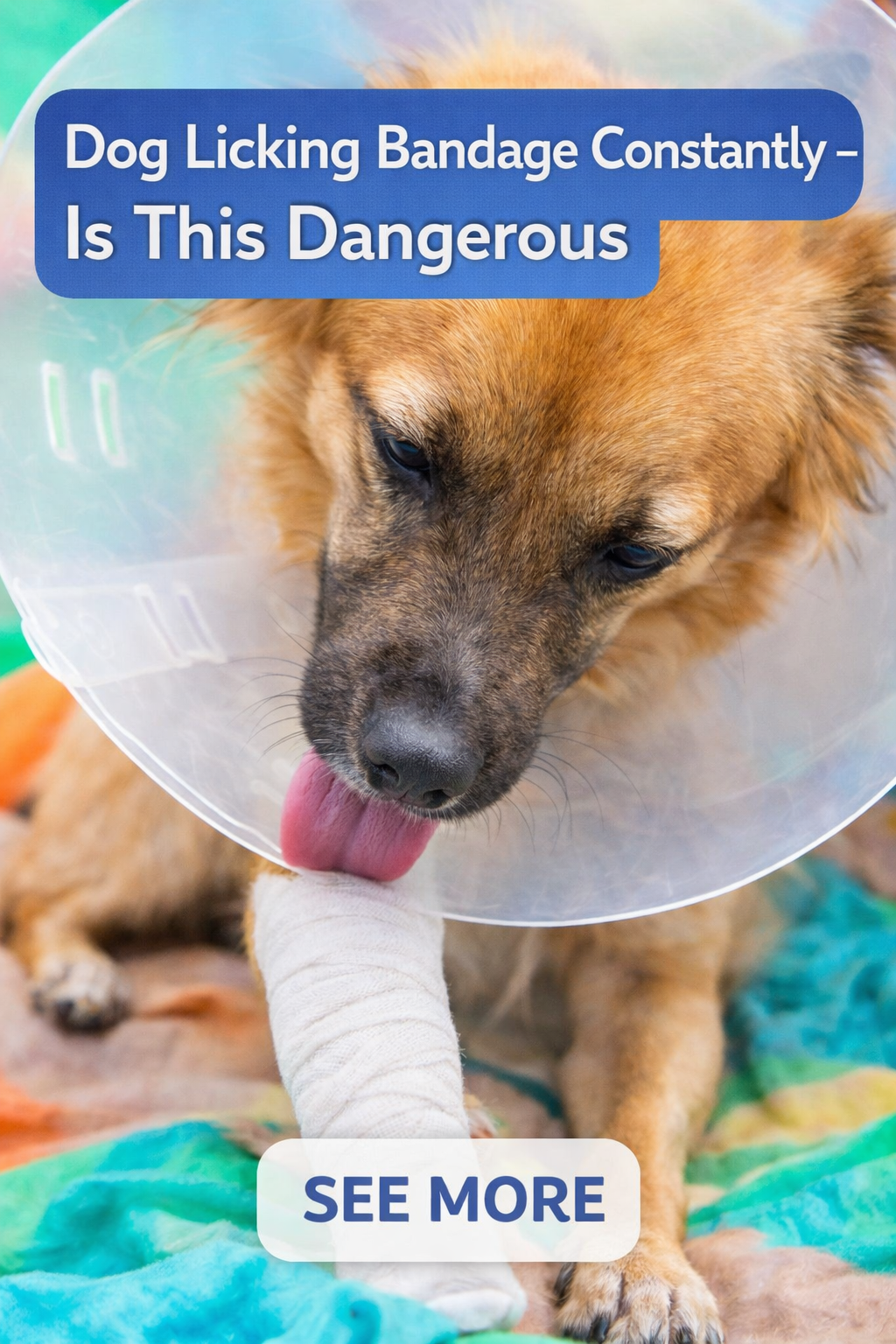
If your dog won’t stop licking, chewing, or nosing at a bandage, it’s more than an annoyance—it can delay healing, introduce infection, and even reopen wounds. While some curiosity is normal, constant bandage licking is a red flag that needs quick action.
This article explains why dogs obsess over bandages, when it’s dangerous, and how to stop it safely so healing can continue.
What Constant Bandage Licking Looks Like
You may notice your dog:
-
Licking the same bandage nonstop
-
Chewing or tugging at tape or wrap
-
Trying to remove the bandage with teeth or paws
-
Becoming restless or anxious around the wrapped area
-
Bandage getting wet, loose, or dirty
👉 Moisture + bacteria = high infection risk.
Why Dogs Lick Bandages So Much

1. Pain or Discomfort (Very Common)
Dogs lick to self-soothe.
-
Surgical pain
-
Tender wounds
-
Bruising under the wrap
If pain isn’t well controlled, licking increases.
2. Itching During Healing
As wounds heal, itching is normal.
-
Dry skin under bandage
-
Hair regrowth
-
Mild inflammation
Unfortunately, licking makes itching worse.
3. Bandage Too Tight, Loose, or Irritating
Improper bandaging can cause:
-
Pressure points
-
Slipping and rubbing
-
Skin irritation
Dogs lick because something doesn’t feel right.
4. Moisture or Trapped Odor
A damp bandage:
-
Smells
-
Feels uncomfortable
-
Attracts attention
Wet wraps should be changed immediately.
5. Anxiety or Boredom
Post-op rest can increase stress.
-
Limited movement
-
Disrupted routine
Repetitive licking releases calming chemicals—making it self-reinforcing.
Why Constant Licking Is Dangerous
Unchecked licking can lead to:
-
Infection
-
Delayed healing
-
Skin breakdown
-
Open wounds
-
Need for repeat surgery
🚨 A wet or chewed bandage is no longer protective.
When Bandage Licking Is an Emergency

🚨 Contact your vet immediately if:
-
The bandage is soaked, slipping, or torn
-
You see redness, swelling, discharge, or bad odor
-
Your dog cries, limps, or shows increased pain
-
Toes above or below the bandage swell or feel cold
-
Your dog removes the bandage completely
Bandage problems can escalate within hours.
What You Can Do Right Now
Prevent Access Immediately
-
Use an E-collar (cone) or recovery collar
-
Consider inflatable collars if approved
-
Supervise closely
Stopping access is priority #1.
Check the Bandage (Don’t Remove Unless Told)
Look for:
-
Wetness
-
Slipping
-
Tightness (check toes for swelling)
If anything looks off, call your vet.
Keep Your Dog Calm
-
Quiet confinement
-
Short leash walks only
-
Enrichment that doesn’t involve movement (food puzzles)
Calm dogs lick less.
Follow Medication Instructions
-
Give pain meds exactly as prescribed
-
Never add human medications
Inadequate pain control = more licking.
How Vets Address Bandage Licking
Your veterinarian may:
-
Replace or rewrap the bandage
-
Adjust padding or fit
-
Prescribe anti-itch or pain relief
-
Recommend stronger protective gear
-
Check for infection
Quick fixes early prevent big setbacks.
Can Dogs Heal Well After This?
Yes—most dogs heal normally once:
-
Licking is blocked
-
Bandage fit is corrected
-
Pain and itch are controlled
The key is early intervention.
Final Takeaway
If your dog is licking a bandage constantly, it’s not misbehavior—it’s communication. Whether it’s pain, itch, anxiety, or a bandage problem, your dog is telling you something needs attention.
🐾 Protect the bandage, protect the wound, and don’t hesitate to call your vet—healing depends on it.