
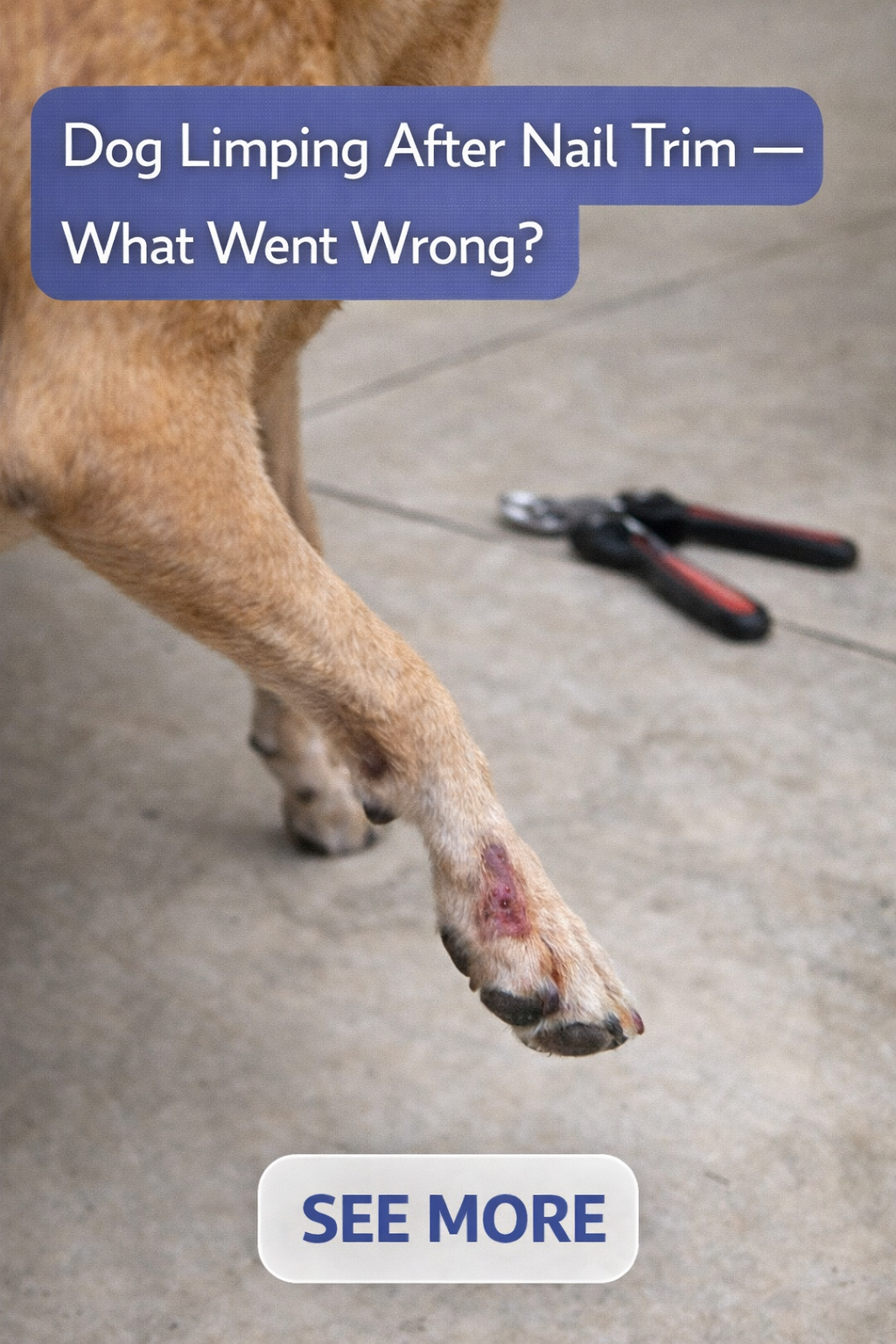
If your dog starts limping right after a nail trim, it’s alarming—and understandably so. While nail trimming is routine, even a small mistake can cause pain, bleeding, or inflammation that makes walking uncomfortable. The good news: most cases are minor and fixable, but a few situations need prompt care.
This article explains why dogs limp after nail trims, how to tell mild soreness from a real injury, and what to do right now.
What This Limping Usually Looks Like
You might notice your dog:
-
Favoring one paw immediately after trimming
-
Holding a paw up or walking on three legs
-
Licking or chewing at a specific nail
-
Hesitating to put weight on the foot
-
Whimpering when the paw is touched
👉 Timing matters: limping that starts right after trimming usually points to a nail or paw issue.
Common Reasons Dogs Limp After a Nail Trim

1. The Quick Was Cut (Most Common)
The “quick” is the sensitive tissue inside the nail.
-
Causes pain and bleeding
-
Even if bleeding stops, soreness can last 1–3 days
Dogs often limp to avoid pressure.
2. Nail Trimmed Too Short
Even without visible bleeding:
-
Exposed nail bed becomes tender
-
Pressure on hard floors hurts
This can cause short-term limping.
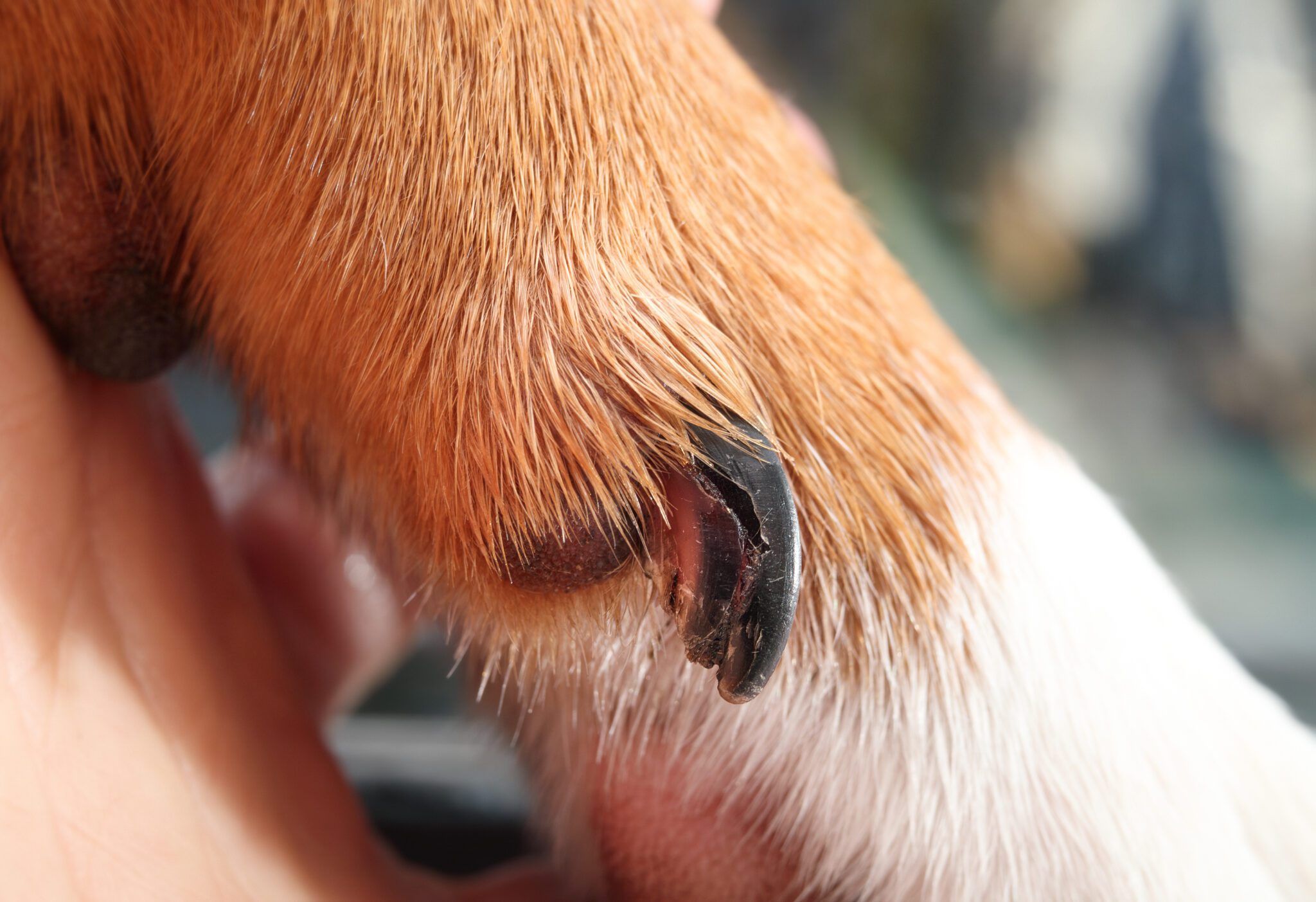
3. Nail Cracked or Split
Clipping can create:
-
Micro-cracks
-
Splits extending into the nail
These are painful and worsen with walking.
4. Paw Pad Irritation or Handling Strain
During trimming:
-
Toes may be bent awkwardly
-
Arthritic or sensitive dogs may strain joints
Senior dogs are especially prone.
5. Anxiety-Related Overreaction
Some dogs:
-
Associate trimming with fear
-
Limp briefly due to stress, not injury
This usually resolves quickly once calm.
When Limping After a Nail Trim Is a Red Flag
🚨 Contact your vet or groomer promptly if your dog:
-
Limping lasts more than 48 hours
-
Bleeding won’t stop or restarts
-
Paw becomes swollen, hot, or red
-
There’s discharge or bad odor
-
Your dog cries when the paw is touched
-
Refuses to walk at all
These signs may indicate infection, deeper injury, or a fracture.
What You Should Do Right Now
1. Check the Paw Carefully
Look for:
-
Fresh bleeding
-
Cracked or jagged nail edges
-
Swelling between toes
Use good lighting; be gentle.
2. Control Bleeding (If Present)
-
Apply styptic powder or cornstarch
-
Hold gentle pressure for several minutes
Do not keep re-checking—this restarts bleeding.
3. Protect the Paw
-
Limit running and jumping
-
Walk on soft surfaces
-
Keep the paw clean and dry
4. Stop Licking
-
Use an E-collar if needed
-
Licking delays healing and introduces bacteria
5. Avoid Home Medications
❌ No human pain relievers
❌ No peroxide soaking unless advised
If pain seems significant, call your vet.
How Vets Treat Nail-Trim Injuries
Your veterinarian may:
-
Smooth or trim damaged nail edges
-
Treat infection if present
-
Prescribe pain relief or antibiotics
-
Apply a protective bandage
Most dogs feel much better within a day or two.
Can This Be Prevented Next Time?
Yes:
-
Trim small amounts frequently
-
Use a grinder for dark nails
-
Keep nails slightly longer if your dog is sensitive
-
Ask a groomer or vet for help if unsure
-
Condition your dog slowly to trims
Final Takeaway
If your dog is limping after a nail trim, it’s usually due to a sore or injured nail, not stubbornness. Most cases are mild—but persistent pain, swelling, or bleeding shouldn’t be ignored.
🐾 Gentle care now helps your dog trust future trims—and keeps small problems from becoming big ones.