
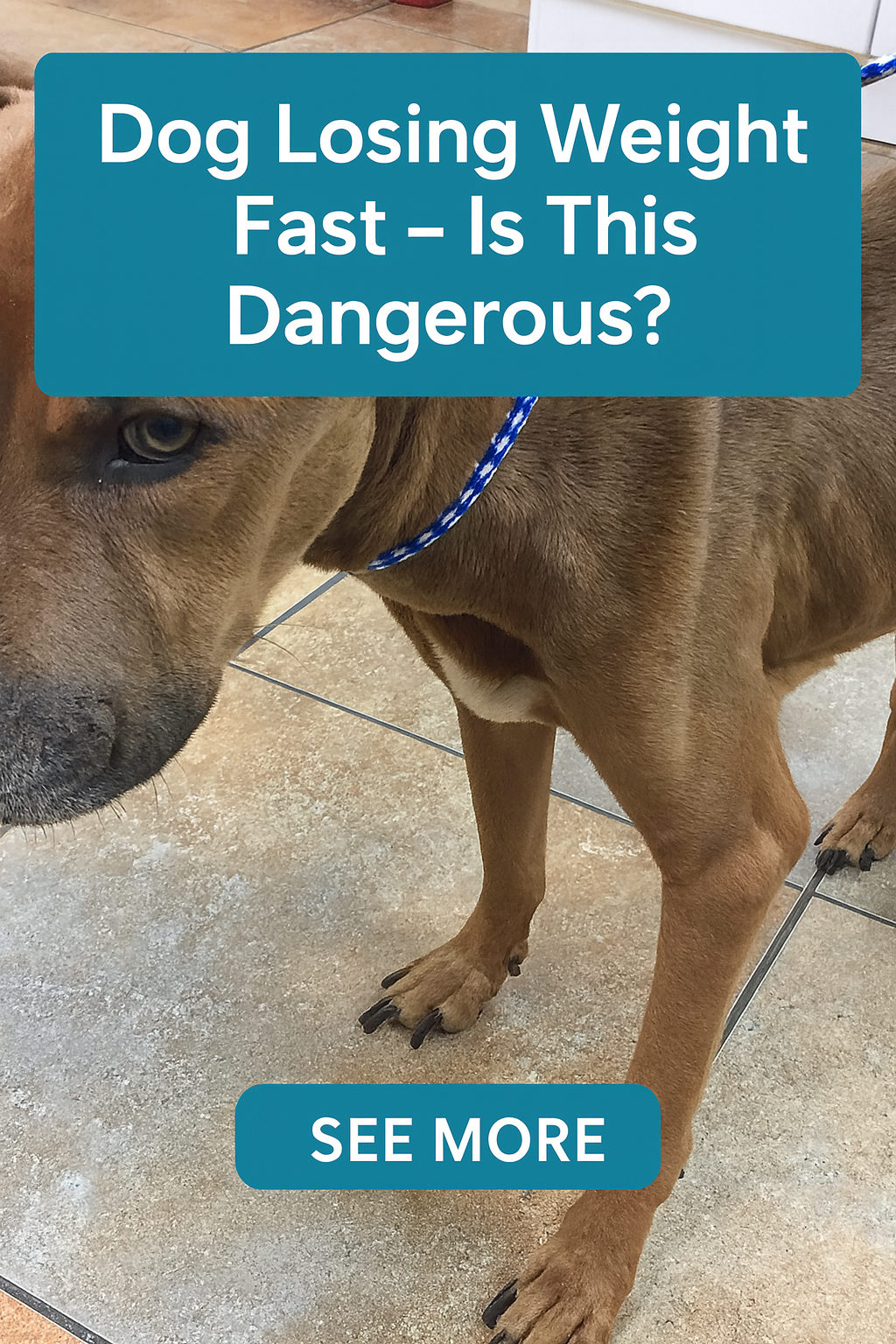
If your dog is losing weight quickly without dieting, it’s a serious red flag. Sudden or rapid weight loss is not normal and often signals an underlying health problem that needs prompt attention. While mild fluctuations can happen, visible weight loss over days or weeks is never something to ignore.
This article explains why dogs lose weight rapidly, when it’s dangerous, what conditions may be involved, and what you should do right now.
What Counts as “Rapid Weight Loss” in Dogs?
You may notice:
-
Ribs, spine, or hip bones becoming visible
-
A slimmer waist appearing quickly
-
Muscle loss in the back legs or shoulders
-
Clothes/harness fitting looser
-
Weight loss despite normal or increased appetite
👉 Any noticeable weight loss within 2–4 weeks is concerning, especially if your dog isn’t on a diet.
Most Common Causes of Rapid Weight Loss

1. Gastrointestinal Problems
Issues that affect digestion or absorption:
-
Parasites (worms, giardia)
-
Chronic diarrhea
-
Inflammatory bowel disease (IBD)
Dogs may eat normally but fail to absorb nutrients.
2. Metabolic or Hormonal Diseases
⚠️ Very common causes of fast weight loss.
-
Diabetes mellitus (often with increased thirst/urination)
-
Hyperthyroidism (rare but possible)
-
Addison’s disease
These conditions disrupt how the body uses energy.
3. Kidney or Liver Disease
Chronic organ disease often causes:
-
Gradual or sudden weight loss
-
Decreased appetite or nausea
-
Increased drinking and urination
Weight loss can be an early warning sign.
4. Cancer
⚠️ One of the most serious possibilities.
-
Rapid weight and muscle loss
-
Normal or reduced appetite
-
Lethargy
Cancer-related weight loss can happen even before other symptoms appear.
5. Dental Disease or Pain
Painful mouths cause dogs to:
-
Eat less
-
Chew poorly
-
Drop food
This is especially common in senior dogs.
6. Stress, Anxiety, or Environmental Changes
Stress can suppress appetite or increase calorie burn:
-
New home
-
New pets or family members
-
Separation anxiety
When Weight Loss Is an Emergency

🚨 Seek veterinary care immediately if weight loss is paired with:
-
Loss of appetite
-
Vomiting or diarrhea
-
Lethargy or weakness
-
Excessive thirst or urination
-
Pale gums
-
Coughing or breathing issues
-
Sudden behavior changes
Rapid weight loss can become life-threatening if untreated.
What You Should Do Right Now
-
Weigh your dog weekly (daily if very thin)
-
Review food intake (amount, brand, appetite changes)
-
Check for additional symptoms
-
Schedule a vet visit as soon as possible
❌ Don’t wait for more weight loss
❌ Don’t just switch foods repeatedly
❌ Don’t assume “aging” is the cause
How Vets Diagnose Rapid Weight Loss
Your veterinarian may recommend:
-
Full physical exam
-
Blood tests (organ function, hormones)
-
Urinalysis
-
Fecal testing
-
Imaging (X-rays or ultrasound)
Early testing often leads to much better outcomes.
Can Dogs Recover From Rapid Weight Loss?
Yes—many dogs regain weight and strength once the cause is treated.
-
Parasites and infections are often easily treated
-
Metabolic diseases can be managed
-
Early-stage organ disease responds better to intervention
The key factor is how quickly you act.
Final Takeaway
If your dog is losing weight fast, it’s dangerous until proven otherwise. Weight loss is one of the clearest signs that something inside the body isn’t working as it should.
🐾 Your dog can’t tell you they’re unwell—but rapid weight loss is their body speaking loudly. Listening early can save their life.