
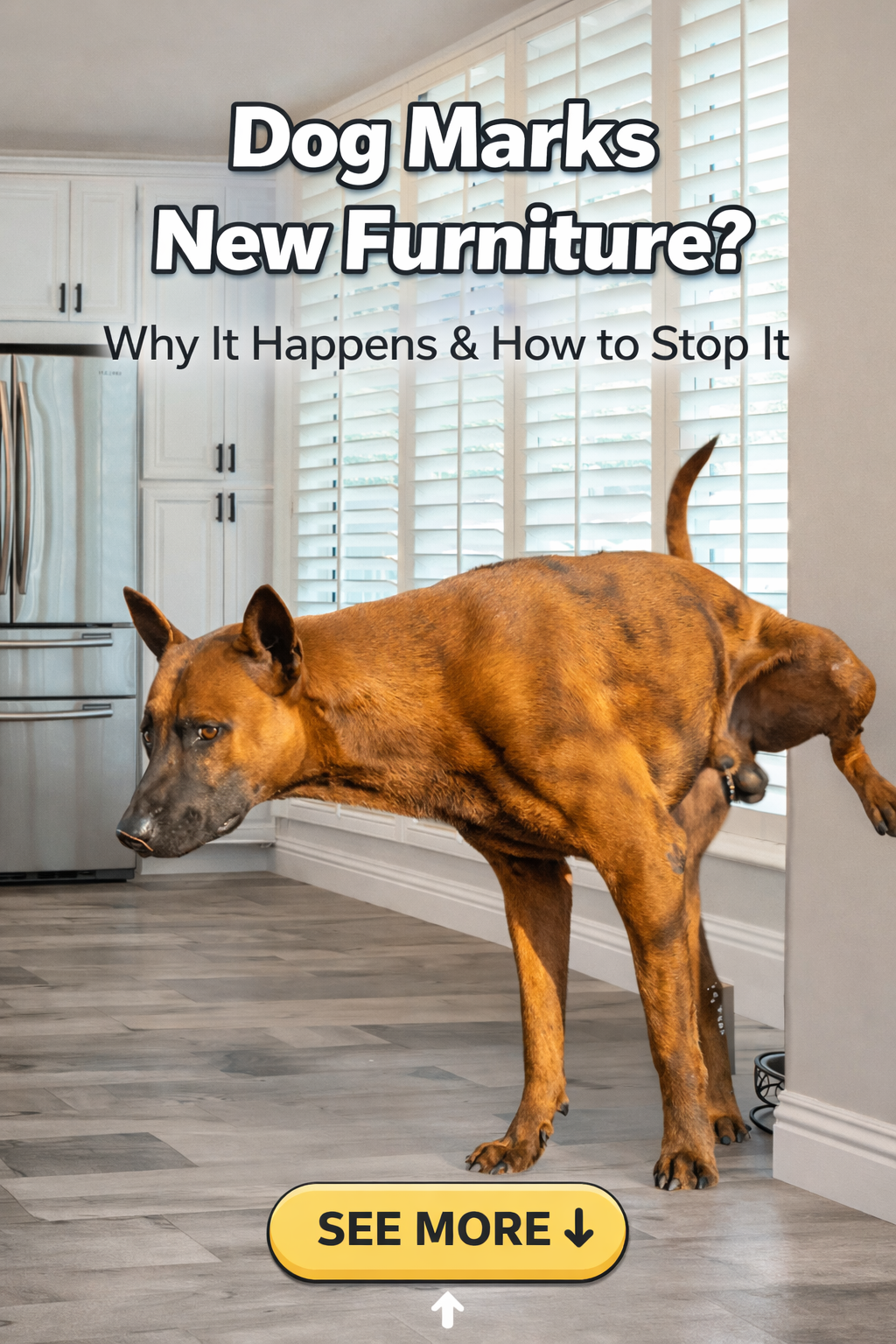
If your dog pees small amounts on new furniture, corners, or recently delivered items, this is urine marking, not a house-training failure. New furniture smells unfamiliar and can trigger a dog’s instinct to claim, investigate, or reduce uncertainty.
The good news: marking is very fixable with the right mix of management, cleaning, and training.
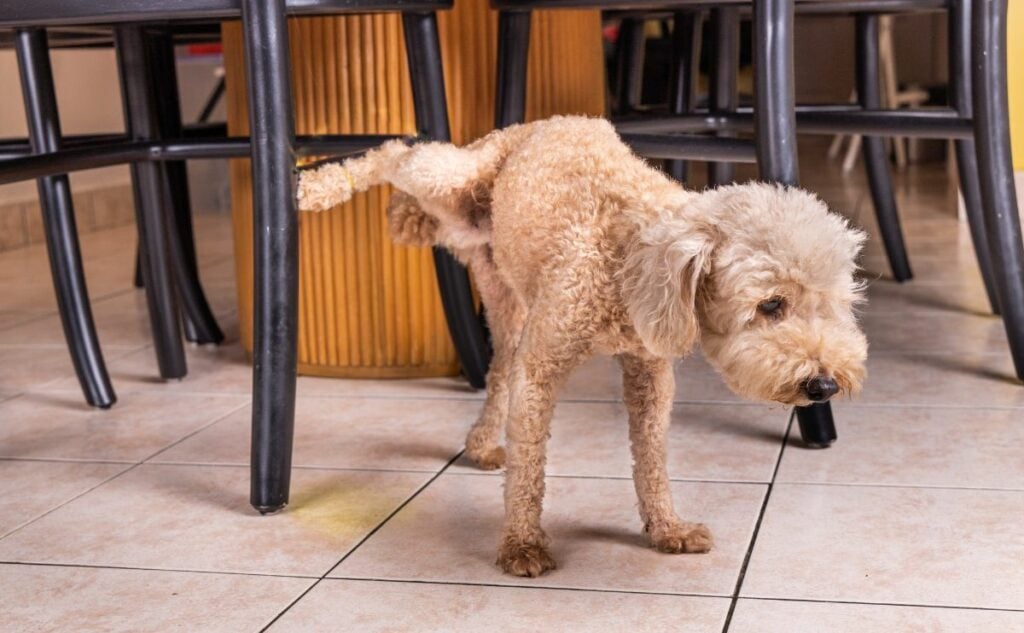
What Furniture Marking Looks Like
You may notice:
-
Small, targeted spots (not full bladder empties)
-
Marking on brand-new items or rearranged rooms
-
Lifting a leg or quick squats
-
Repeats on the same object
👉 Small amounts + specific targets = marking, not accidents.
Why Dogs Mark New Furniture
1. Novel Scents Trigger Territory Behavior (Most Common)
New furniture carries:
-
Factory odors
-
Delivery scents
-
Other people’s smells
Marking says, “This belongs here—now it smells like me.”
2. Stress or Change
Changes like:
-
New furniture
-
Rearranged rooms
-
Guests or moves
can raise anxiety, increasing marking.
3. Hormones (Sometimes)
Intact males mark more, but:
-
Neutered males can mark
-
Females can mark too
Hormones amplify—don’t usually cause it alone.
4. Learned Habit
If marking ever went unnoticed:
-
No interruption
-
No cleanup with enzyme cleaner
the behavior sticks.
5. Incomplete House-Training Generalization
Some dogs are clean in familiar areas but need help learning that new objects are also off-limits.
What NOT to Do
❌ Don’t scold after the fact
❌ Don’t rub noses in it
❌ Don’t use ammonia cleaners (smells like urine to dogs)
❌ Don’t assume it’s “spite”
Punishment increases anxiety—and more marking.
How to Stop Marking on New Furniture (Step by Step)

1. Clean Properly (Critical)
-
Use an enzymatic urine cleaner
-
Soak per instructions
-
Repeat if needed
If your dog can smell it, they’ll re-mark.
2. Manage Access Temporarily
-
Block the room
-
Cover furniture
-
Keep the dog leashed indoors during transitions
Prevention beats correction.
3. Increase Potty Breaks
Especially during:
-
First 48–72 hours with new furniture
-
After meals, play, or naps
Reward outdoor marking only.
4. Interrupt In the Moment
If you catch the start:
-
Calm “uh-uh”
-
Immediately go outside
-
Praise and reward for finishing outdoors
Timing matters.
5. Reduce Stress Around Change
-
Keep routines steady
-
Add enrichment (sniff walks, puzzles)
-
Use calm greetings
Less stress = less marking.
6. Consider Belly Bands (Short-Term Tool)
For males:
-
Belly bands can protect furniture
-
Use with training, not as the only solution
When to See the Vet
📞 Check with your vet if:
-
Marking started suddenly
-
There’s frequent urination or straining
-
Urine smells strong or has blood
-
Your dog drinks excessively
Rule out UTIs or medical causes.
Will This Stop for Good?
Yes—very often.
When:
-
Scent is fully removed
-
Access is managed during change
-
Calm outdoor marking is reinforced
Most dogs stop marking new items within 1–2 weeks.
Final Takeaway
Dogs mark new furniture to make unfamiliar things feel familiar. It’s not misbehavior—it’s communication. With proper cleaning, supervision, and calm structure, marking fades fast.
🐾 To your dog, new furniture smells confusing. Help it smell like “home,” not a battleground.