
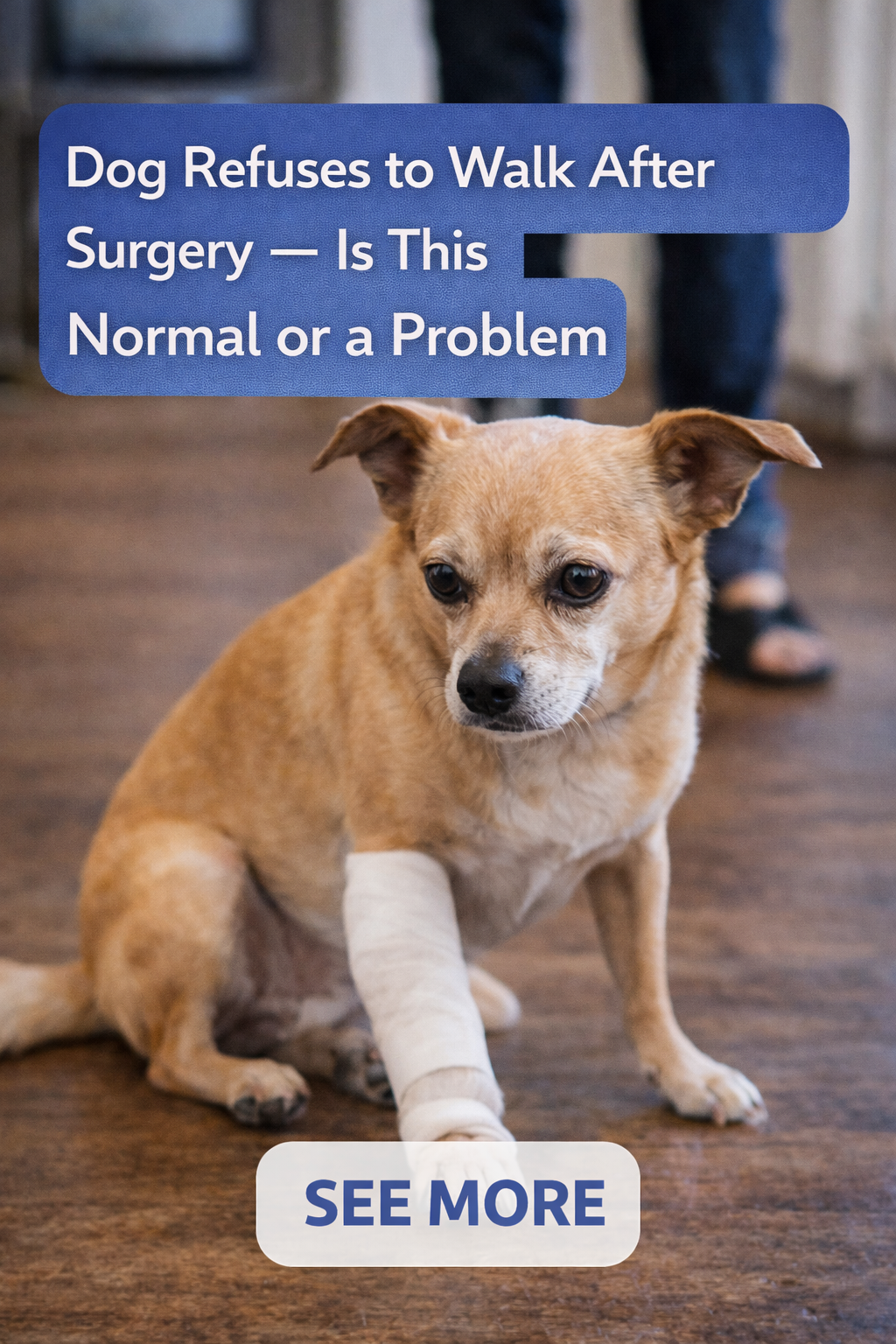
If your dog refuses to walk, stands stiffly, or won’t put weight on their legs after surgery, it’s completely understandable to feel worried. In many cases, this behavior can be part of normal post-operative recovery, but it can also signal pain, complications, or fear that should not be ignored.
This article explains why dogs may refuse to walk after surgery, what’s normal vs. concerning, and what you should do to help your dog recover safely.
What Does “Refusing to Walk” Look Like?
You might notice your dog:
-
Won’t stand up or takes only a few steps
-
Cries, shakes, or pants when trying to move
-
Drags or avoids using one leg
-
Lies down immediately after standing
-
Seems fearful or confused when encouraged to walk
👉 The timing after surgery and progression (better or worse) are key clues.
Common Reasons Dogs Won’t Walk After Surgery

1. Anesthesia Effects (Very Common in First 12–24 Hours)
Residual anesthesia can cause:
-
Weakness or wobbliness
-
Disorientation
-
Poor coordination
Most dogs improve steadily within 24 hours.
2. Pain or Discomfort
Pain is the most common reason dogs avoid walking.
-
Surgical site soreness
-
Muscle stiffness
-
Abdominal or joint pain
Dogs may freeze or refuse movement to avoid discomfort.
3. Fear or Stress
After surgery, dogs may:
-
Feel unfamiliar sensations
-
Be confused by cones, bandages, or pain
Fear alone can make a dog refuse to move—even if physically able.
4. Incision Sensitivity
Movement can stretch the incision.
-
Especially after abdominal, orthopedic, or spinal surgery
-
Dogs may associate walking with pulling or pain
5. Nerve Blocks or Temporary Numbness
Some surgeries use local nerve blocks.
-
Legs may feel “dead” or weak
-
Dogs may avoid stepping until sensation returns
This typically resolves within hours to a day.
6. Surgical Complications (Less Common, More Serious)
⚠️ Must be ruled out if symptoms worsen.
-
Excessive swelling or bleeding
-
Infection
-
Nerve injury
-
Internal pain
What’s Normal vs. Not Normal After Surgery
✅ Usually Normal
-
Mild reluctance to walk the first day
-
Slow, careful steps
-
Sleeping more than usual
-
Gradual improvement each day
🚨 Concerning
-
Refusal to walk beyond 24–48 hours
-
Crying, yelping, or trembling in pain
-
Sudden worsening instead of improvement
-
Dragging legs or loss of balance
-
Swelling, heat, or discharge at incision
-
Not eating or drinking
When to Contact the Vet Immediately
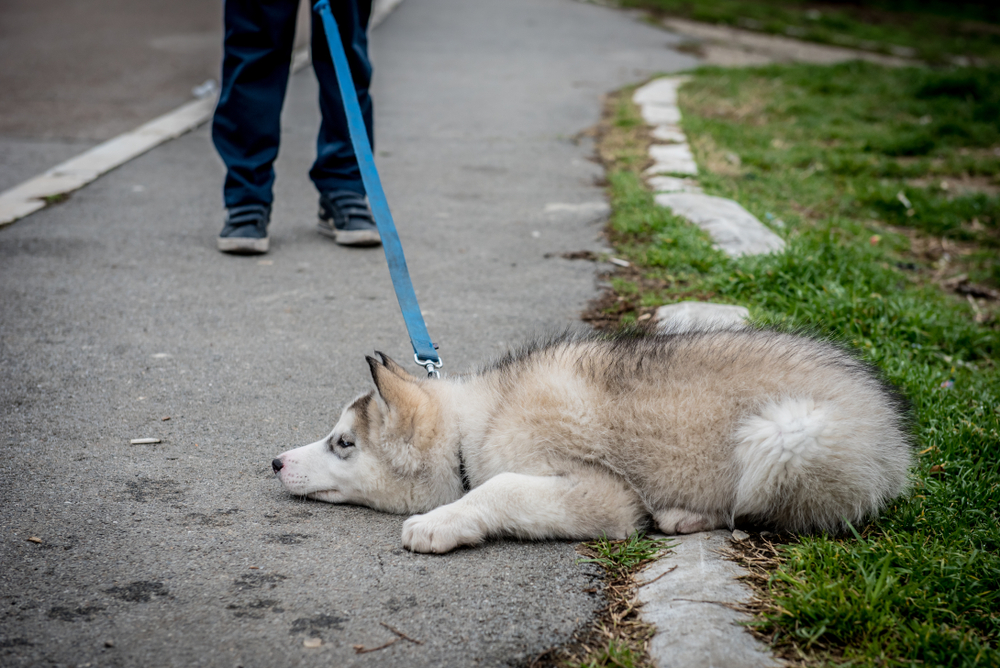
🚨 Call your veterinarian right away if your dog:
-
Cannot stand at all
-
Screams or cries when moving
-
Has bleeding, oozing, or severe swelling
-
Appears weak, pale, or unresponsive
-
Loses bladder or bowel control
Post-surgical complications can escalate quickly.
What You Can Do Right Now
Support Gentle Movement
-
Use a sling or towel under the belly
-
Encourage short, slow bathroom trips only
-
Walk on non-slip surfaces
Manage Pain Properly
-
Give pain meds exactly as prescribed
-
Never give human pain medication
If pain control seems inadequate, call your vet.
Create a Calm Recovery Space
-
Quiet, warm, confined area
-
Easy access to water
-
Minimal stairs or jumping
Check the Incision Daily
Look for:
-
Redness or swelling
-
Heat
-
Discharge or opening
How Vets Evaluate Post-Surgery Walking Issues
Your veterinarian may:
-
Assess pain and mobility
-
Check the incision and swelling
-
Adjust pain medication
-
Evaluate nerve or muscle function
-
Perform imaging if needed
Early intervention prevents long-term recovery issues.
Can Dogs Recover Fully After This?
Yes—most dogs regain normal movement once:
-
Pain is well controlled
-
Anesthesia fully wears off
-
Fear and stiffness resolve
Recovery timelines vary by surgery type, age, and health—but progress should be gradual and steady.
Final Takeaway
If your dog refuses to walk after surgery, it can be normal in the short term—but persistent refusal, worsening pain, or sudden changes are not. Your dog isn’t being stubborn; they’re responding to discomfort, confusion, or a potential complication.
🐾 Trust your instincts. When recovery doesn’t feel right, a quick call to your vet can make all the difference.