
If your dog used to wag happily but now keeps their tail still, low, or tucked, it can absolutely be a sign of pain or discomfort—though not always. A sudden change in tail movement is meaningful because tail wagging is closely tied to emotion, confidence, and physical comfort.
Here’s how to tell when a non-wagging tail is normal, when it suggests pain, and what to do next.
What “Stopped Wagging” Usually Looks Like
You might notice:
-
Tail held low or tucked
-
Very stiff tail with minimal movement
-
Tail only wags briefly or not at all
-
Dog avoids sitting or turning
-
Change in mood or interaction
👉 A change from your dog’s normal baseline is the biggest clue.
When a Still Tail Suggests Pain

1. Tail or Lower Back Injury
Pain may come from:
-
A strained tail (“limber tail syndrome”)
-
Bruising from play or slipping
-
Lower back or hip pain
Signs include:
-
Tail hanging straight down
-
Pain when touched
-
Difficulty sitting or getting up
This is very common after intense activity or cold exposure.
2. Anal Gland Problems
Dogs with full or infected anal glands may:
-
Hold tail still or tucked
-
Avoid wagging
-
Scoot or lick the rear
This causes pressure and pain at the tail base.
3. Spinal or Hip Pain
Back-end discomfort can limit tail movement.
Watch for:
-
Stiff walking
-
Reluctance to jump
-
Slow posture changes
4. General Illness or Fever
Dogs feeling unwell may:
-
Move less overall
-
Stop wagging
-
Seem withdrawn
This is the body conserving energy.
When It’s Emotional, Not Physical
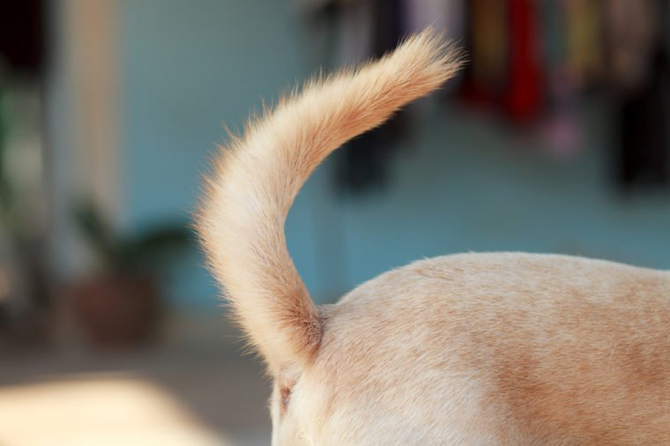
5. Fear, Anxiety, or Stress
A dog may stop wagging when:
-
Scared or overwhelmed
-
In a new environment
-
Around unfamiliar people or dogs
Fear-based tail stillness is often paired with:
-
Ears back
-
Lip licking
-
Avoidance
6. Aging Changes
Senior dogs may wag less due to:
-
Reduced mobility
-
Arthritis
-
Lower energy
Gradual change is more typical of aging.
How to Tell Pain vs Emotion (Quick Guide)
| More Likely Pain | More Likely Emotion |
|---|---|
| Tail stiff or painful to touch | Tail relaxed but low |
| Avoids sitting or movement | Tail lifts in safe settings |
| Change happened suddenly | Happens only in certain places |
| Other pain signs present | Dog otherwise playful |
What You Should Do Right Now
-
Observe when the tail stops wagging (always vs situational)
-
Gently check for swelling or sensitivity at the tail base
-
Watch for other pain signs (limping, stiffness, appetite loss)
-
Do not force tail movement
When to See the Vet
📞 Schedule a visit if:
-
Tail stiffness appeared suddenly
-
Your dog seems painful or withdrawn
-
There’s difficulty sitting, walking, or jumping
-
Tail is limp, cold, or immobile
🚨 Urgent if:
-
Tail is completely limp and painful
-
There’s loss of bowel/bladder control
-
Your dog yelps when moving
Treatment Depends on the Cause
May include:
-
Rest and anti-inflammatory medication
-
Anal gland treatment
-
Pain management
-
Physical therapy
Most tail-related issues improve quickly once treated.
Final Takeaway
A dog who stops wagging their tail is communicating something—often discomfort, sometimes fear, occasionally illness. Sudden changes deserve attention, especially if paired with other signs.
🐾 Tail silence is still communication. Listen closely.