
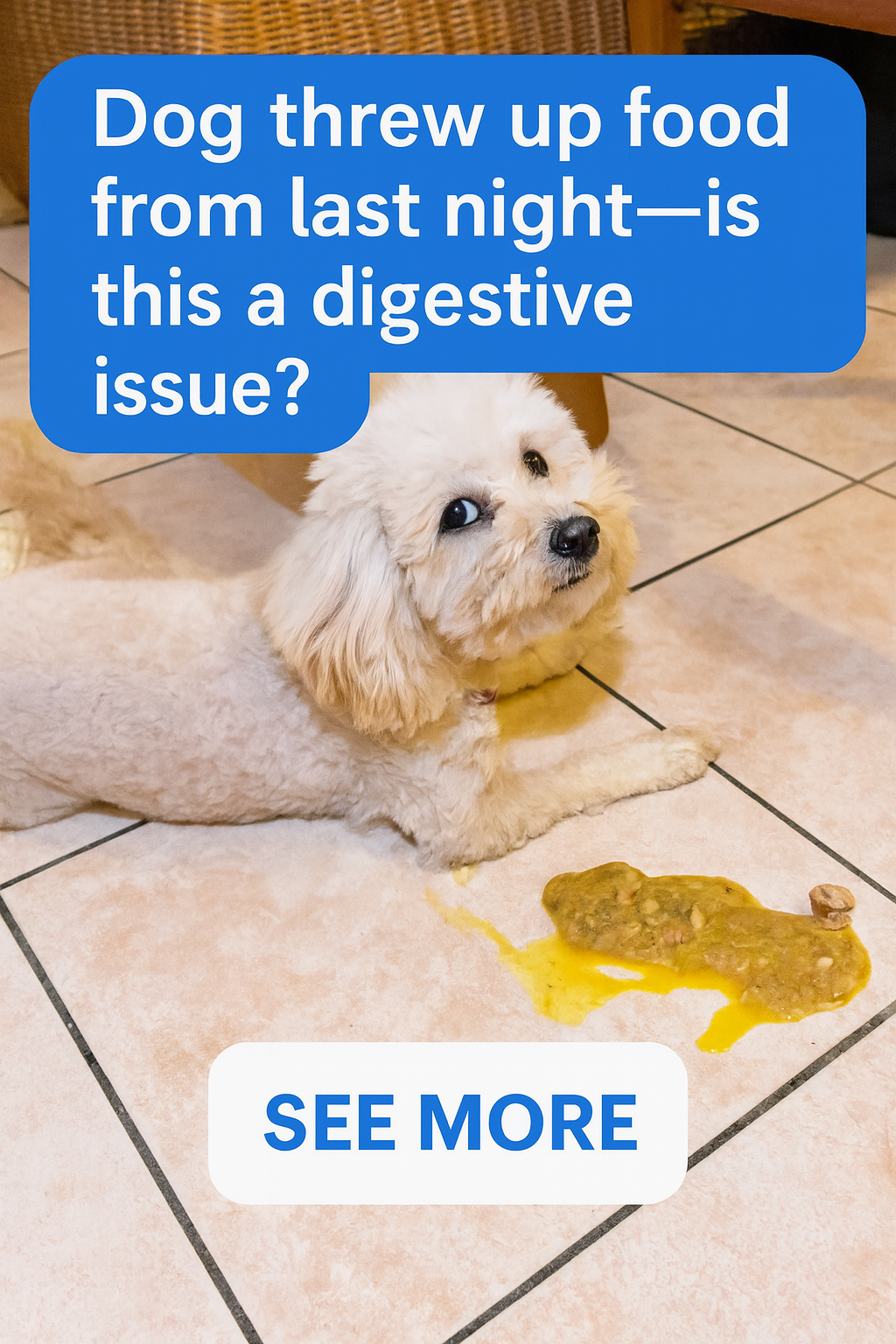
Finding a pile of undigested food hours after your dog ate—especially from last night—can be alarming. Many owners immediately wonder if something is seriously wrong with their dog’s digestion. Sometimes it’s mild and temporary… but other times, it’s a sign of delayed stomach emptying or an underlying health problem.
This article explains why dogs vomit undigested food hours later, what it means, when to worry, and what to do next.
What Does “Vomiting Last Night’s Food” Mean?
This usually looks like:
-
Whole or mostly intact kibble
-
Minimal bile or liquid
-
Food that looks barely digested
-
Vomiting occurring 6–10+ hours after eating
This is different from regurgitation right after meals—and it matters.
Common Reasons Dogs Vomit Undigested Food Hours Later

1. Delayed Gastric Emptying
This is one of the most common causes.
-
Food sits in the stomach too long
-
Eventually triggers vomiting
-
Can happen due to inflammation, stress, or illness
It often causes vomiting late at night or early morning.
2. Acid Reflux or Overnight Stomach Irritation
Dogs with reflux may:
-
Vomit undigested food or foam
-
Gag or lick lips before vomiting
-
Be worse when lying down overnight
This is more common in:
-
Senior dogs
-
Dogs fed one large evening meal
3. Eating Too Fast
Dogs that gulp food may:
-
Swallow air
-
Poorly break down food
-
Vomit intact kibble hours later
This can happen even if the vomiting isn’t immediate.
4. Mild Gastritis (Stomach Inflammation)
Triggered by:
-
Table scraps
-
Fatty foods
-
Sudden diet changes
-
Garbage eating
Gastritis slows digestion and irritates the stomach lining.
5. Stress or Anxiety
Stress affects digestion more than most people realize.
-
Boarding
-
Schedule changes
-
Loud noises overnight
Stress can delay digestion and cause morning vomiting.
When Vomiting Undigested Food Is a Red Flag

🚨 See a vet promptly if your dog:
-
Vomits undigested food repeatedly
-
Stops eating or drinking
-
Becomes lethargic or withdrawn
-
Has diarrhea or abdominal pain
-
Vomits more than once in 24 hours
-
Is a puppy, senior, or small breed
⚠️ Persistent vomiting can indicate obstruction, pancreatitis, or systemic illness.
What You Can Do Right Now (If Your Dog Seems Otherwise Normal)
✅ Withhold food for 8–12 hours (not puppies)
✅ Offer small sips of water
✅ Resume with small, bland meals
✅ Feed earlier in the evening
✅ Consider splitting meals into smaller portions
❌ Don’t give human antacids
❌ Don’t immediately switch foods
❌ Don’t ignore repeat episodes
Regurgitation vs. Vomiting (Important Difference)
Vomiting
-
Active retching
-
Abdominal movement
-
Nausea signs beforehand
Regurgitation
-
Passive
-
Food comes up effortlessly
-
Often shortly after eating
Vomiting undigested food hours later is more concerning than regurgitation.
How Vets Diagnose the Cause
Your vet may recommend:
-
Physical exam
-
Dietary review
-
Blood work
-
X-rays or ultrasound (if obstruction suspected)
Early diagnosis prevents complications.
Can This Be Prevented?
Often, yes—once the cause is identified:
-
Smaller, more frequent meals
-
Elevated feeding bowls (if recommended)
-
Slow-feeder bowls
-
Managing stress and routine
-
Treating reflux or inflammation
Final Takeaway
If your dog threw up food from last night, it’s often a sign of delayed digestion or stomach irritation. One isolated episode may not be serious—but repeated vomiting should never be ignored.
🐾 Your dog’s stomach shouldn’t still be holding food hours later. When it is, something deserves a closer look.