
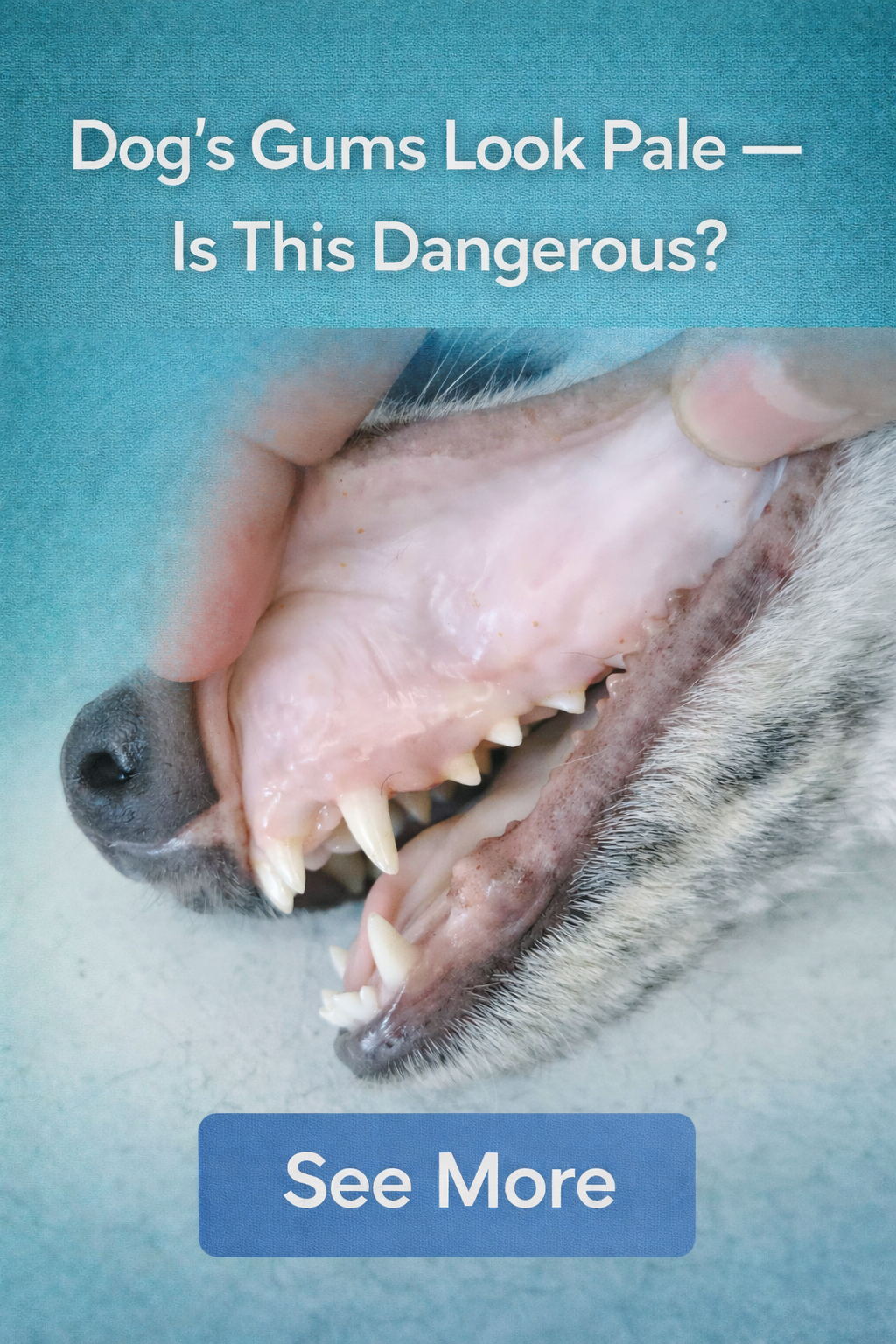
If you notice your dog’s gums looking pale, white, gray, or washed-out instead of healthy pink, this can be a serious warning sign. Pale gums are not a cosmetic issue—they often indicate poor oxygen delivery, blood loss, anemia, or shock, and they may require urgent veterinary care.
This article explains what pale gums mean, the most common causes, how to check properly, and what to do right now.
What Are Healthy Dog Gums Supposed to Look Like?
Healthy gums should be:
-
Bubble-gum pink (most dogs)
-
Moist and smooth
-
Refill with pink color within 1–2 seconds after pressing
⚠️ Gums that are white, gray, bluish, or very pale pink are abnormal.
How to Check Your Dog’s Gums Correctly
-
Gently lift the lip (don’t force the mouth open)
-
Look at the gum color above the teeth
-
Press lightly with a finger, then release
-
Count how long it takes for color to return
-
Normal: ≤ 2 seconds
-
Concerning: > 2 seconds
-
Common Causes of Pale Gums in Dogs
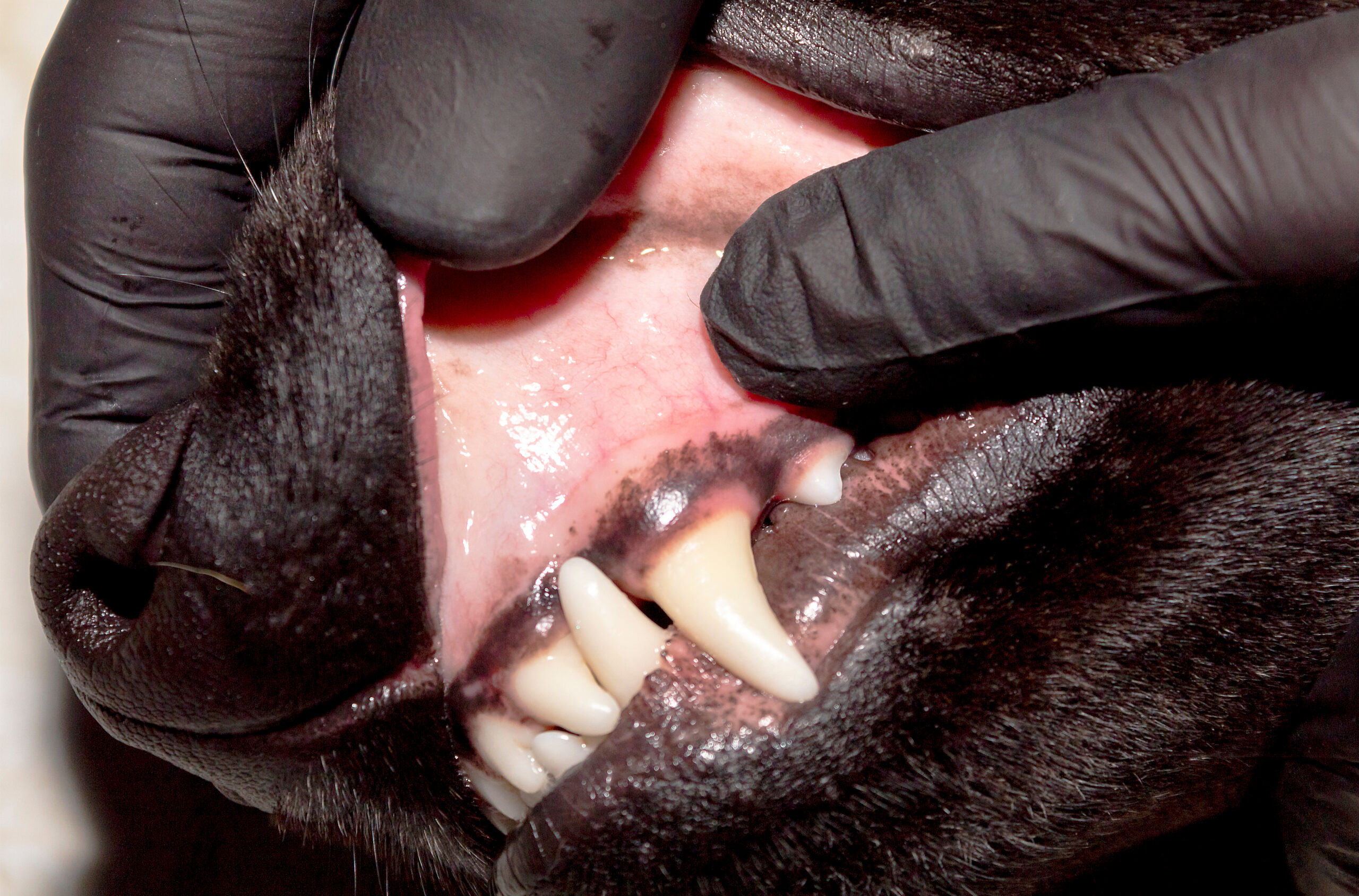
1. Anemia (VERY COMMON)
Anemia means not enough red blood cells.
Causes include:
-
Parasites (fleas, ticks, hookworms)
-
Immune-mediated disease
-
Chronic illness
-
Bone marrow problems
Other signs:
-
Weakness
-
Lethargy
-
Rapid breathing
2. Internal or External Blood Loss
⚠️ Medical emergency
Can result from:
-
Trauma
-
Internal bleeding
-
Surgery complications
-
Ruptured tumors
Dogs may appear:
-
Weak or collapsing
-
Cold to the touch
-
Rapid heart rate
3. Shock
Shock reduces blood flow to tissues.
Triggers include:
-
Severe infection
-
Heatstroke
-
Trauma
-
Allergic reactions
Pale gums in shock often progress rapidly.
4. Heart Disease
Poor circulation can cause gums to appear pale.
Often paired with:
-
Coughing
-
Exercise intolerance
-
Fainting episodes
5. Severe Dehydration
Less common, but possible.
-
Thick, sticky gums
-
Sunken eyes
-
Skin doesn’t snap back
6. Poisoning or Toxins
Certain toxins damage red blood cells.
-
Rat poison
-
Onions/garlic
-
Some medications
When Pale Gums Are an Emergency
🚨 Go to the vet or ER IMMEDIATELY if pale gums are paired with:
-
Weakness or collapse
-
Rapid or labored breathing
-
Vomiting or diarrhea
-
Lethargy or unresponsiveness
-
Cold ears or paws
-
Bleeding or recent injury
⏱️ Pale gums can indicate life-threatening conditions. Waiting can be fatal.
What You Should Do Right Now
-
Check gum color again in good lighting
-
Keep your dog calm and warm
-
Do NOT give food, water, or medication
-
Seek veterinary care immediately
❌ Don’t “wait and see”
❌ Don’t assume it’s stress or aging
How Vets Diagnose Pale Gums
Your veterinarian may:
-
Run blood tests (PCV, RBC count)
-
Check blood pressure
-
Perform imaging (X-ray, ultrasound)
-
Test for parasites or toxins
Early diagnosis can be life-saving.
Can Dogs Recover From This?
Yes—if treated quickly.
-
Anemia can often be managed
-
Bleeding can be controlled
-
Shock can be reversed with rapid care
Outcome depends heavily on how fast treatment begins.
Final Takeaway
If your dog’s gums look pale, assume it’s serious until proven otherwise. Gums are a window into circulation and oxygen levels—and pale color means the body may be in trouble.
🐾 When the gums lose their color, time matters. Acting fast can save your dog’s life.