
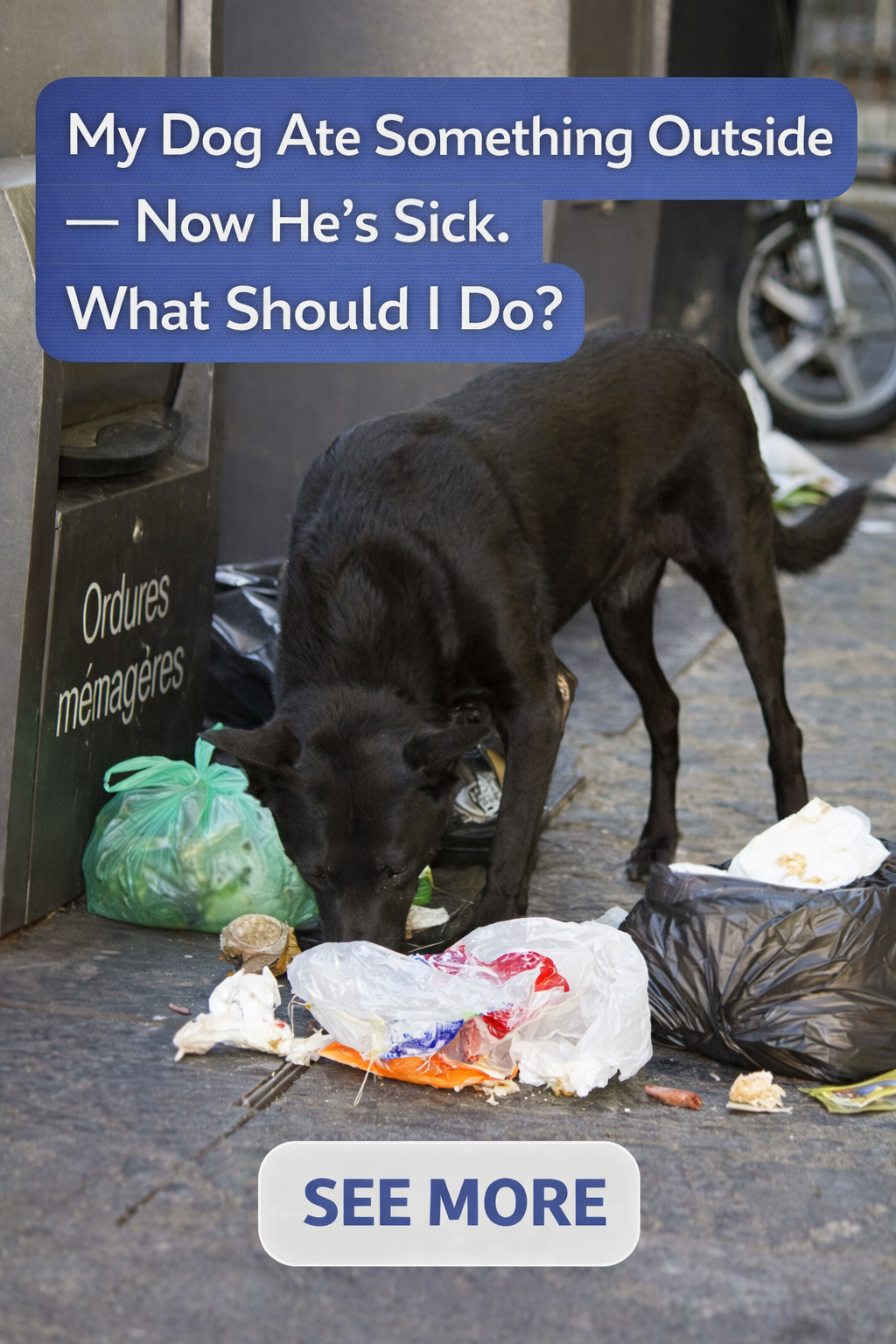
If your dog picked up something outside and is now vomiting, having diarrhea, acting lethargic, or behaving strangely, this is a situation you should take seriously. Dogs explore the world with their mouths—and unfortunately, outdoor items can include toxins, spoiled food, foreign objects, or infectious material.
This article explains what might be happening, how to tell if it’s an emergency, and what steps to take immediately to protect your dog.
Common Signs After Eating Something Outside
You may notice:
-
Vomiting or retching
-
Diarrhea (sometimes bloody)
-
Excessive drooling or foaming
-
Lethargy or weakness
-
Refusal to eat
-
Trembling, shaking, or restlessness
-
Abdominal pain (hunched posture)
👉 The combination of sudden illness + recent scavenging is a major clue.
What Dogs Commonly Eat Outside That Makes Them Sick
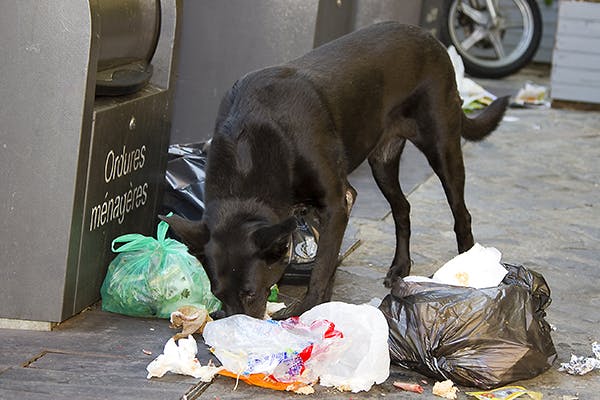
1. Spoiled Food or Garbage
-
Rotten leftovers
-
Moldy bread or food scraps
-
Greasy or fatty foods
These can cause acute stomach upset or pancreatitis.
2. Toxins or Poisoned Baits
⚠️ Life-threatening
-
Rodent poison
-
Pesticides or herbicides
-
Antifreeze residue
-
Toxic plants
Symptoms may appear hours or even days later.
3. Dead Animals or Feces
-
Carries bacteria and parasites
-
Can cause severe GI infections
4. Foreign Objects
-
Bones, sticks, plastic, wrappers
-
Corn cobs, fruit pits
These can cause intestinal blockage, which is a medical emergency.
5. Unknown Substances
If you don’t know what was eaten, assume risk until proven otherwise.
When This Is an Emergency
🚨 Go to the vet or emergency clinic immediately if your dog:
-
Is vomiting repeatedly or uncontrollably
-
Has bloody diarrhea or black stools
-
Is very lethargic, weak, or collapsing
-
Is shaking, twitching, or having seizures
-
Has pale gums or difficulty breathing
-
Ate something toxic or unknown
-
Is a puppy, senior, or small breed
⚠️ Do NOT wait to “see if it passes” in these cases.
What You Should Do Right Now
1. Stop Access
-
Prevent further scavenging
-
Remove similar items from the area
2. Do NOT Induce Vomiting
❌ Never try home remedies
❌ Some substances cause more damage coming back up
Only a vet should decide this.
3. Gather Information
-
What did your dog eat?
-
When did it happen?
-
How much?
-
What symptoms are present?
Photos or samples (if safe) can help the vet.
4. Call Your Vet Immediately
Even if symptoms seem mild—timing matters with toxins and blockages.
What the Vet May Do
Your veterinarian may:
-
Induce vomiting (if safe and early)
-
Give activated charcoal
-
Run blood tests
-
Take X-rays or ultrasound
-
Provide IV fluids and medications
Early treatment often means faster recovery and lower risk.
Can Dogs Recover From This?
Yes—many dogs recover fully when treated promptly. Delays, however, can turn a mild problem into a life-threatening emergency, especially with toxins or blockages.
How to Prevent This in the Future
-
Train a strong “leave it” cue
-
Use a basket muzzle for scavengers
-
Keep dogs on leash in risky areas
-
Avoid letting dogs roam unsupervised
-
Bring high-value treats on walks to redirect
Final Takeaway
If your dog ate something outside and is now sick, trust your instincts. Outdoor ingestion is one of the most common causes of emergency vet visits—and early action saves lives.
🐾 When in doubt, act fast. It’s always better to be safe than sorry.