
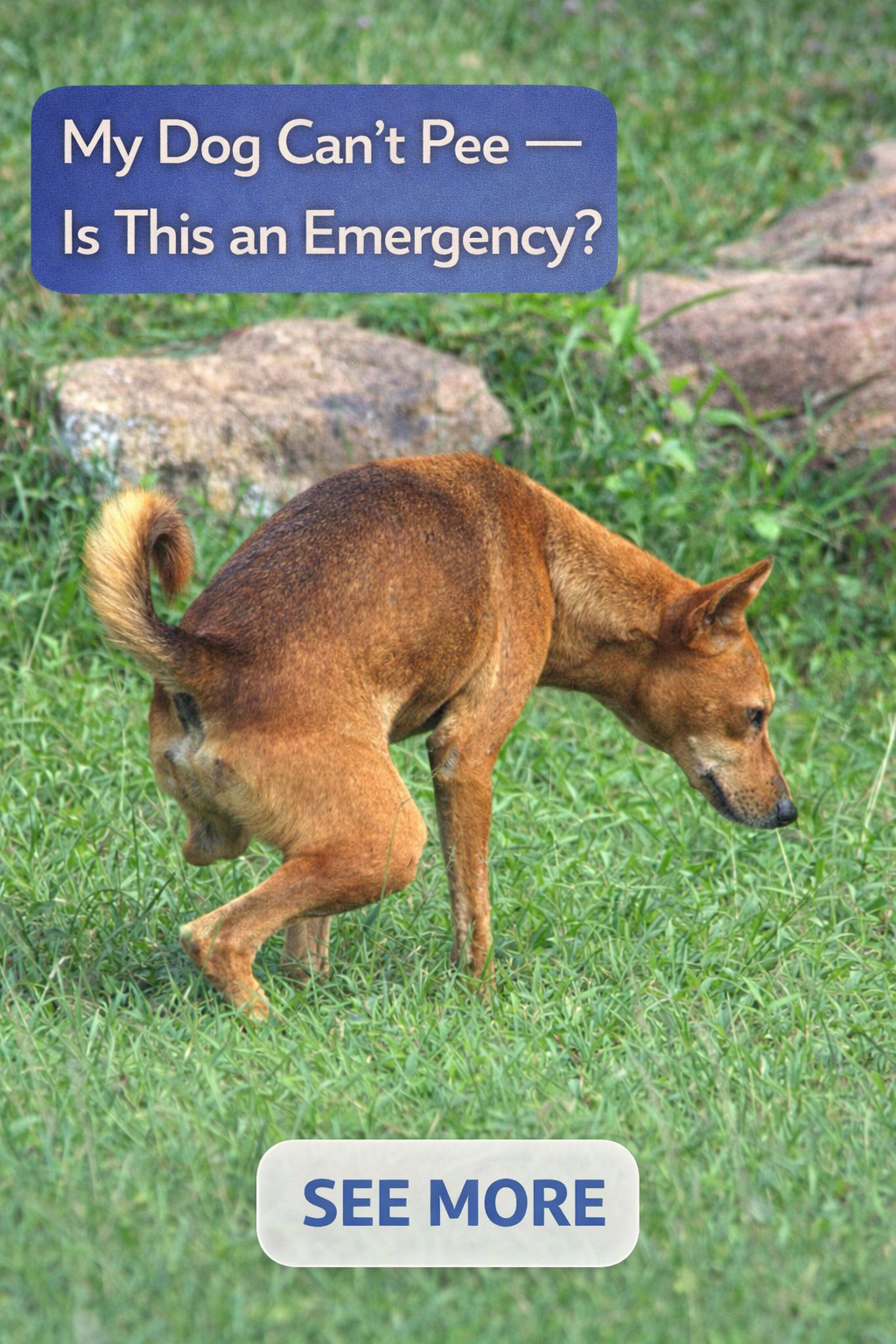
If your dog is trying to urinate but nothing comes out, or only a few drops appear, this is a true medical emergency—especially in male dogs. Inability to pee can mean a urinary blockage, which can become life-threatening within hours, not days.
This article explains why dogs suddenly can’t pee, the warning signs you must not ignore, and exactly what to do right now.
What “Can’t Pee” Usually Looks Like
You may notice your dog:
-
Squatting or lifting the leg repeatedly with little or no urine
-
Straining, crying, or looking uncomfortable while trying to pee
-
Dribbling drops instead of a stream
-
Licking the genital area excessively
-
Restlessness, pacing, or whining
-
A firm or painful belly
👉 Repeated attempts with no urine = emergency.
Most Common Causes of Inability to Urinate

1. Urinary Blockage (Most Dangerous)
⚠️ Life-threatening
-
Bladder stones
-
Crystals or mucus plugs
Blockage causes toxins to build up rapidly in the bloodstream and can lead to kidney failure or heart rhythm collapse.
2. Severe Urinary Tract Infection
Inflammation and swelling can:
-
Block urine flow
-
Cause extreme pain
-
Lead to bladder rupture if untreated
3. Prostate Enlargement (Male Dogs)
An enlarged prostate can:
-
Compress the urethra
-
Make urination difficult or impossible
More common in intact (not neutered) males.
4. Nerve or Spinal Injury
Damage affecting bladder control can:
-
Prevent bladder emptying
-
Cause urine retention
Often paired with hind-leg weakness.
5. Tumors or Structural Abnormalities
Growths near the bladder or urethra may block urine flow gradually or suddenly.
Why This Is So Dangerous
When urine can’t exit the body:
-
Toxins build up quickly
-
Potassium levels rise (can stop the heart)
-
The bladder can rupture
-
Kidney failure can occur
⏱️ This can become fatal in 12–24 hours.
When to Go to the Emergency Vet

🚨 Go to an emergency clinic immediately if your dog:
-
Has not urinated in 8–12 hours
-
Is straining repeatedly with no urine
-
Is crying, lethargic, vomiting, or collapsing
-
Has a swollen or painful abdomen
-
Is a male dog with sudden urinary difficulty
⚠️ Do NOT wait for morning. Do NOT try home remedies.
What You Should Do Right Now
-
Stop all food and treats
-
Do NOT force fluids
-
Do NOT massage the belly
-
Go to the nearest emergency vet immediately
If possible, call ahead to alert them you are coming with a suspected urinary blockage.
What the Vet Will Do
Emergency treatment may include:
-
Immediate catheter placement
-
Pain relief
-
IV fluids
-
Blood tests (kidney function, electrolytes)
-
X-rays or ultrasound
-
Hospitalization
Fast action often saves the dog’s life.
Can Dogs Recover From This?
Yes—if treated quickly.
-
Many dogs recover fully
-
Delays increase the risk of death and recurrence
-
Some dogs require diet changes or surgery to prevent future blockages
How to Prevent Future Urinary Emergencies
-
Feed a vet-recommended urinary diet if advised
-
Ensure constant access to fresh water
-
Encourage frequent bathroom breaks
-
Watch for early signs: straining, slow stream, frequent attempts
Final Takeaway
If your dog can’t pee, this is not a “wait and see” situation. It is one of the most serious emergencies in dogs—especially males.
🐾 Trust your instincts. Go to the emergency vet immediately. Acting fast can save your dog’s life.