
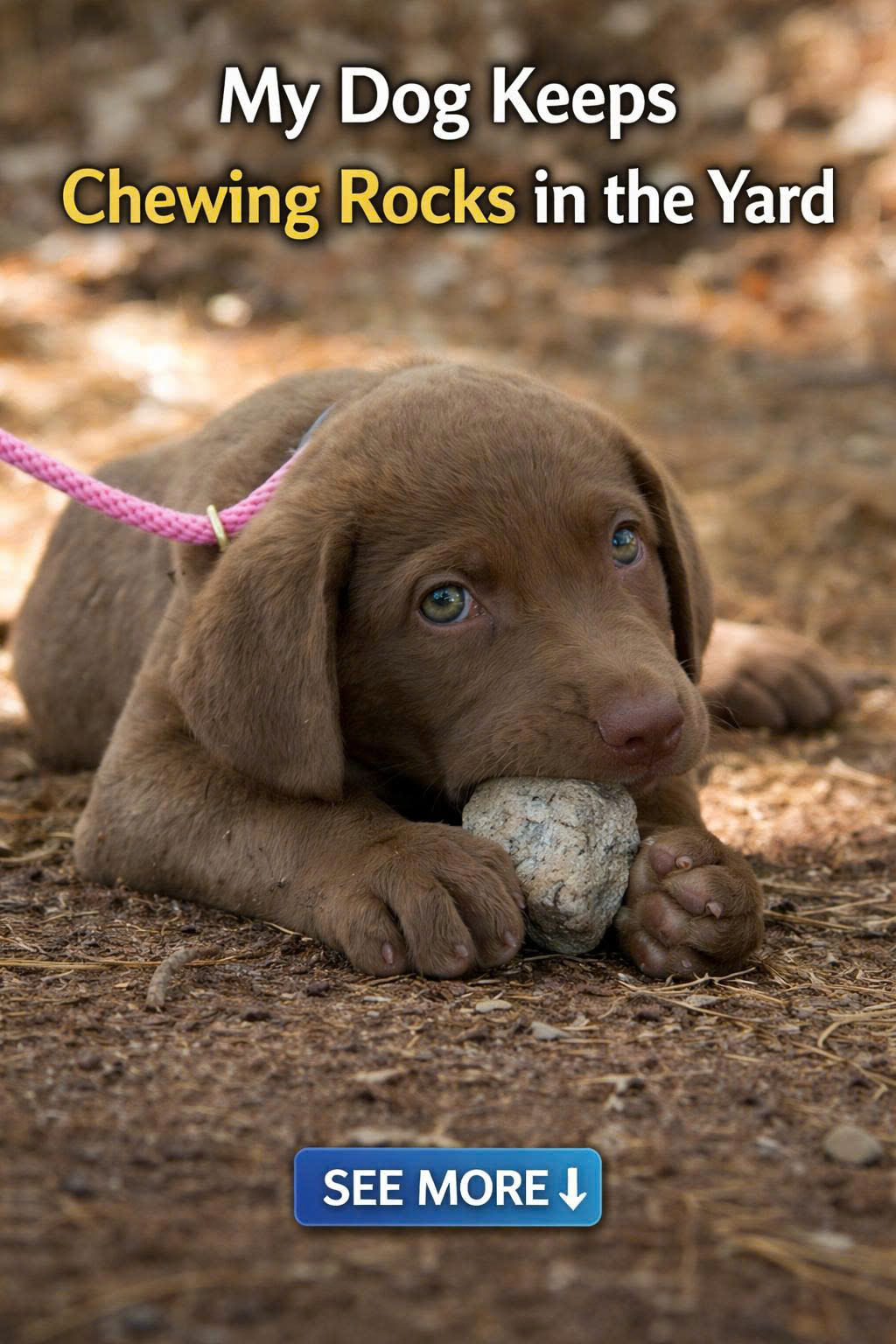
If your dog chews or mouths rocks in the yard, it’s more than a quirky habit—it can be dangerous. Rock chewing can damage teeth, cause choking, or lead to serious intestinal blockages if swallowed. The behavior usually points to boredom, anxiety, teething, nutritional issues, or a condition called pica.
Let’s break down why dogs do this and how to stop it without punishment.
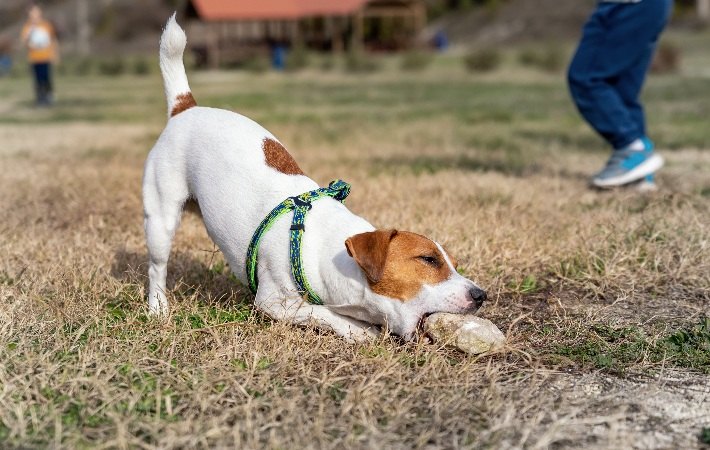
🦴 Common Reasons Dogs Chew Rocks
1. Boredom or Excess Energy
Dogs left alone in the yard without stimulation may:
-
Chew rocks out of boredom
-
Use stones as “toys”
This is common in high-energy breeds or dogs lacking daily exercise.
2. Teething (Puppies & Young Dogs)
Puppies may chew hard objects to:
-
Relieve gum discomfort
-
Explore textures
Unfortunately, rocks are much harder than safe chew toys—and can crack teeth.
3. Anxiety or Stress
Stress behaviors can include:
-
Repetitive chewing
-
Fixation on objects
Dogs may chew rocks as a coping mechanism, especially after changes in routine.
4. Pica (Eating Non-Food Items)
Pica is a behavioral or medical condition where dogs eat non-food objects such as:
-
Rocks
-
Dirt
-
Wood
Pica can be linked to:
-
Nutritional deficiencies
-
Gastrointestinal issues
-
Neurological or behavioral problems
⚠️ This requires veterinary attention.
5. Attention-Seeking
If your dog gets a strong reaction when chewing rocks—yelling, chasing, or panic—they may learn that rock chewing gets instant attention.
🐕 Why Rock Chewing Is Dangerous
-
🦷 Broken or worn teeth
-
😮💨 Choking hazard
-
🚑 Intestinal blockage (life-threatening)
-
🤢 Vomiting, pain, or emergency surgery
Even small stones can cause major problems.
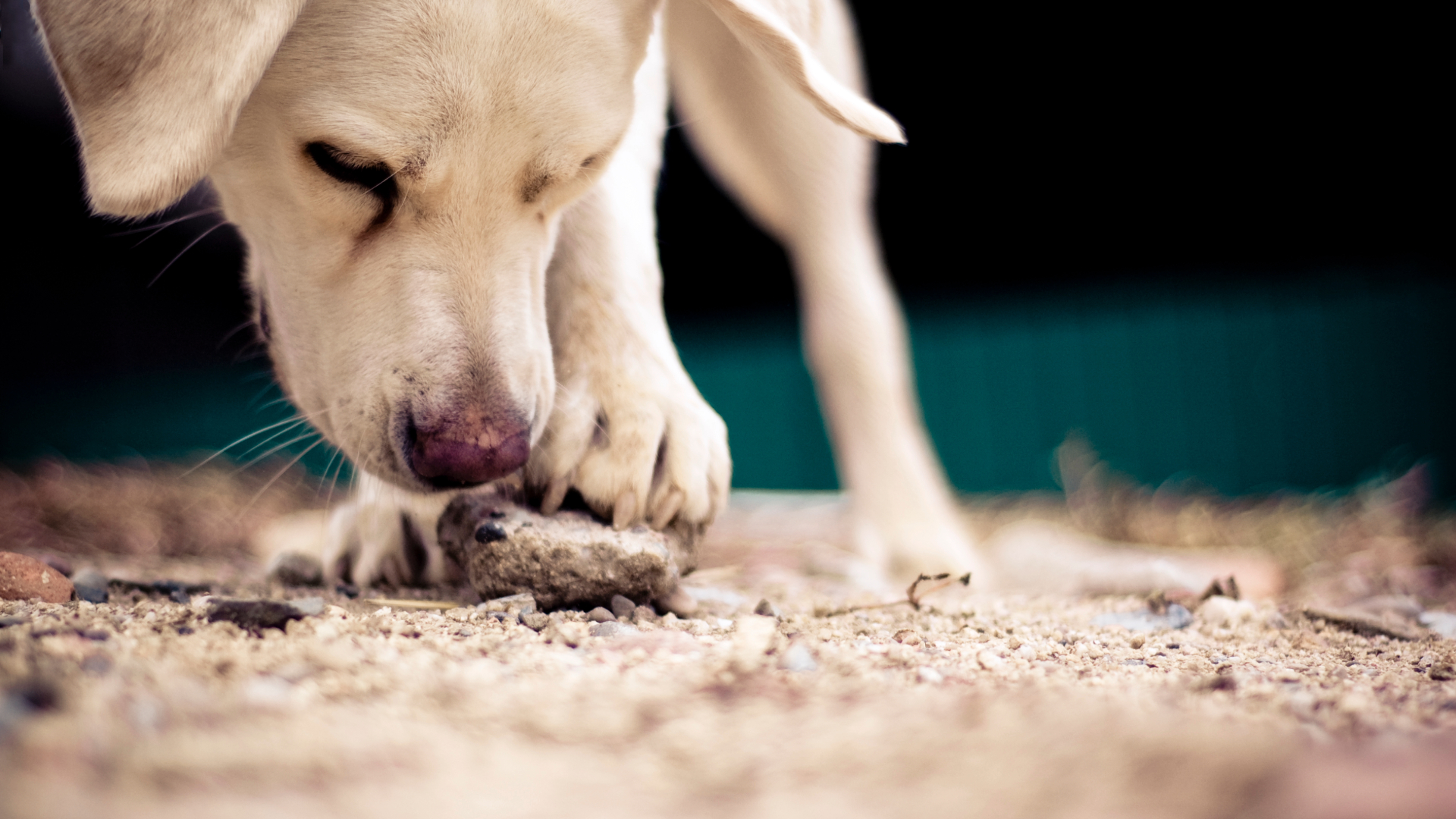
🏠 How to Stop Your Dog From Chewing Rocks
✅ Supervise Yard Time
Don’t leave your dog alone outside if rock chewing is an issue.
🧠 Increase Mental & Physical Stimulation
-
Daily walks and play sessions
-
Training games
-
Puzzle toys
A tired dog is far less likely to chew rocks.
🦴 Provide Safe Chew Alternatives
Offer:
-
Durable rubber chew toys
-
Frozen food-stuffed toys
-
Appropriate bones (vet-approved)
Rotate toys to keep them interesting.
🚫 Remove or Block Access
-
Clear loose rocks if possible
-
Use barriers or mulch alternatives
-
Leash your dog in rock-heavy areas
Management is key while training.
❌ Avoid Punishment
Punishment can:
-
Increase anxiety
-
Make the behavior secretive
-
Worsen pica-related habits
Redirect calmly and reward better choices.
🚑 When to See a Veterinarian
Seek veterinary help immediately if:
-
Your dog swallows rocks
-
Chewing is obsessive or constant
-
There is vomiting, pain, or appetite loss
-
You suspect pica
Early intervention can prevent emergencies.
🐾 Final Thoughts
A dog chewing rocks isn’t being “naughty”—they’re communicating a need or coping with something missing. With supervision, enrichment, and proper guidance, most dogs can break this habit safely and quickly.