
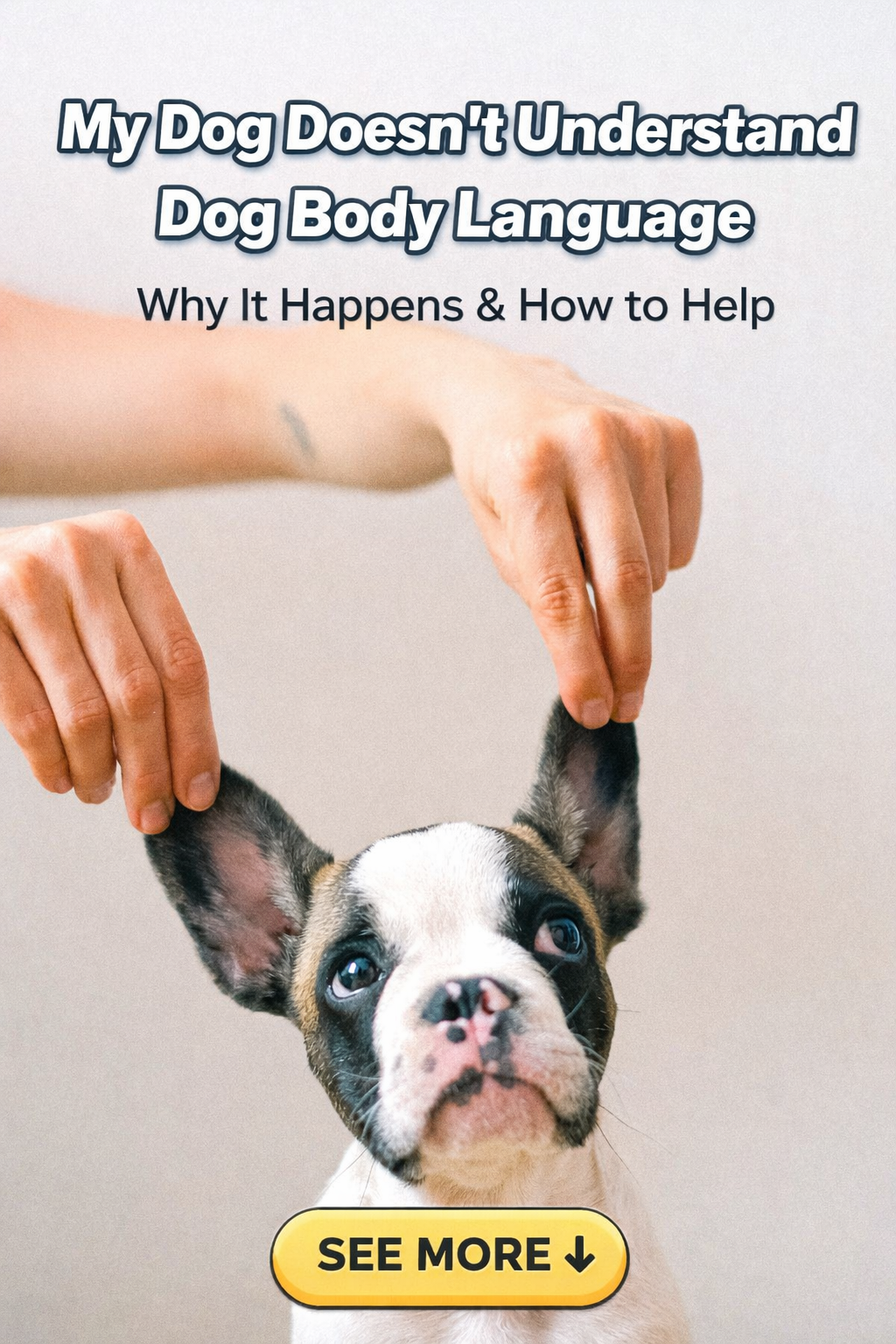
If your dog misses social cues, keeps pushing play when other dogs say “no,” gets snapped at, or seems confused during interactions, you’re likely dealing with a dog who struggles to read dog body language. This is more common than most people think—and it’s fixable with the right approach.
What Poor Dog-to-Dog Communication Looks Like
Your dog may:
-
Keep approaching when another dog turns away
-
Ignore growls, stiff posture, or freezing
-
Play too rough or too persistently
-
Get corrected or snapped at often
-
Seem surprised when other dogs react negatively
👉 This doesn’t mean your dog is rude or aggressive—it means they’re socially unskilled.
Why Some Dogs Don’t Read Body Language Well
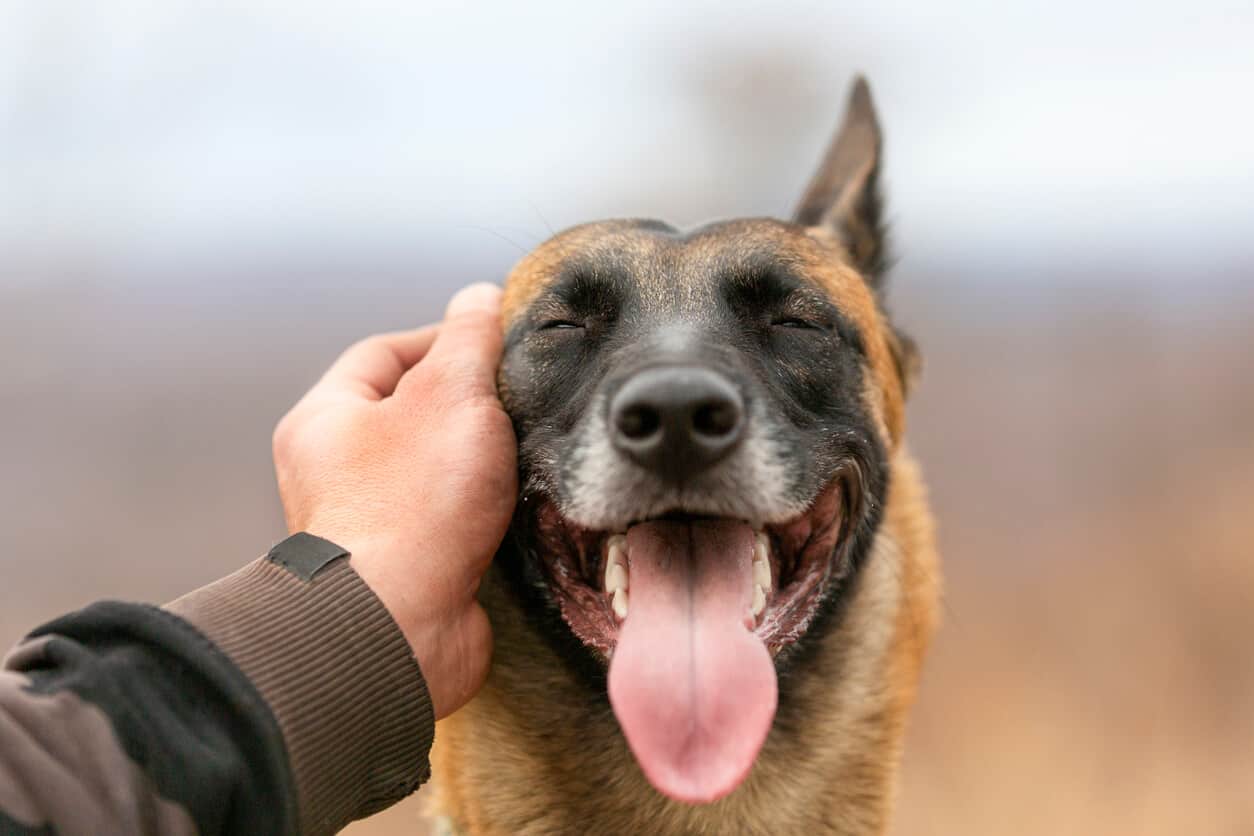
1. Limited Early Socialization (Most Common)
Dogs learn dog language as puppies.
If your dog:
-
Missed early exposure
-
Was isolated during critical periods
-
Grew up with only humans
They never fully learned how dogs communicate.
2. Overexcitement Overrides Awareness
Highly aroused dogs:
-
Stop processing subtle signals
-
Miss warnings
-
Act before thinking
Excitement literally blocks social learning.
3. Play Style Mismatch
Some dogs:
-
Love rough play
-
Don’t pause naturally
-
Struggle with give-and-take
This can overwhelm calmer dogs.
4. Breed or Physical Factors
Certain traits make reading signals harder:
-
Stiff tails or ears
-
Flat faces (harder to read expressions)
-
Very large or very small size
Other dogs may also misread your dog.
5. Learned Success Ignoring Signals
If your dog:
-
Kept playing despite warnings
-
Was never interrupted
They learned that ignoring signals “works.”
Why This Can Become a Problem
🚨 Dogs who miss signals are at higher risk for:
-
Fights
-
Being labeled “the problem dog”
-
Developing fear or reactivity
-
Losing access to safe socialization
Dog Signals Your Dog Might Be Missing
Common “back off” cues:
-
Turning head or body away
-
Freezing
-
Lip licking
-
Whale eye (white of eye showing)
-
Growling
These are polite warnings before stronger reactions.
What NOT to Do
❌ Don’t force dog park interactions
❌ Don’t assume “they’ll figure it out”
❌ Don’t punish corrections from other dogs
❌ Don’t allow repeated ignoring of signals
Uncontrolled exposure increases risk.
How to Help Your Dog Learn Social Skills
1. Choose the Right Dog Teachers
Best teachers are:
-
Calm
-
Confident
-
Clear communicators
-
Not aggressive
Avoid puppies or hyper dogs as teachers.
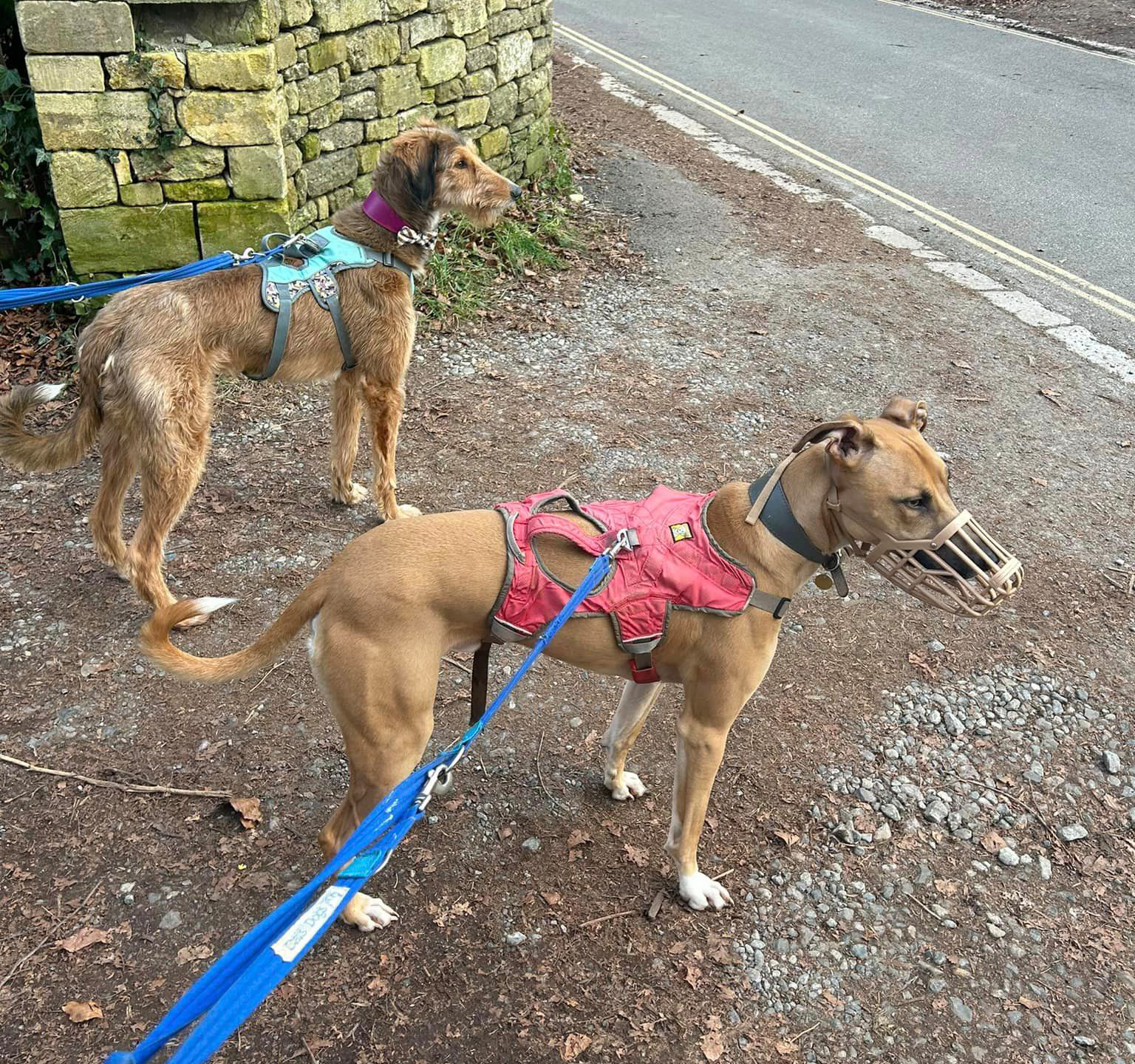
2. Use Parallel Walks
Walking side-by-side:
-
Reduces pressure
-
Builds comfort
-
Allows observation without interaction
This is one of the safest learning tools.
3. Interrupt Early & Often
Before your dog misses cues:
-
Call them away
-
Leash briefly
-
Enforce breaks
Breaks teach self-regulation.
4. Reward Disengagement
Pay heavily when your dog:
-
Looks away
-
Chooses to leave
-
Pauses play
Disengaging is a skill—not avoidance.
5. Skip Dog Parks (Temporarily)
Dog parks:
-
Move too fast
-
Reward poor skills
-
Punish mistakes harshly
Controlled environments teach better.
Can Dogs Learn Later in Life?
Yes—absolutely.
Dogs can learn social skills at any age when:
-
Exposure is controlled
-
Stress stays low
-
Success is reinforced
Progress may be gradual—but it’s real.
When to Get Professional Help
Seek help if:
-
Your dog causes frequent conflicts
-
You’re unsure when to interrupt
-
There’s growling or snapping
A trainer or behaviorist can coach both you and your dog.
Final Takeaway
A dog who doesn’t understand dog body language isn’t bad—they’re just uneducated socially. With patience, structure, and the right partners, dogs can learn to read the room and interact safely.
🐾 Social skills aren’t instincts alone—they’re learned. And learning is always possible.