
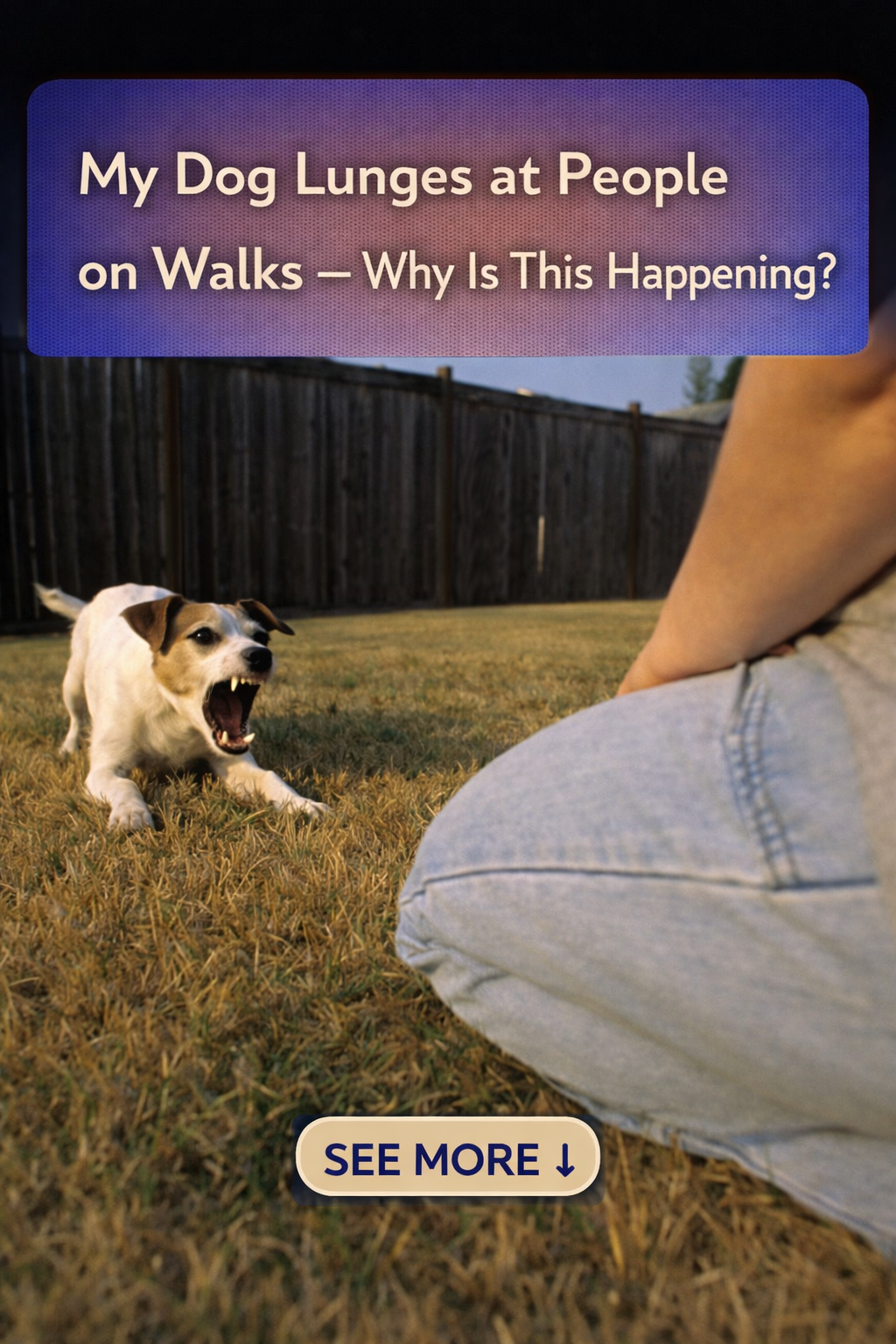
If your dog suddenly lunges, barks, growls, or snaps at people while on walks, it can be frightening, embarrassing, and dangerous. The most important thing to know is this: lunging is not random and it’s not dominance. In most cases, it’s a sign of fear, anxiety, frustration, or pain, all intensified by the leash.
This article explains why dogs lunge at people on walks, how to identify the real trigger, and what you should do to keep everyone safe.
What Lunging Behavior Typically Looks Like
You may notice your dog:
-
Pulling hard toward people
-
Barking or growling as someone passes
-
Jumping or snapping at the end of the leash
-
Freezing and then exploding suddenly
-
Ignoring commands he normally knows
👉 The key pattern: this happens on leash, around people, and escalates quickly.
Most Common Reasons Dogs Lunge at People
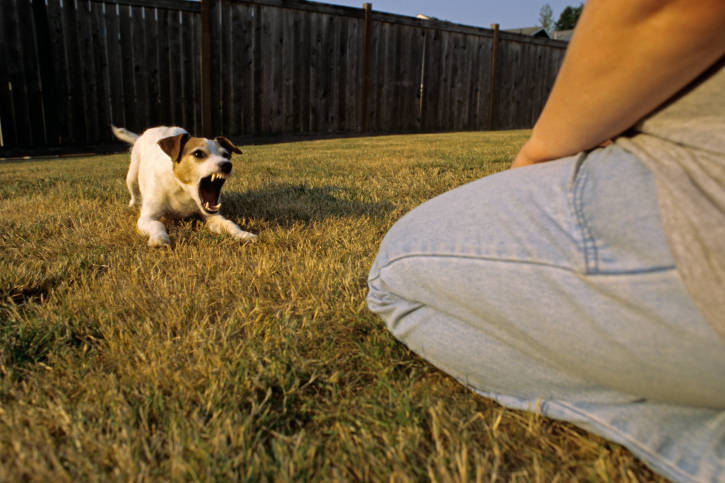
1. Fear-Based Reactivity (Most Common)
Your dog isn’t trying to attack—he’s trying to create distance.
-
Strangers feel unpredictable
-
Dog feels trapped by the leash
-
Lunging makes people move away
From your dog’s perspective, the behavior works.
2. Leash Reactivity
Leashes change emotions.
-
No escape option
-
Tension travels from handler to dog
-
Frustration explodes outward
Many dogs who lunge on leash are calm off leash.
3. Poor Socialization
Dogs not exposed positively to strangers early on:
-
Don’t know how to assess humans safely
-
Default to defensive behavior
4. Over-Arousal or Frustration
Some dogs are:
-
Overstimulated
-
Unable to regulate excitement
The result can look aggressive even when it’s emotional overload.
5. Pain or Medical Issues
⚠️ Often overlooked.
Pain lowers tolerance.
-
Joint pain
-
Back or neck pain
-
Ear or dental pain
Dogs in pain react faster and harder.
Warning Signs Before the Lunge
Many dogs do warn—but subtly:
-
Stiffening
-
Hard staring
-
Mouth closing suddenly
-
Tail high or tucked
-
Weight shifting forward
Learning these signs helps you interrupt before the explosion.
When This Is a Serious Safety Issue

🚨 Get professional help urgently if your dog:
-
Has tried to bite
-
Lunges at close range
-
Cannot recover after reacting
-
Escalates over time
-
Lunges at children or joggers
This is about public safety, not just training.
What You Should Do Right Now
1. Increase Distance Immediately
Distance is your best tool.
-
Cross the street
-
Turn around early
-
Step behind a car or barrier
More space = less reaction.
2. Stop All Forced Greetings
-
No strangers petting your dog
-
No “he just needs to meet people” moments
Forced exposure makes reactivity worse.
3. Switch to Safety Equipment
-
Front-clip harness
-
Secure leash (no retractables)
-
Consider a basket muzzle (properly introduced)
Muzzles protect everyone and reduce stress.
4. Rule Out Pain
Schedule a vet exam to check:
-
Joints
-
Spine
-
Ears
-
Teeth
Behavior changes always deserve a medical check.
How to Train This Safely (Overview)
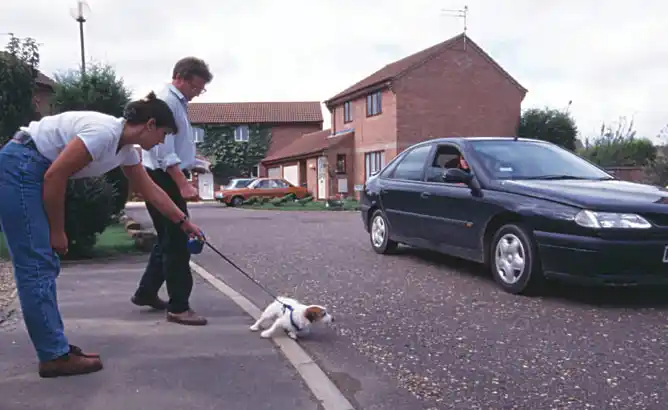
1. Work Below Threshold
Your dog must be far enough away to:
-
Take treats
-
Respond to you
No learning happens during a meltdown.
2. Pair People With Good Things
Every time a person appears:
-
Treat → treat → treat
-
Person leaves → treats stop
People start predicting good outcomes, not fear.
3. Teach Engagement
Reward:
-
Eye contact
-
Choosing you over the trigger
Attention comes before obedience.
4. Keep Sessions Short
-
Short walks
-
Fewer triggers
-
End on success
Quality > quantity.
What NOT to Do
❌ Punish or yell
❌ Yank the leash
❌ Force proximity
❌ Use dominance techniques
❌ “Correct” fear
These increase fear and bite risk.
Can Dogs Stop Lunging at People?
Yes—many dogs improve dramatically with:
-
Distance-based training
-
Consistent management
-
Professional guidance
The goal isn’t loving strangers—it’s calm, safe neutrality.
Final Takeaway
When a dog lunges at people on walks, it’s not bad behavior—it’s a stress response under restraint. With space, structure, and the right training, your dog can learn that people are safe—and that he doesn’t have to react to survive.
🐾 Safety first. Understanding second. Training third. That order protects everyone.