
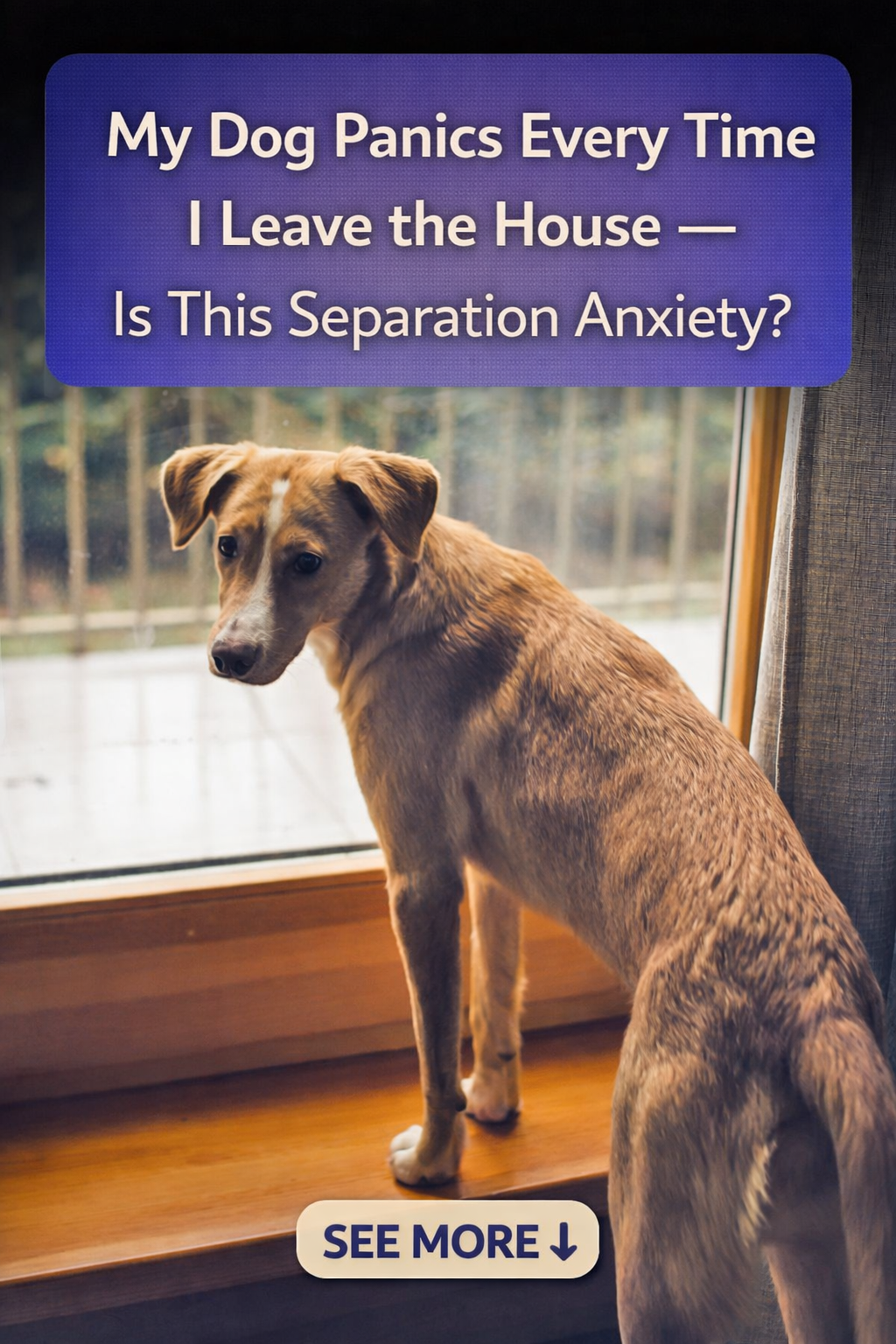
If your dog panics the moment you grab your keys, put on shoes, or walk out the door, this isn’t stubbornness or misbehavior. What you’re likely seeing is separation-related anxiety, a serious emotional condition where a dog experiences real fear and distress when left alone.
This article explains why dogs panic when owners leave, how to tell anxiety from normal protest behavior, and what you can do to help your dog feel safe.
What Panic When You Leave Looks Like
You may notice your dog:
-
Crying, barking, or howling after you leave
-
Pacing, trembling, or drooling
-
Scratching doors or windows
-
Destroying furniture near exits
-
Having accidents despite being house-trained
-
Panicking before you even leave (keys, shoes = meltdown)
👉 The key sign is panic, not boredom.
Why Dogs Panic When Left Alone
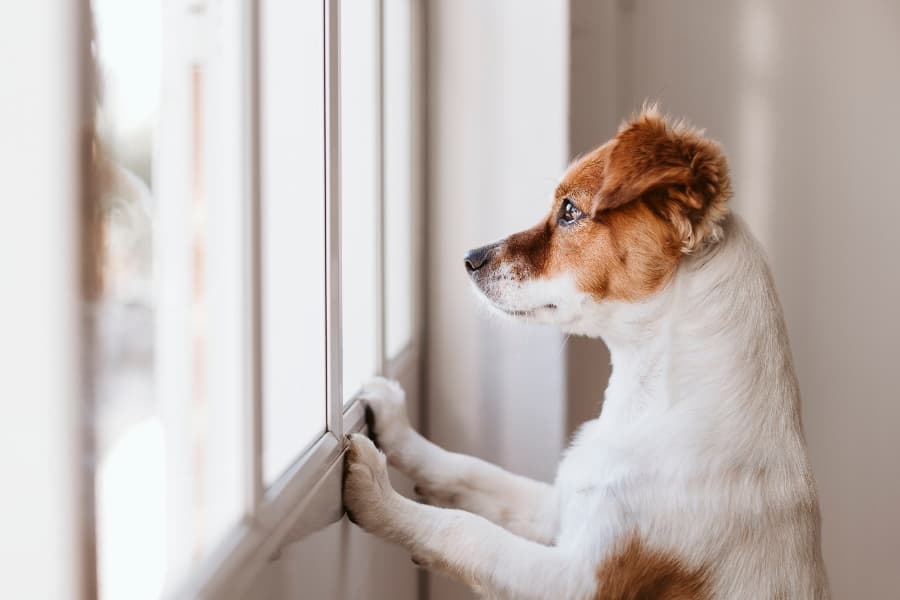
1. Separation Anxiety (Most Common)
Your dog isn’t upset about being alone—
he’s terrified of being separated from you.
This often develops after:
-
Rehoming or rescue
-
Sudden schedule changes
-
Illness or injury
-
Loss of a family member (human or animal)
2. Hyper-Attachment
Some dogs form an intense attachment to one person.
-
Dog follows you everywhere
-
Can’t relax unless you’re present
Leaving feels emotionally unsafe to them.
3. Past Trauma or Abandonment
Dogs remember fear.
-
Being abandoned
-
Being left alone for long periods
Your departure can trigger panic memories.
4. Lack of Gradual Independence Training
Dogs aren’t born knowing how to be alone.
-
Constant companionship
-
No practice being separated
Sudden alone time becomes overwhelming.
5. Anxiety, Not Disobedience
An anxious dog:
-
Is not thinking
-
Cannot “calm down” on command
-
Is operating in survival mode
Punishment makes it worse, not better.
When This Is More Than “Normal”
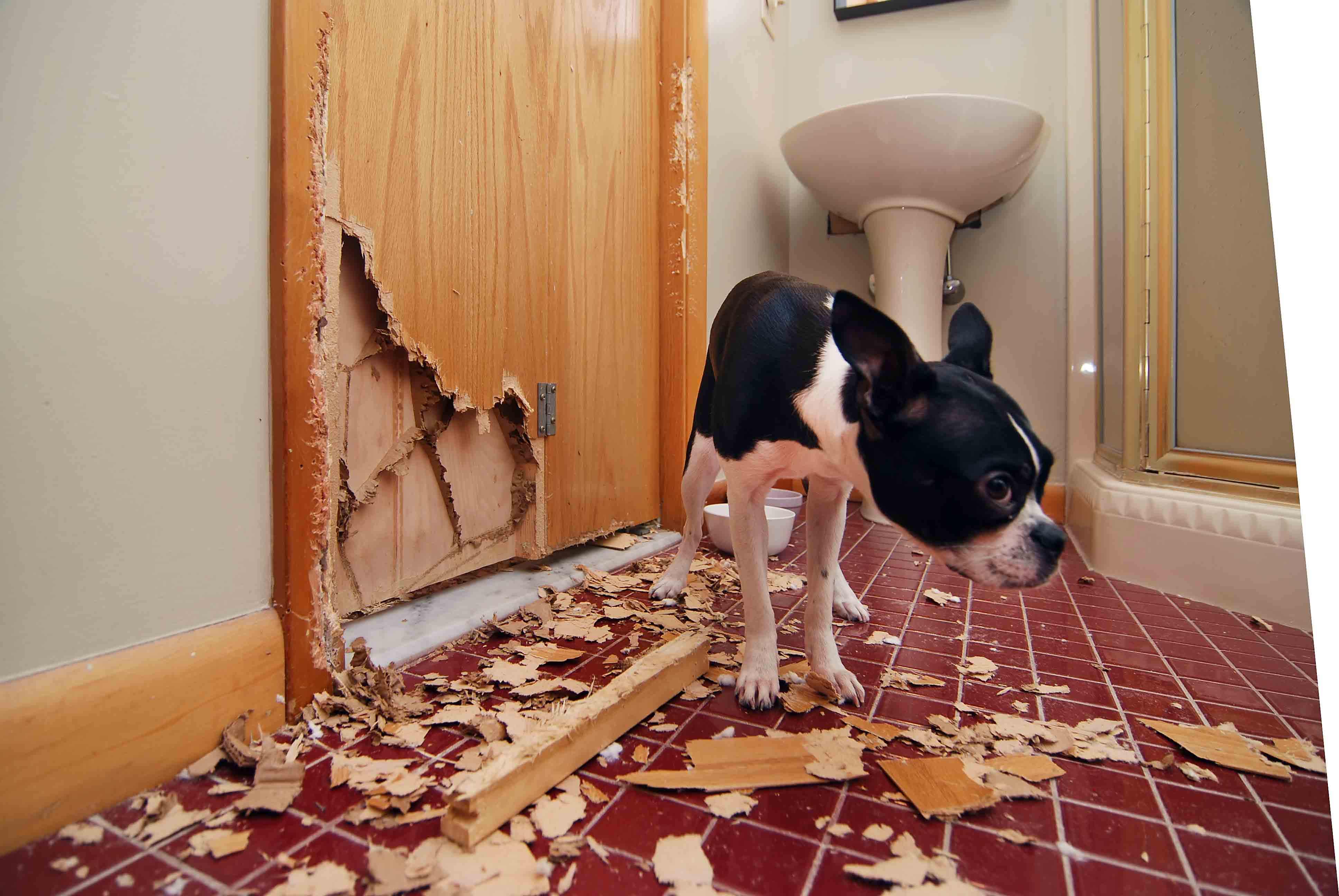
🚨 This is serious if your dog:
-
Hurts himself trying to escape
-
Panics every single time you leave
-
Cannot eat treats when alone
-
Takes hours to settle (or never does)
-
Gets worse over time
This level of anxiety needs intervention.
What You Should Do Right Now
1. Stop Leaving Your Dog to Panic
Repeated panic:
-
Reinforces fear
-
Makes anxiety stronger
If possible, arrange:
-
Dog sitter
-
Daycare
-
Someone at home temporarily
This protects your dog’s mental health while you train.
2. Break the “Leaving” Triggers
Desensitize cues:
-
Pick up keys → sit down
-
Put on shoes → no leaving
Repeat until these cues lose meaning.
3. Practice Very Short Absences
Start with:
-
1–5 seconds
-
Step out, return before panic
Gradually increase time only if your dog stays calm.
4. Build Independence Inside the Home
Teach your dog:
-
To relax on a mat
-
To be in another room
-
That distance ≠ danger
Independence is a skill.
5. Use Calm, Predictable Departures
-
No emotional goodbyes
-
No dramatic returns
Calm in = calm out.
What Often Does NOT Help
❌ Punishment
❌ Crate use (unless already crate-trained and calm)
❌ “Let him cry it out”
❌ More exercise alone
These often increase panic.
How Vets & Behaviorists Help
Professionals may:
-
Create a separation-anxiety protocol
-
Prescribe anti-anxiety medication (temporary or long-term)
-
Combine training + medication for best results
Medication doesn’t “sedate”—it lowers panic so learning can happen.
Can Dogs Recover From Separation Anxiety?
Yes—many dogs improve dramatically with:
-
Gradual desensitization
-
Consistent routines
-
Professional support
But this is not a quick fix—it’s emotional rehabilitation.
Final Takeaway
If your dog panics every time you leave, he’s not being dramatic—he’s afraid. And fear doesn’t disappear through force or ignoring it.
🐾 Teaching your dog that you always come back—calmly and safely—is the path to real confidence and peace.