
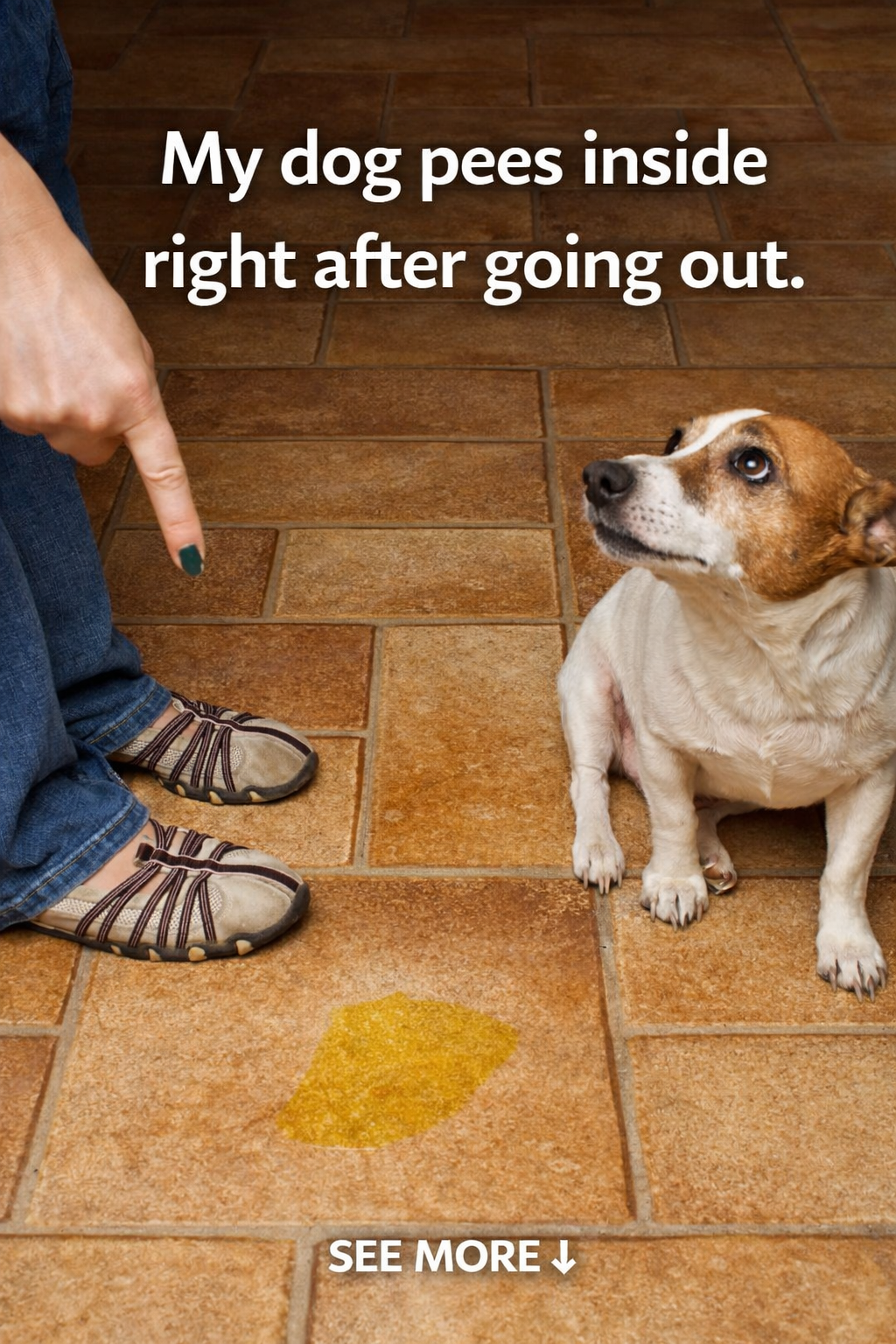
It can be incredibly frustrating when your dog goes outside to potty—then pees again indoors minutes later. This behavior doesn’t usually mean your dog is being stubborn or spiteful. In most cases, it points to a training gap, anxiety, marking behavior, or a medical issue.
Let’s break down the most common reasons and how to solve them the right way.

🦴 Common Reasons Dogs Pee Inside After Going Outside
1. Incomplete Elimination Outside
Some dogs:
-
Get distracted outdoors
-
Sniff, play, or rush back inside
-
Only release a small amount of urine
Once they relax indoors, their bladder empties fully.
💡 This is very common in puppies and easily distracted dogs.
2. Poor Potty Training Association
If a dog hasn’t fully learned that:
“Outside = the ONLY place to pee,”
they may think peeing indoors is still acceptable.
This often happens when:
-
Potty breaks are too short
-
Accidents were never fully addressed
-
Outdoor potty time lacks clear rewards
3. Excitement or Submissive Urination
Dogs may urinate indoors due to:
-
Excitement when re-entering the house
-
Greeting people
-
Anxiety or fear
This urination is involuntary and not a training failure.
4. Marking Behavior
Some dogs pee small amounts indoors to:
-
Mark territory
-
Respond to other pets’ scents
-
React to stress or changes in routine
This is more common in unneutered males but can occur in any dog.
5. Urinary or Medical Issues
Health problems can cause frequent urination, including:
-
Urinary tract infections (UTIs)
-
Bladder inflammation
-
Hormonal incontinence
-
Diabetes or kidney disease
⚠️ If indoor accidents start suddenly, always rule out medical causes first.
🐕 How to Tell It’s NOT a Training Issue
-
Your dog pees multiple times in short periods
-
Accidents happen despite recent outdoor trips
-
Your dog strains, dribbles, or licks the genital area
-
Increased thirst or lethargy
These signs point toward a medical issue, not behavior.
🏠 How to Fix the Problem
✅ Step 1: Make Outdoor Potty Time Longer
Stay outside until your dog:
-
Fully empties their bladder
-
Pee at least once (preferably twice)
Wait calmly—don’t rush back inside.
🍗 Step 2: Reward Immediately
The moment your dog finishes peeing outside:
-
Give high-value treats
-
Use enthusiastic praise
This strengthens the “outside potty” connection.
🚽 Step 3: Go Out Again Shortly After
If accidents keep happening:
-
Take your dog out again after 5–10 minutes
-
Especially after meals, naps, or play
This helps prevent “leftover” accidents.
🧼 Step 4: Clean Indoor Accidents Properly
Use enzymatic cleaners to remove scent markers.
Regular cleaners may leave smells dogs can still detect.
❌ Step 5: Avoid Punishment
Scolding after an accident:
-
Creates fear
-
Leads to hidden peeing
-
Breaks trust
Dogs don’t connect punishment with past actions.
🚑 When to See a Veterinarian
Make a vet appointment if:
-
Accidents begin suddenly
-
Urination is frequent or urgent
-
There’s blood, pain, or straining
-
Your dog drinks more water than usual
Medical causes must be ruled out before behavior training continues.
🐾 Final Thoughts
When a dog pees indoors right after going outside, it’s usually a sign of confusion, distraction, anxiety, or a health issue—not defiance. With patience, consistency, and proper diagnosis, most dogs can overcome this problem quickly.