
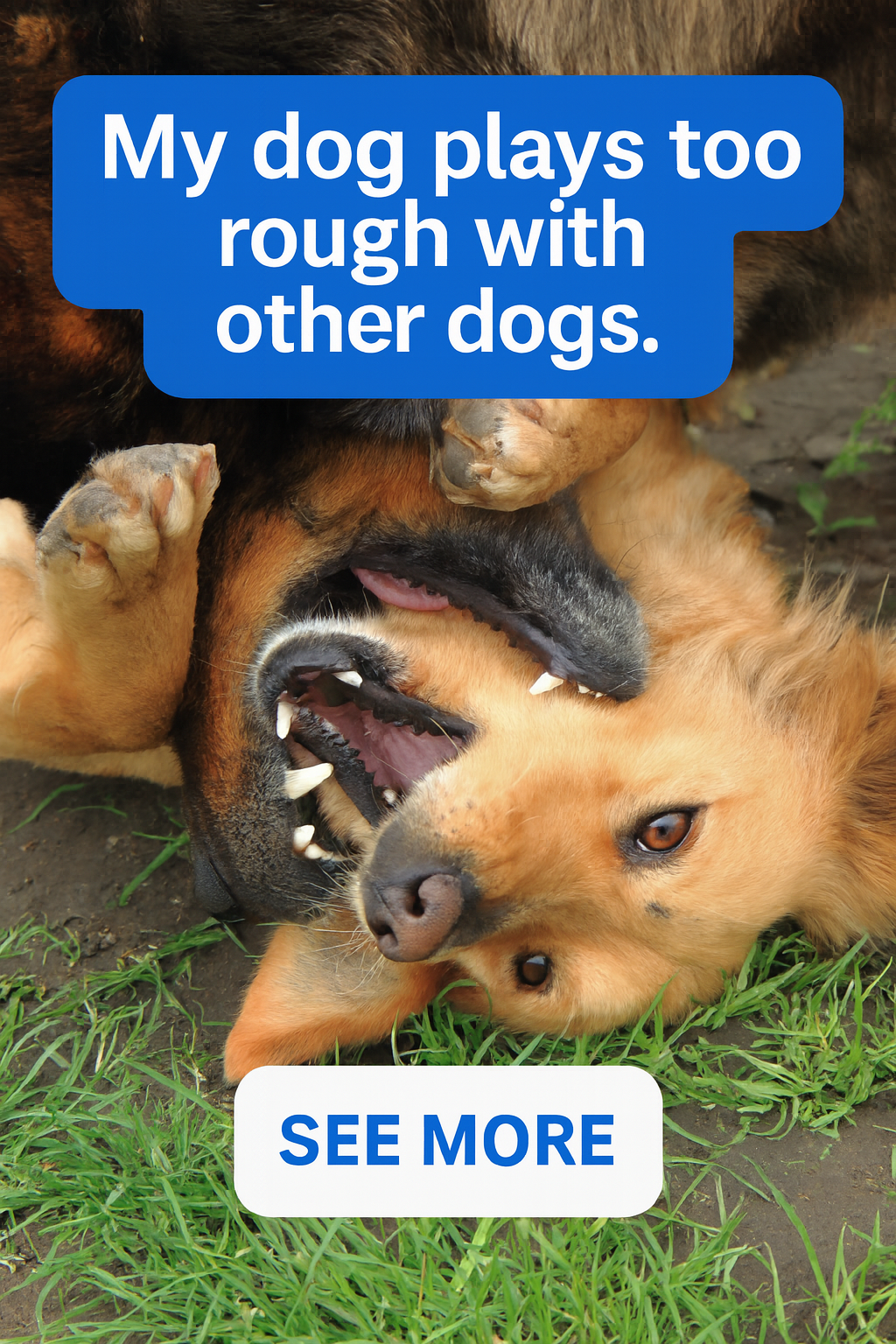
Does your dog slam into other dogs, bite hard during play, pin them down, or ignore their signals to stop? Rough play can look scary—and sometimes it is a problem. While some dogs naturally play harder than others, not all rough play is healthy or safe.
This article explains why some dogs play too rough, how to tell play from aggression, when to step in, and how to teach safer social play.
What Does “Playing Too Rough” Look Like?
You may notice your dog:
-
Body-slamming or tackling other dogs
-
Biting the neck, ears, or legs hard
-
Chasing relentlessly without pauses
-
Ignoring yelps or avoidance signals
-
Playing intensely while the other dog looks stressed
-
Escalating instead of calming down
The biggest red flag is one-sided play—when only one dog is having fun.
Why Some Dogs Play Too Rough

1. High Energy or Arousal (Most Common)
Some dogs get overstimulated quickly.
-
Young dogs and adolescents
-
High-energy or working breeds
-
Dogs without enough daily exercise
When arousal spikes, self-control drops.
2. Poor Social Skills
Dogs that missed early social learning may:
-
Not recognize calming signals
-
Fail to pause or self-regulate
-
Think constant intensity = normal play
This isn’t aggression—it’s lack of feedback learning.
3. Mismatched Play Styles
Not all dogs play the same way.
-
Some love wrestling
-
Others prefer chase or gentle play
Problems arise when styles don’t match.
4. Anxiety or Frustration Disguised as Play
⚠️ Often overlooked.
Some dogs use rough play to:
-
Release stress
-
Control the interaction
-
Mask nervousness
This can escalate quickly if not managed.
5. Reinforced Rough Behavior
If rough play:
-
Is allowed to continue
-
Gets attention
-
Isn’t interrupted
Your dog learns: “This is acceptable.”
Play vs. Aggression — How to Tell the Difference
Healthy Play
✔ Role reversals (chaser becomes chased)
✔ Frequent pauses
✔ Loose, bouncy movements
✔ Self-handicapping (gentler with smaller dogs)
Concerning Play

🚩 Signs include:
-
Stiff body posture
-
Hard staring
-
Growling with no breaks
-
Ignoring yelps or attempts to disengage
-
Escalating intensity
If you’re unsure, interrupt safely.
When Rough Play Becomes a Problem
🚨 Step in if your dog:
-
Repeatedly overwhelms other dogs
-
Causes fear, injuries, or fights
-
Can’t disengage when called
-
Gets worse over time
Unchecked rough play can damage social confidence in other dogs—and in your own.
What You Can Do Right Now
Interrupt Early and Calmly
✅ Call your dog away before escalation
✅ Use leashes or long lines initially
✅ Give short “cool-down” breaks
Choose Better Playmates
✅ Match size, energy, and play style
✅ Avoid crowded dog parks
✅ Prefer structured playdates
Teach Self-Regulation
✅ Reward calm check-ins
✅ Practice recall during play
✅ Reinforce pauses
❌ Don’t punish
❌ Don’t wait for a fight to intervene
Training Strategies That Help
-
Impulse-control training (sit, wait, leave it)
-
Structured social exposure
-
Supervised group classes
-
Professional trainer guidance if needed
Dogs can learn to play politely with the right support.
Should You Avoid Dog Play Entirely?
Not necessarily.
Some dogs:
-
Prefer people over dogs
-
Do better with one-on-one play
-
Need limited, structured interactions
That’s okay. Social success doesn’t mean loving every dog.
Final Takeaway
A dog that plays too rough isn’t “bad”—they’re often overstimulated, under-skilled, or mismatched. With guidance, most dogs learn how to play safely and respectfully.
🐾 Good play isn’t about intensity—it’s about consent, balance, and breaks. Teaching that now protects everyone later.