
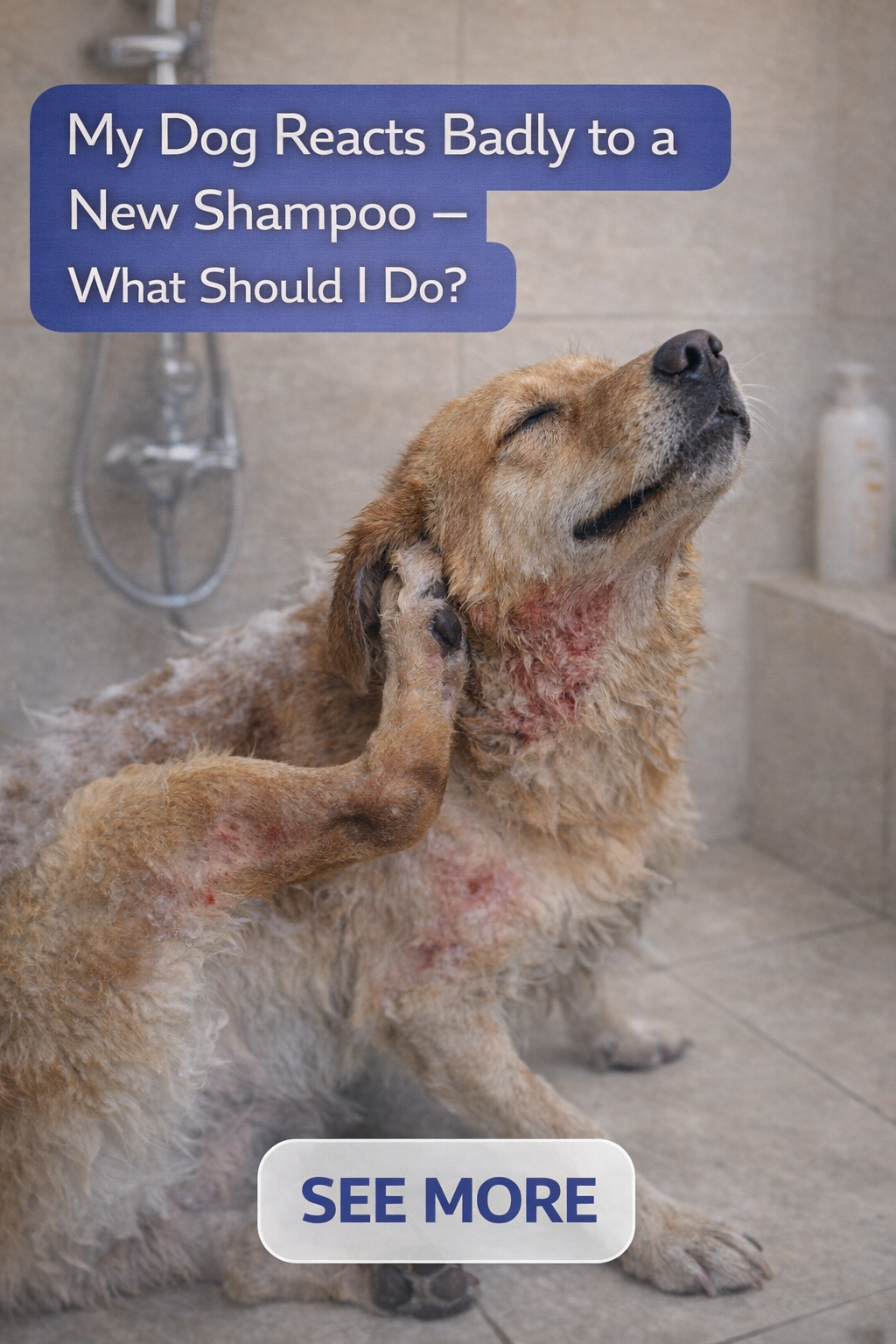
If your dog started itching, scratching, developing red skin, or acting uncomfortable right after a bath with a new shampoo, this is a very common problem—and it shouldn’t be ignored. Dogs have much more sensitive skin than humans, and even shampoos labeled “natural” or “gentle” can trigger reactions.
This article explains why dogs react badly to new shampoos, how serious it might be, and what you should do immediately to protect your dog’s skin.
Common Signs of a Shampoo Reaction
You may notice your dog:
-
Scratching or biting at the skin nonstop
-
Red, inflamed, or blotchy skin
-
Dry flakes or dandruff
-
Hives or raised bumps
-
Excessive licking of paws or belly
-
Shaking or rubbing against furniture
-
Acting restless or uncomfortable
👉 Symptoms often appear within minutes to 24 hours after bathing.
Why Dogs React Badly to New Shampoo
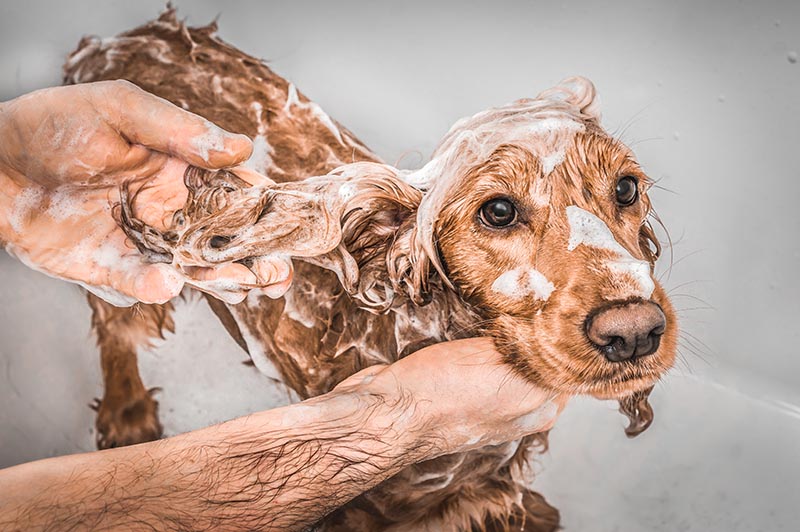
1. Contact Dermatitis (Most Common)
This is a direct skin reaction.
-
Harsh cleansers
-
Fragrances
-
Essential oils
Even brief contact can irritate sensitive skin.
2. Fragrances & Essential Oils
Ingredients like:
-
Tea tree oil
-
Lavender
-
Citrus extracts
can be too strong or toxic for some dogs—even in small amounts.
3. Human or Multi-Pet Shampoo
Human shampoos are:
-
Too acidic for dogs
-
Stripping to natural oils
This leads to burning, dryness, and inflammation.
4. Allergic Reaction
Some dogs develop true allergies to:
-
Plant extracts
-
Preservatives
-
Dyes
These reactions can worsen with repeated exposure.
5. Residue Left on the Skin
Incomplete rinsing can:
-
Trap chemicals on the skin
-
Cause prolonged irritation
Thick coats make this especially common.
When a Shampoo Reaction Is an Emergency
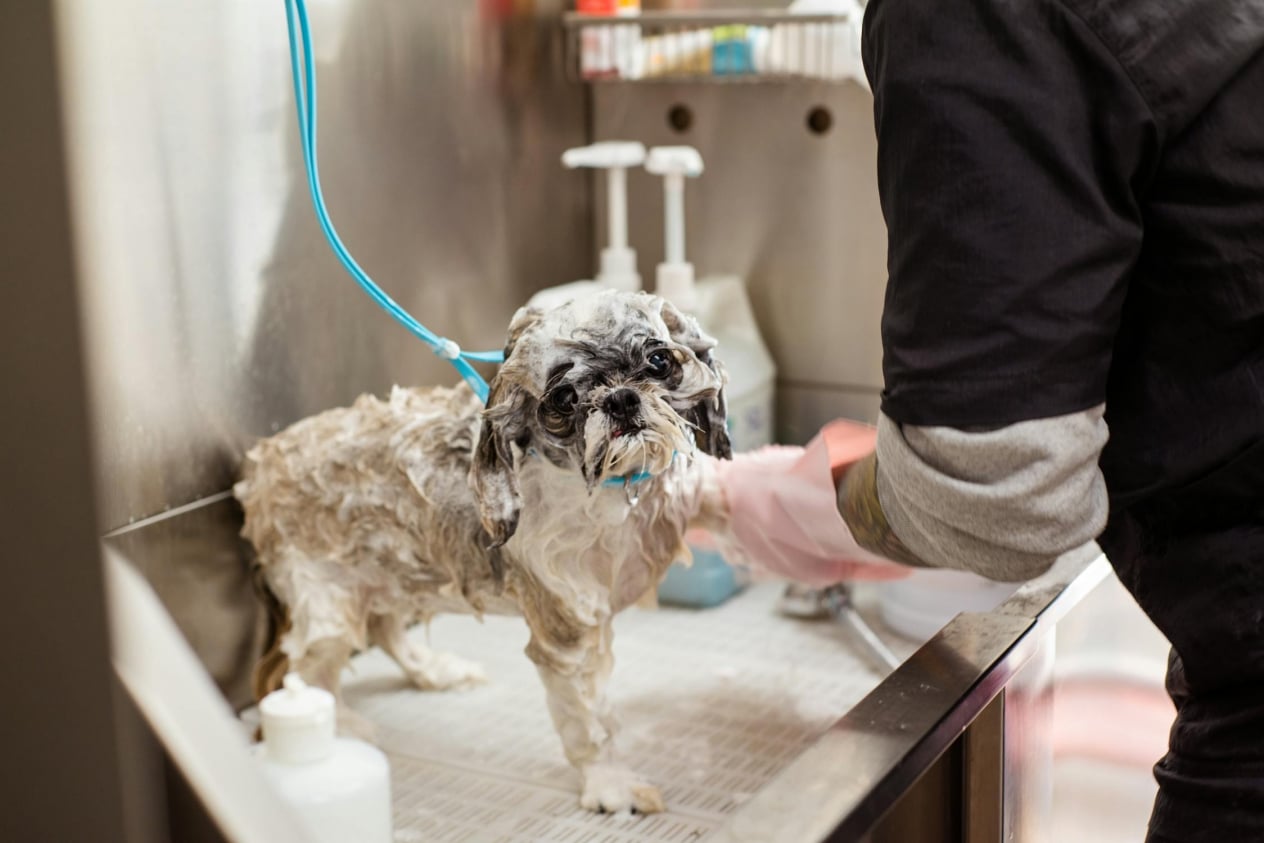
🚨 Seek veterinary care immediately if your dog:
-
Has facial or muzzle swelling
-
Develops widespread hives
-
Is vomiting or lethargic
-
Has difficulty breathing
-
Seems extremely distressed or painful
These signs may indicate a serious allergic reaction.
What You Should Do Right Now
1. Rinse Thoroughly
-
Rinse your dog with lukewarm water only
-
Continue rinsing for several minutes
-
Focus on armpits, belly, paws, and neck
Removing residue is the most important first step.
2. Stop Using the Shampoo
Do not try it again—even if the reaction seems mild.
3. Prevent Further Skin Damage
-
Stop brushing irritated areas
-
Use an E-collar if licking becomes intense
-
Keep your dog cool and calm
4. Monitor Closely for 24–48 Hours
Watch for:
-
Worsening redness
-
Open sores
-
Signs of infection
If symptoms don’t improve, contact your vet.
What Vets May Do
Your veterinarian may:
-
Prescribe anti-itch or anti-inflammatory medication
-
Treat secondary skin infections
-
Recommend soothing medicated shampoos
-
Identify ingredient sensitivities
Early treatment prevents chronic skin problems.
How to Choose a Safe Shampoo Next Time
✔ Labeled specifically for dogs
✔ Fragrance-free
✔ Hypoallergenic
✔ Short ingredient list
✔ Vet-recommended for sensitive skin
Always patch-test a small area first.
Can Dogs Fully Recover From Shampoo Reactions?
Yes—most dogs recover quickly once the irritant is removed and skin is supported. However, repeated exposure can lead to long-term allergies or chronic dermatitis, so prevention is key.
Final Takeaway
If your dog reacts badly to a new shampoo, it’s not just “sensitive skin”—it’s your dog’s body saying this product isn’t safe for them. Acting quickly can prevent days or weeks of discomfort.
🐾 Gentle care, simple ingredients, and quick response make all the difference.