
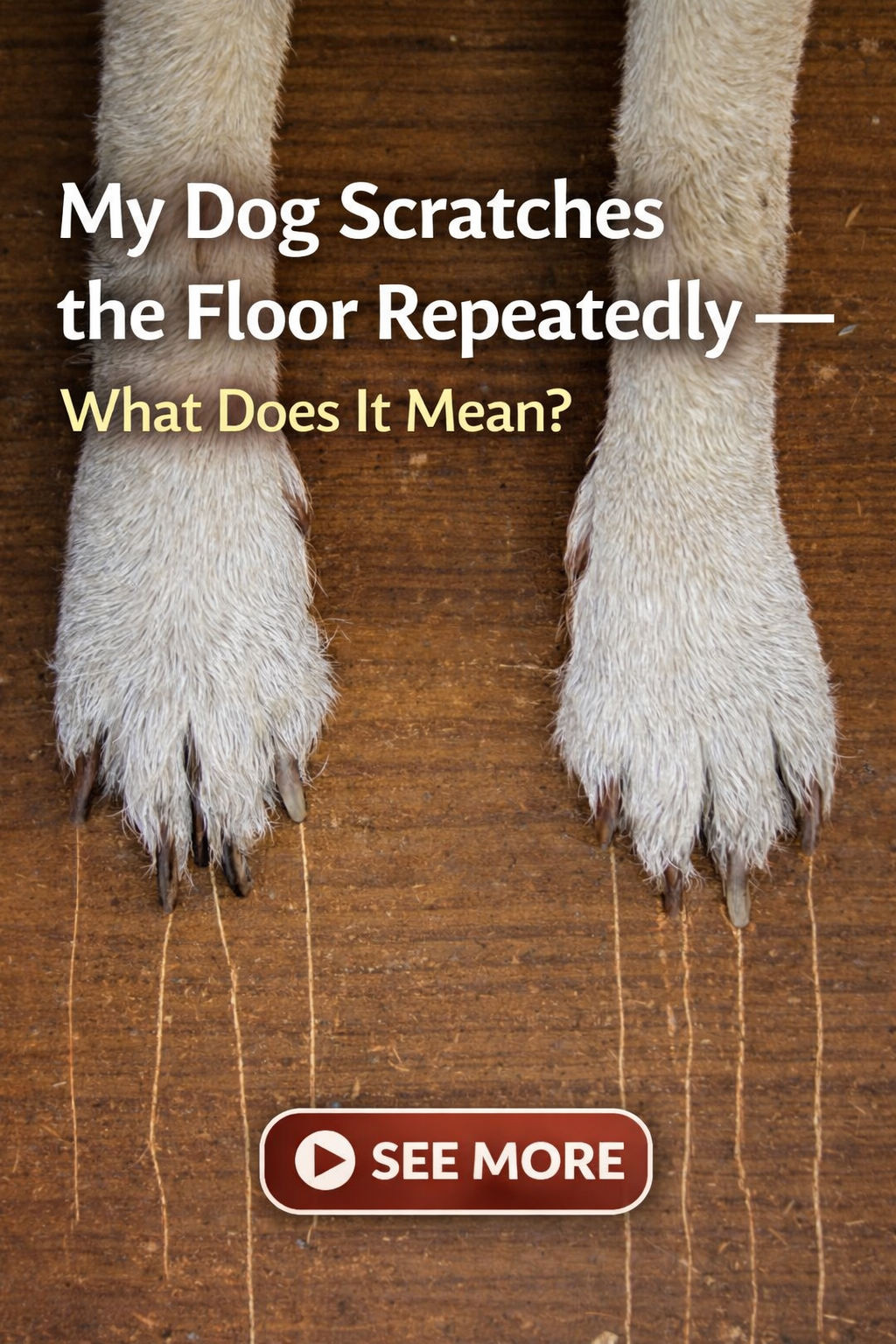
If your dog scratches, paws, or “digs” at the floor over and over, it can look odd or even worrying—but this behavior usually has a clear reason. Most causes fall into instinct, comfort-seeking, anxiety, or medical irritation.
Let’s break down why dogs do this, when it’s normal, and when to intervene.
Common (and Normal) Reasons Dogs Scratch the Floor
1. Nesting / Comfort Behavior (Very Common)
Dogs instinctively scratch to:
-
“Prepare” a resting spot
-
Make the surface more comfortable
-
Cool down or warm up the area
This is especially common before lying down or sleeping.
✅ Normal if it stops once your dog settles.
2. Instinctive Digging
Dogs evolved to dig.
-
Scratching mimics digging behavior
-
Some breeds (terriers, huskies) do this more
Hard floors don’t stop the instinct—they just redirect it.
3. Scent Marking
Dogs have scent glands in their paws.
Scratching can:
-
Leave scent
-
Mark territory
-
Signal comfort in a space
Often happens in favorite spots.
Behavioral Reasons to Watch

4. Stress, Anxiety, or Frustration
Repetitive floor scratching can be a displacement behavior.
Triggers include:
-
Boredom
-
Waiting (before walks/meals)
-
Changes in routine
-
Noise or visitors
If scratching looks frantic or excessive, stress may be involved.
5. Attention-Seeking (Learned Behavior)
If scratching:
-
Makes you react
-
Gets verbal attention
Your dog may repeat it intentionally.
Medical Causes (Less Obvious, Important)
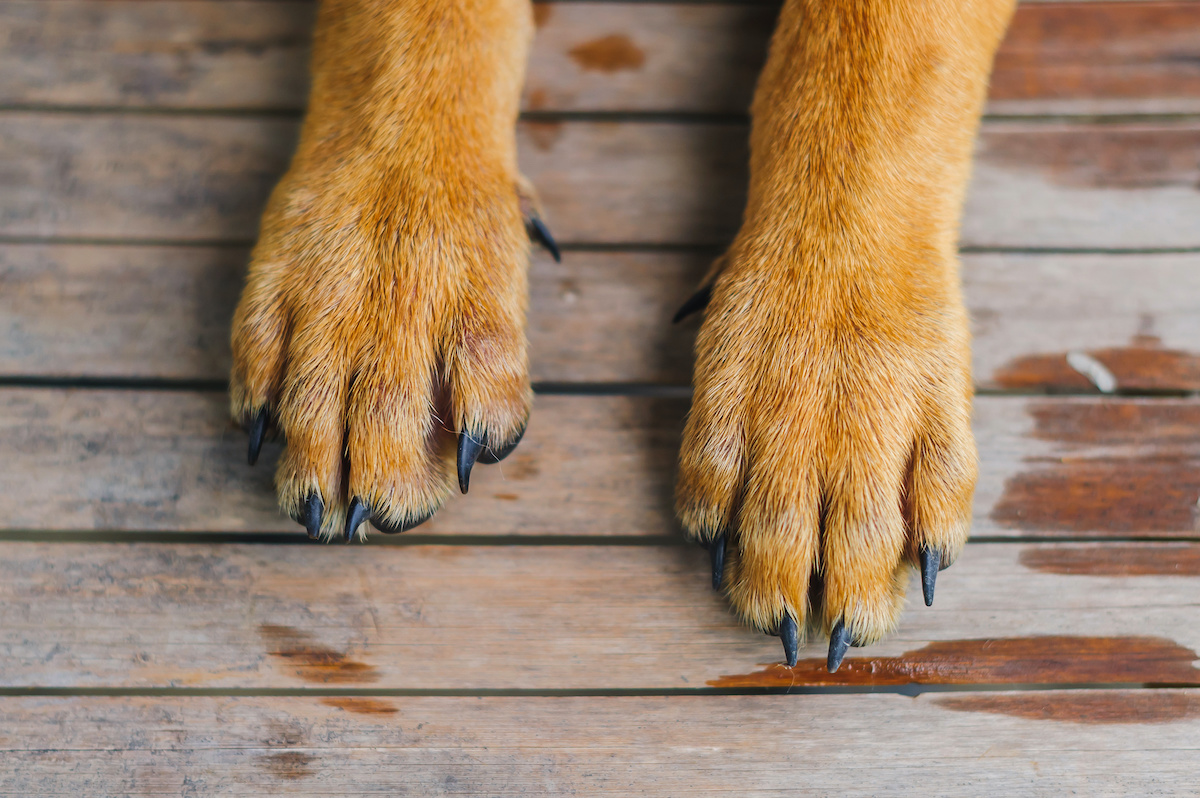
6. Paw Discomfort or Itching
Dogs may scratch the floor if they have:
-
Allergies
-
Nail pain
-
Dry or irritated paw pads
-
Foreign objects (tiny splinters, debris)
Check paws regularly.
7. Cognitive Changes (Senior Dogs)
Older dogs may develop:
-
Repetitive behaviors
-
Restlessness
-
Confusion
Especially if scratching happens at night or is new.
When Floor Scratching Is a Red Flag
🚨 Look closer if:
-
The behavior is new and intense
-
Your dog can’t settle afterward
-
It happens constantly
-
Paws look red, swollen, or sore
-
Your dog seems anxious or compulsive
In these cases, a vet or trainer should evaluate.
What You Can Do Right Now
1. Provide a Comfortable Alternative
-
Soft bed or mat
-
Cooling mat (for hot dogs)
-
Designated “nesting” area
2. Increase Mental & Physical Enrichment
-
Sniff walks
-
Puzzle toys
-
Training games
A tired brain scratches less.
3. Ignore Mild Attention-Seeking
If it’s harmless:
-
Don’t react
-
Reward calm settling instead
4. Check and Care for Paws
-
Trim nails
-
Moisturize dry pads
-
Rinse after outdoor walks
When to See the Vet
📞 Book a visit if:
-
Scratching becomes obsessive
-
There’s visible paw irritation
-
Your dog shows anxiety or confusion
-
The behavior appeared suddenly
Final Takeaway
Most floor scratching is normal canine behavior—nesting, instinct, or comfort. It becomes a concern only when it’s excessive, stress-driven, or linked to pain.
🐾 If your dog scratches the floor, they’re usually just trying to feel “right” in their space. Help them settle, and the behavior often fades.