
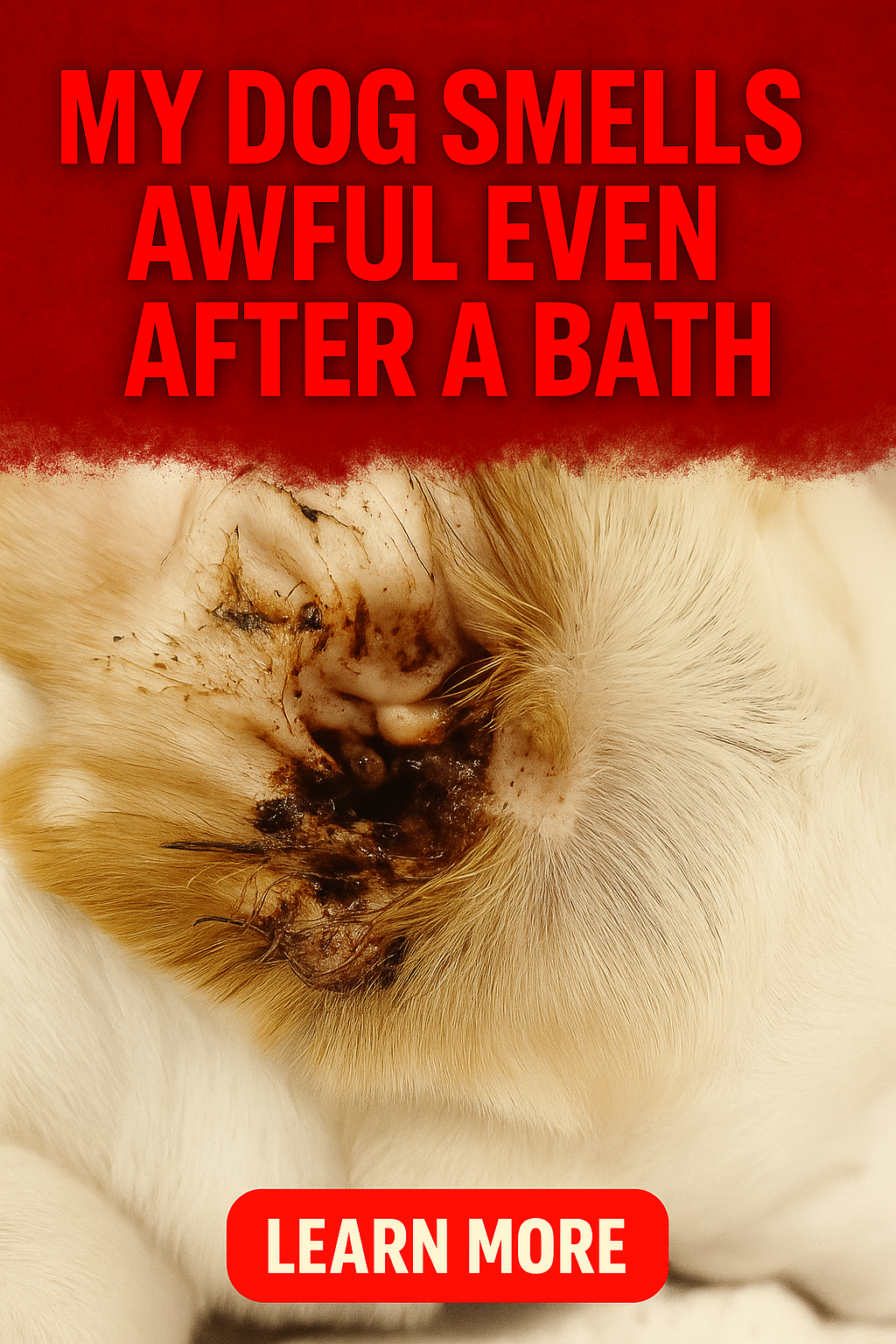
If your dog still smells terrible right after a bath, the problem usually isn’t dirt —
it’s a skin condition.
Persistent odor often comes from yeast, bacteria, oil imbalance, allergies, or chronic inflammation, and no amount of shampooing will remove the smell unless the underlying issue is treated.
Below are the most common causes of bad odor in dogs, with realistic illustrations that match each condition.
1️⃣ Yeast Overgrowth (Malassezia Dermatitis)
Typical Signs:
-
A sour or “corn chip” odor
-
Greasy, sticky skin and coat
-
Redness in armpits, groin, belly, feet
-
Brown discoloration from constant licking
-
Itching that gets worse at night
Why it smells:
Yeast produces oils and byproducts that create a strong, sour, musty odor — the smell returns quickly after bathing.
2️⃣ Bacterial Skin Infection (Pyoderma)

Typical Signs:
-
Red patches, pustules, scabs
-
“Rotten” or fishy smell
-
Circular hair loss
-
Warm or painful skin
-
Yellow crusts or oozing lesions
Bacteria trapped under damaged skin produce a sharp, unpleasant odor that won’t wash off.
3️⃣ Seborrhea (Oily or Flaky Skin Condition)

Typical Signs:
-
Heavy flakes or dandruff
-
Greasy, oily fur even after a bath
-
Chronic “doggy smell”
-
Thickened or irritated skin
-
Worsening odor after a few hours
Seborrhea causes excess oil production → the oils oxidize → persistent, rancid odor.
4️⃣ Allergies (Environmental or Food)

Typical Signs:
-
Red, inflamed skin
-
Constant licking, especially feet
-
Recurrent ear infections (also smelly)
-
Hyperpigmented brown skin
-
Chronic itching leading to infection
Allergies damage the skin barrier, allowing yeast and bacteria to thrive → strong odor grows back fast.
5️⃣ Ear Infections (Odor Spreading to the Body)

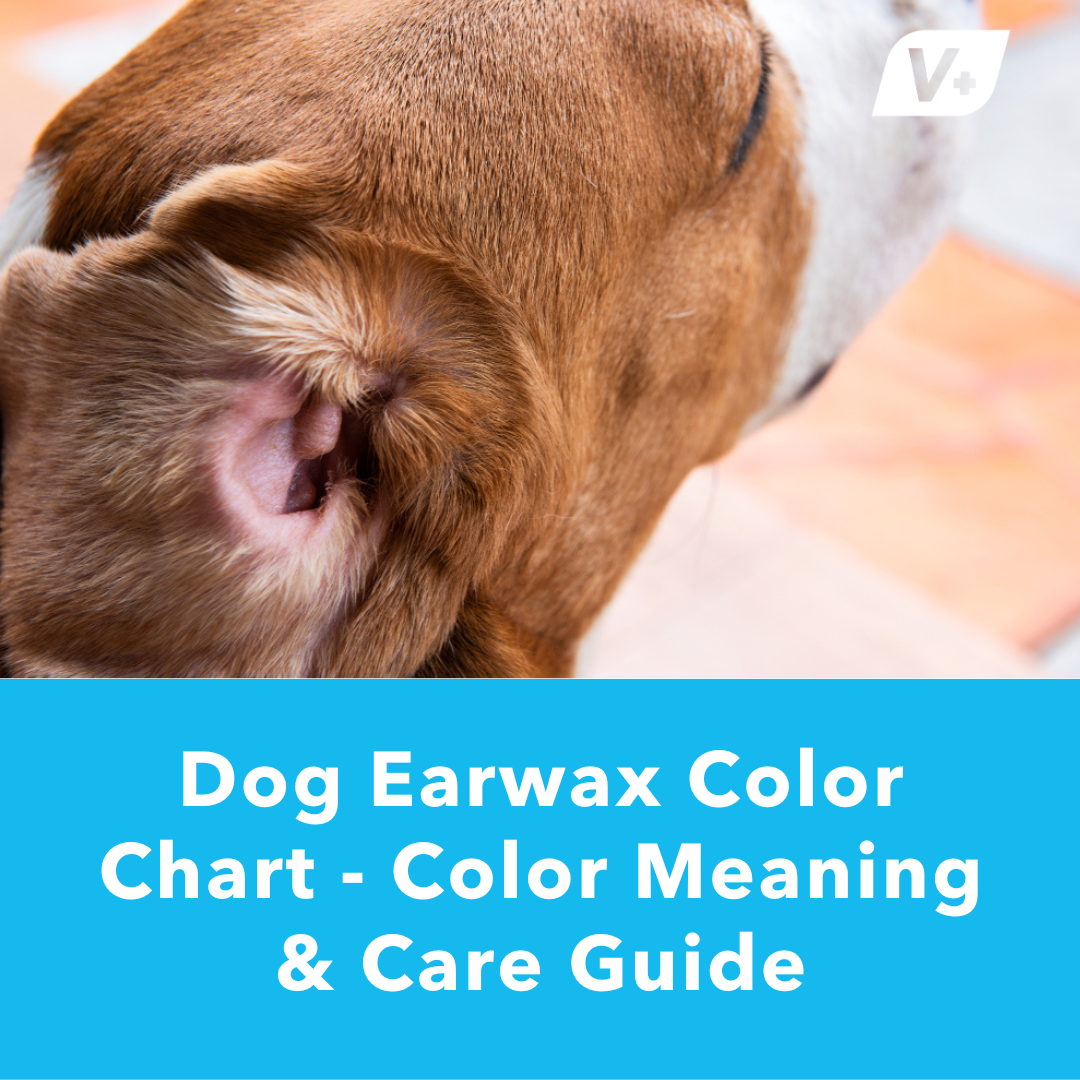
Typical Signs:
-
Very strong smell coming from ears
-
Dark, sticky, or waxy discharge
-
Head shaking or scratching
-
Painful ear canals
-
Odor spreading to neck and chest
Many owners think “the whole dog smells,” but the smell often originates from the ears.
6️⃣ Anal Gland Issues (Sharp, Fishy Odor)
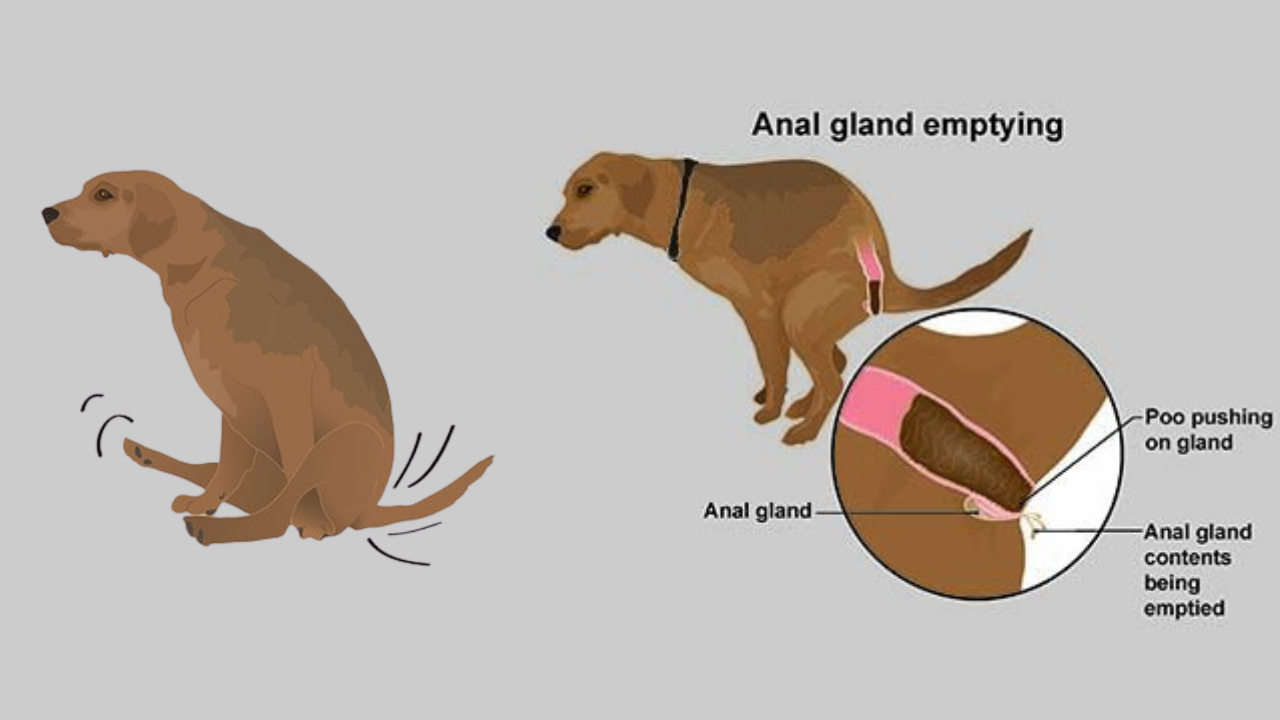
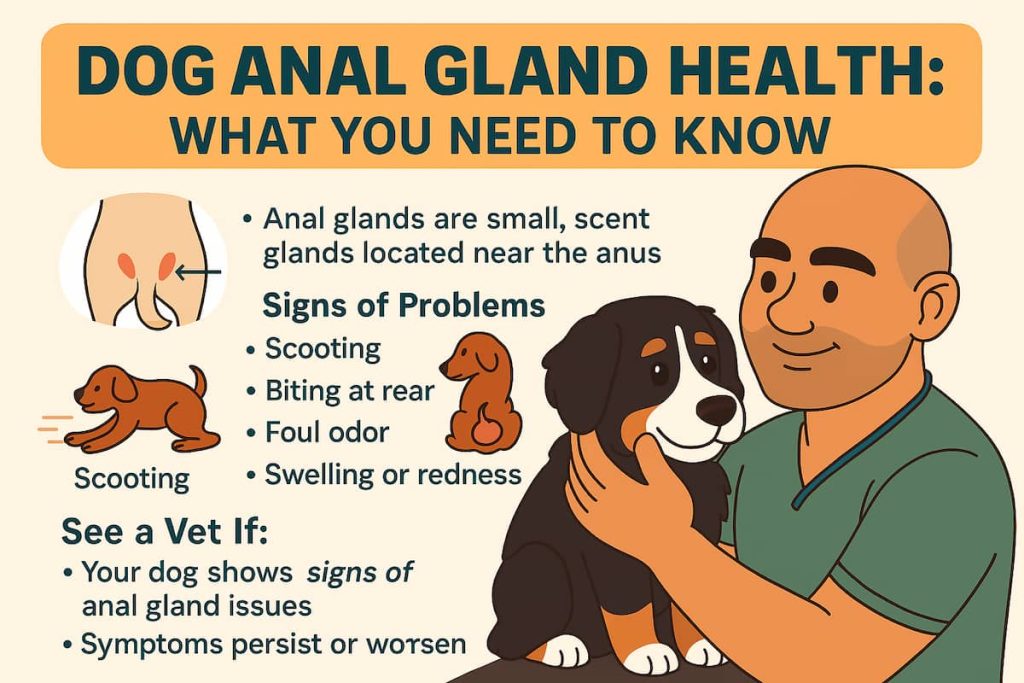
Typical Signs:
-
Fishy, metallic, or foul odor
-
Scooting on the floor
-
Excessive licking under the tail
-
Sudden bursts of sharp smell
While not a skin condition, this is one of the strongest odors a dog can produce.
⚠️ Why the Smell Comes Back After Bathing
Because the odor is caused by microorganisms, inflammation, or oil imbalance, bathing only cleans the surface —
the underlying problem stays and the smell returns within hours to days.
To eliminate the odor, you must treat the medical cause, not just wash the coat.
⭐ How to Fix It
-
Use veterinary medicated shampoo (chlorhexidine / ketoconazole)
-
Treat infections with proper medication
-
Address allergies (environmental, food-related, or flea-related)
-
Add Omega-3 for skin barrier support
-
Clean ears properly if infected
-
Express or treat anal glands when necessary
Persistent odor is never normal — it’s a signal your dog needs treatment.