
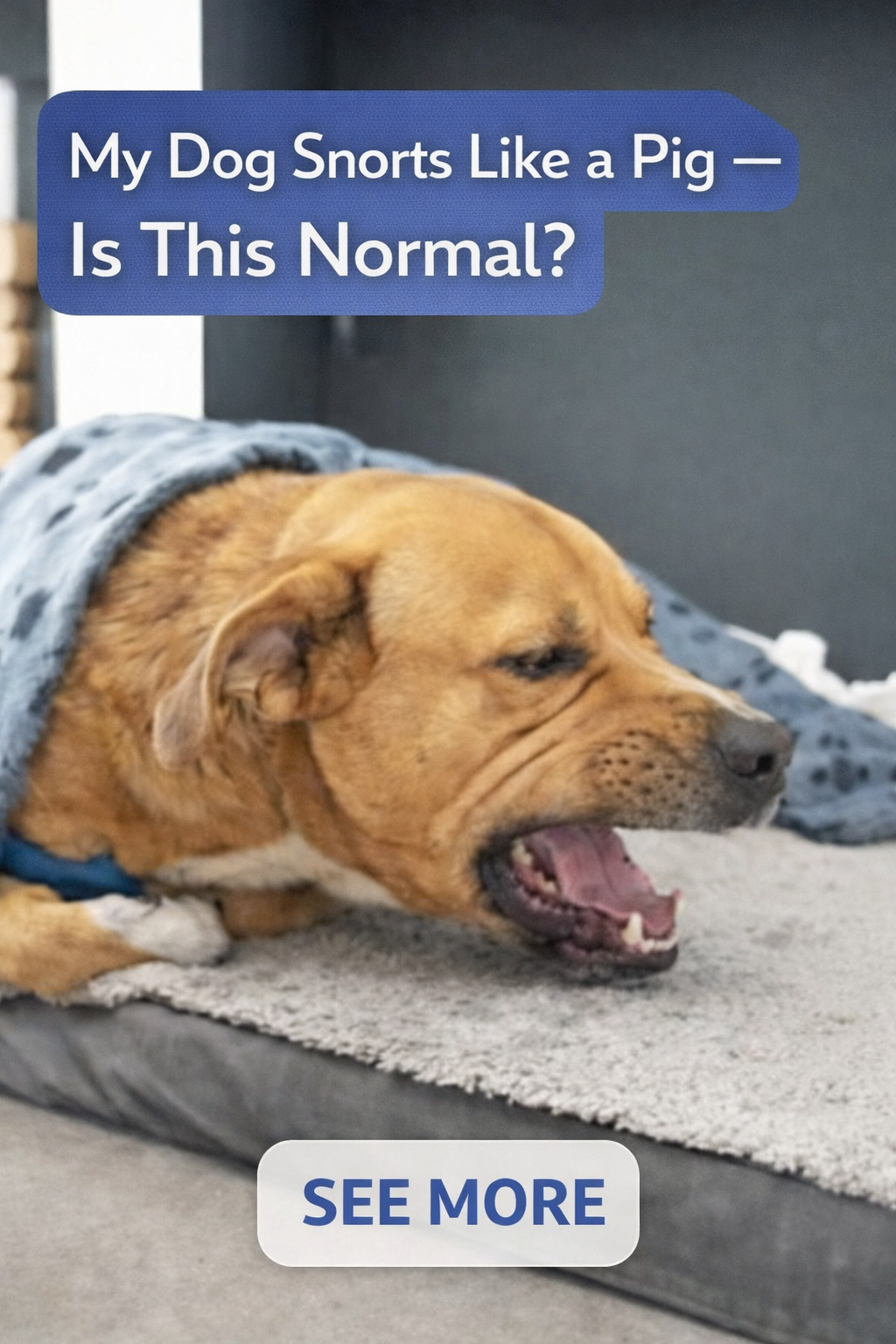
If your dog snorts, honks, or makes pig-like snuffling sounds, it can be funny at first—but also a little worrying. In many cases, this noise is harmless and common, especially in certain breeds. However, frequent, worsening, or distressing snorting can signal a breathing issue that needs attention.
This article explains why dogs snort, when it’s normal vs. concerning, and what you should do to help your dog breathe comfortably.
What Does “Snorting” in Dogs Sound Like?
You might hear:
-
Short, loud snorts through the nose
-
Snuffling or honking sounds
-
Rapid nasal inhalations
-
Noises that stop suddenly and start again
-
Episodes that last seconds to a minute
👉 Many owners confuse snorting with coughing or choking—it’s usually neither.
Most Common Reasons Dogs Snort

1. Reverse Sneezing (Most Common & Usually Harmless)
This is the #1 cause of pig-like snorting.
-
Sudden spasms of the throat
-
Dog pulls air in rapidly through the nose
-
Sounds dramatic but is not dangerous
Triggers include:
-
Excitement
-
Pulling on the leash
-
Dust, pollen, or perfume
-
Temperature changes
Episodes often end on their own.
2. Breed Anatomy
Flat-faced (brachycephalic) dogs are prone to snorting:
-
Short noses
-
Narrow nostrils
-
Elongated soft palate
Snorting can be part of normal breathing for these dogs—but still needs monitoring.
3. Allergies or Nasal Irritation
Inflammation makes airflow noisy.
-
Pollen, dust, smoke
-
Cleaning sprays or fragrances
Often seasonal and paired with sneezing or watery eyes.
4. Overexcitement
Excited dogs breathe fast and shallow.
-
Greeting people
-
Playtime
-
Anticipation (food, walks)
Snorting usually stops once the dog calms down.
5. Mild Upper Respiratory Infection
Can cause temporary snorting.
-
Nasal discharge
-
Sneezing
-
Mild lethargy
Should improve in a few days.
When Snorting Is NOT Normal

🚨 Contact your vet promptly if your dog:
-
Snorts frequently or daily
-
Appears distressed during episodes
-
Has blue or pale gums
-
Collapses or struggles to breathe
-
Has thick, bloody, or foul nasal discharge
-
Snorts even at rest or during sleep
-
Is a senior dog with sudden onset
Persistent snorting can indicate airway obstruction, infection, polyps, or worsening brachycephalic airway disease.
What You Can Do During a Snorting Episode
✔ Stay calm—panic can worsen it
✔ Gently massage your dog’s throat
✔ Briefly cover the nose and encourage swallowing
✔ Offer a sip of water after the episode
✔ Reduce excitement and leash pressure
❌ Don’t force the mouth open
❌ Don’t shake or restrain harshly
Most reverse sneezing episodes resolve in seconds.
How Vets Diagnose Problem Snorting
Your veterinarian may:
-
Examine nostrils, throat, and airway
-
Check for allergies or infection
-
Evaluate breed-related airway narrowing
-
Recommend imaging or referral if severe
Early assessment prevents chronic breathing problems.
Can Snorting Be Treated?
Yes—depending on the cause:
-
Reverse sneezing: reassurance, trigger control
-
Allergies: antihistamines or environmental changes
-
Infections: medication
-
Anatomical issues: management strategies or surgery in severe cases
Many dogs improve significantly once triggers are controlled.
Final Takeaway
If your dog snorts like a pig occasionally, it’s often normal—especially reverse sneezing or breed anatomy. But if snorting becomes frequent, intense, or distressing, it’s your dog’s way of saying breathing isn’t easy.
🐾 When in doubt, a quick vet check can bring peace of mind—and better breaths for your dog.