
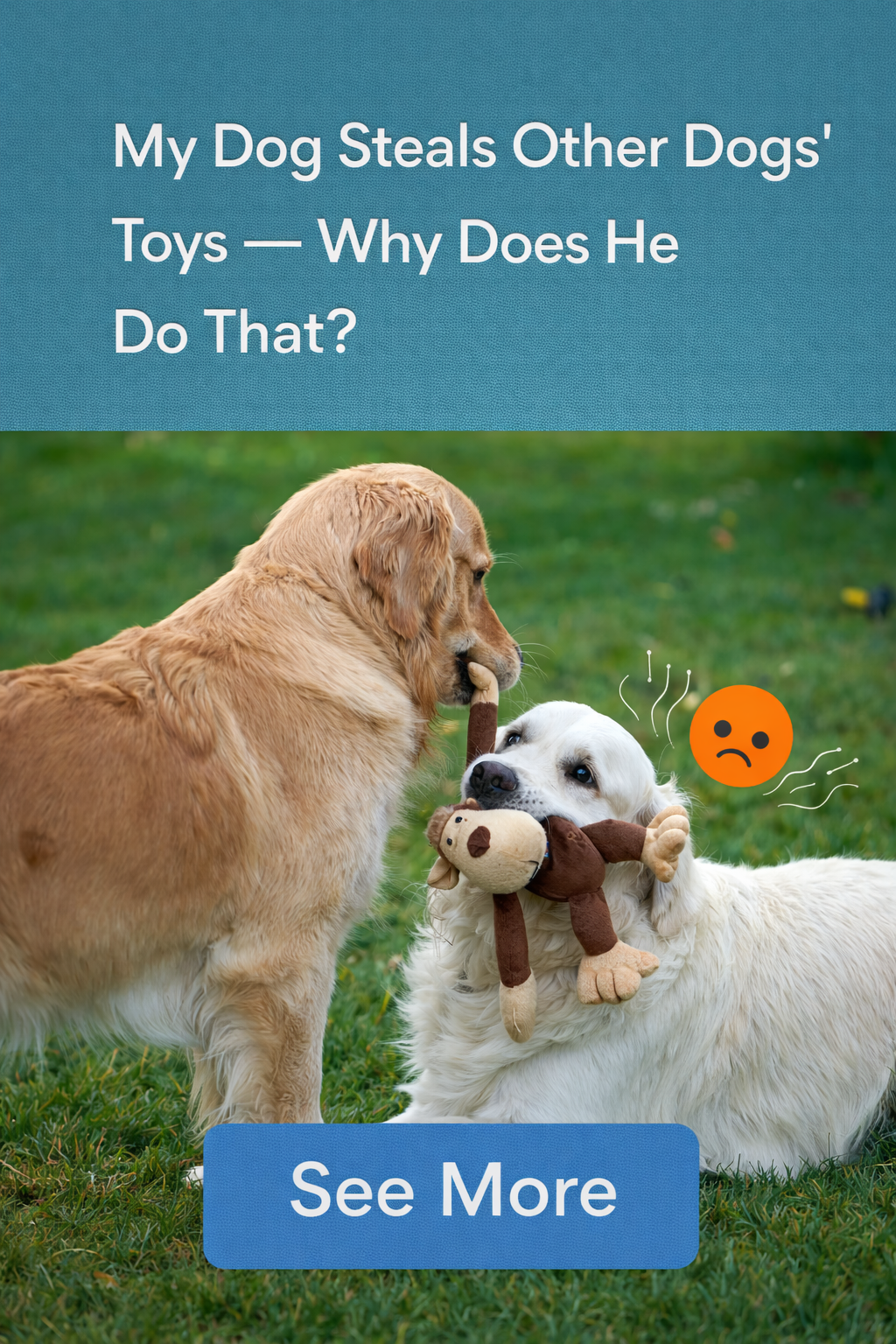
If your dog constantly grabs toys from other dogs, runs off with them, or hoards everything in sight, you’re not alone. This behavior is common—but it’s often misunderstood. While it can look rude or dominant, toy stealing is usually about excitement, insecurity, or poor social skills, not bad manners.
This article explains why dogs steal other dogs’ toys, when it’s harmless vs. problematic, and how to stop it safely without creating conflict.
What Does Toy Stealing Look Like?
You may notice your dog:
-
Taking toys directly out of another dog’s mouth
-
Running away with toys and refusing to share
-
Hoarding multiple toys in one spot
-
Ignoring other dogs unless a toy is involved
-
Becoming tense or possessive once they have the toy
The key issue is repetition and impact on other dogs, not a single playful grab.
Why Dogs Steal Other Dogs’ Toys

1. Overexcitement or Arousal (Most Common)
Some dogs get overwhelmed during play.
-
Toys increase excitement
-
Impulse control disappears
-
Grabbing becomes automatic
This is especially common in young or high-energy dogs.
2. Insecurity or Resource Guarding Tendencies
Toy stealing can be a form of:
-
“I need to control this situation”
-
Fear of missing out
-
Anxiety around shared resources
This doesn’t always include growling—but it can escalate.
3. Poor Social Skills
Dogs that didn’t learn polite play early may:
-
Not understand turn-taking
-
Ignore other dogs’ signals
-
Think possession = play
They’re not mean—they’re socially unskilled.
4. Learned Behavior
If your dog steals toys and:
-
Other dogs back off
-
Humans laugh or don’t intervene
Your dog learns:
👉 “This works.”
5. Preference for Objects Over Dogs
Some dogs enjoy toys more than social interaction.
-
They steal toys to avoid direct play
-
The toy becomes a comfort item
When Toy Stealing Becomes a Problem

🚨 Address the behavior immediately if your dog:
-
Causes fights or scuffles
-
Growls, snaps, or freezes over toys
-
Makes other dogs anxious or avoidant
-
Hoards toys obsessively
-
Escalates over time
Unchecked toy stealing can turn into resource guarding.
What NOT to Do
❌ Don’t label your dog as “dominant”
❌ Don’t let dogs “work it out” if tension rises
❌ Don’t punish or yell
❌ Don’t allow free-for-all toy access in groups
These approaches increase stress and conflict.
What You Can Do Right Now
Manage the Environment
✅ Remove toys during group play
✅ Use toys only in structured games
✅ Choose neutral spaces
Teach Toy Manners
✅ Practice “drop it” and “leave it” at home
✅ Reward giving toys back
✅ Reinforce calm disengagement
Interrupt Early
✅ Call your dog away before stealing
✅ Use short breaks to reset arousal
✅ Keep sessions brief and positive
Consistency matters more than force.
Training That Actually Helps
Toy-stealing dogs benefit from:
-
Impulse-control training
-
Supervised playdates
-
Matching play styles (not all dogs like toys)
-
Certified trainer guidance if needed
Many dogs improve quickly once rules are clear and predictable.
Should You Avoid Dog Play Entirely?
Not necessarily—but:
-
Some dogs play better without toys
-
Some prefer one-on-one interactions
-
Toy-free play can be calmer and safer
Social success doesn’t require sharing toys.
Final Takeaway
Stealing other dogs’ toys isn’t about dominance—it’s usually about excitement, insecurity, or missing social skills. With structure, supervision, and training, most dogs learn to play politely and confidently.
🐾 Good play is about consent, balance, and safety—not who owns the toy. Helping your dog learn that keeps everyone happier.