
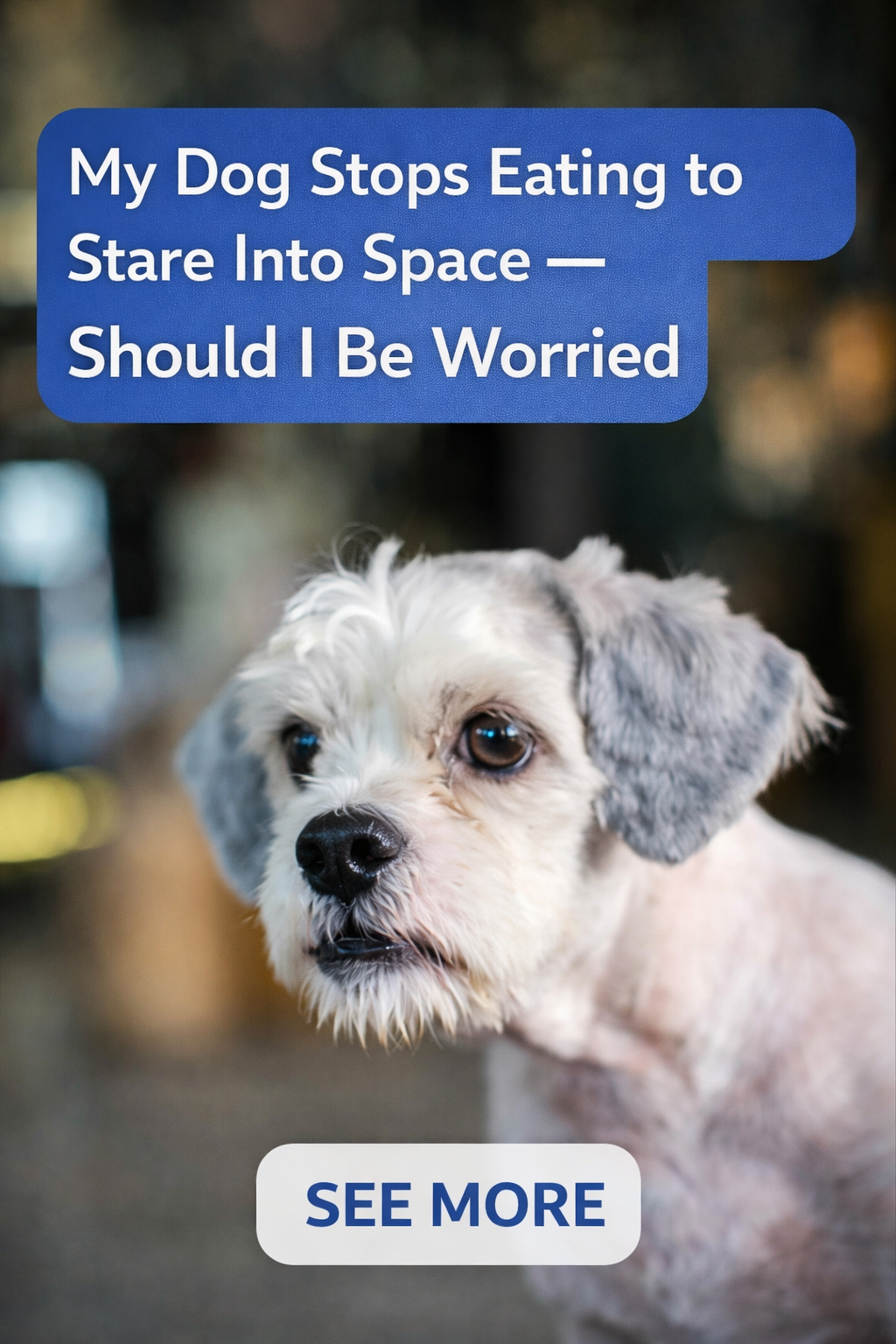
If your dog suddenly pauses mid-meal and stares blankly into space, seeming disconnected or “zoned out,” it’s understandable to feel alarmed. While a brief pause can be harmless, repeated episodes—especially during eating—can signal neurological, cognitive, sensory, or stress-related issues that deserve attention.
This article explains what this behavior can mean, how to tell harmless pauses from red flags, and what steps to take next.
What Does This Behavior Look Like?
You may notice your dog:
-
Freezing mid-bite or mid-chew
-
Staring at a wall, corner, or nothing in particular
-
Not responding when you call their name
-
Resuming eating after several seconds or minutes
-
Appearing confused or distant afterward
👉 The concern is interruption + staring + reduced responsiveness, especially if it repeats.
Common Reasons Dogs Stop Eating to Stare

1. Focal (Partial) Seizures
⚠️ Important to rule out
-
Brief staring spells
-
Pausing behavior without falling over
-
Lip smacking, swallowing, or subtle twitching may occur
Dogs often resume activity afterward as if nothing happened.
2. Canine Cognitive Dysfunction (Senior Dogs)
Similar to dementia in humans.
-
Disorientation
-
Staring episodes
-
Disrupted routines (including eating)
Often paired with nighttime wandering or confusion.
3. Anxiety or Freeze Response
Stress can interrupt normal behavior.
-
Loud noises
-
Pressure during mealtime
-
Changes in environment
The brain pauses to “assess,” causing a freeze and stare.
4. Sensory Changes (Hearing or Vision)
Dogs with sensory decline may:
-
Pause to orient themselves
-
Stare while processing unfamiliar sounds or shadows
More common in older dogs.
5. Pain or Nausea
Discomfort can break focus.
-
Dental pain
-
GI upset or reflux
Dogs may stop eating, stare, then cautiously resume.
6. Learned Attention or Distraction
Occasionally:
-
A dog learns that pausing gets attention
-
Or becomes easily distracted during meals
This is usually brief and easily interrupted.
When This Is a Red Flag
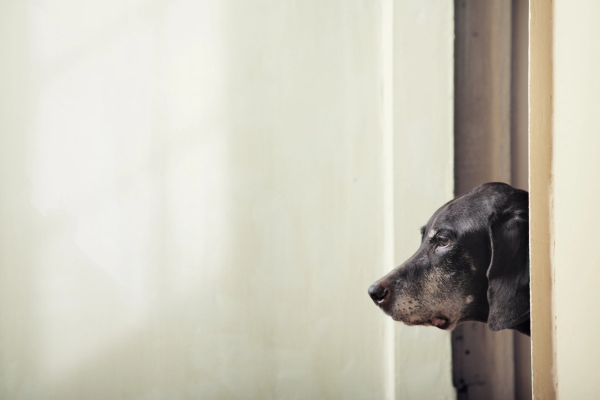
🚨 Contact your vet promptly if your dog:
-
Has repeated staring spells
-
Is unresponsive to voice or touch during episodes
-
Shows lip smacking, twitching, or swallowing motions
-
Seems confused after the episode
-
Is a senior dog with new onset
-
Loses appetite, weight, or energy
Frequent interruptions during eating are not normal.
What You Can Do Right Now
-
Time the episodes (seconds vs. minutes)
-
Gently test responsiveness (say name, clap softly—don’t startle)
-
Record a short video to show your vet
-
Note triggers (noise, stress, time of day)
-
Avoid pressure during meals
❌ Don’t shake or yell
❌ Don’t assume it’s “just spacing out” if it repeats
How Vets Evaluate Staring Episodes
Your veterinarian may:
-
Review videos and episode history
-
Perform a neurological exam
-
Run blood tests (metabolic causes)
-
Assess cognitive function (in seniors)
-
Recommend imaging or referral if seizures are suspected
Early evaluation often leads to effective management.
Can This Be Treated?
Yes—many causes are manageable:
-
Seizures: medication and monitoring
-
Cognitive dysfunction: supportive care and meds
-
Anxiety: routine adjustments and behavior support
-
Pain/GI issues: targeted treatment
The sooner the cause is identified, the better the outcome.
Final Takeaway
If your dog stops eating to stare into space, it’s more than a quirk when it happens repeatedly. It’s often your dog’s way of signaling a brief neurological or emotional interruption.
🐾 Trust patterns you notice. Capturing details and acting early can protect your dog’s health and peace of mind.