
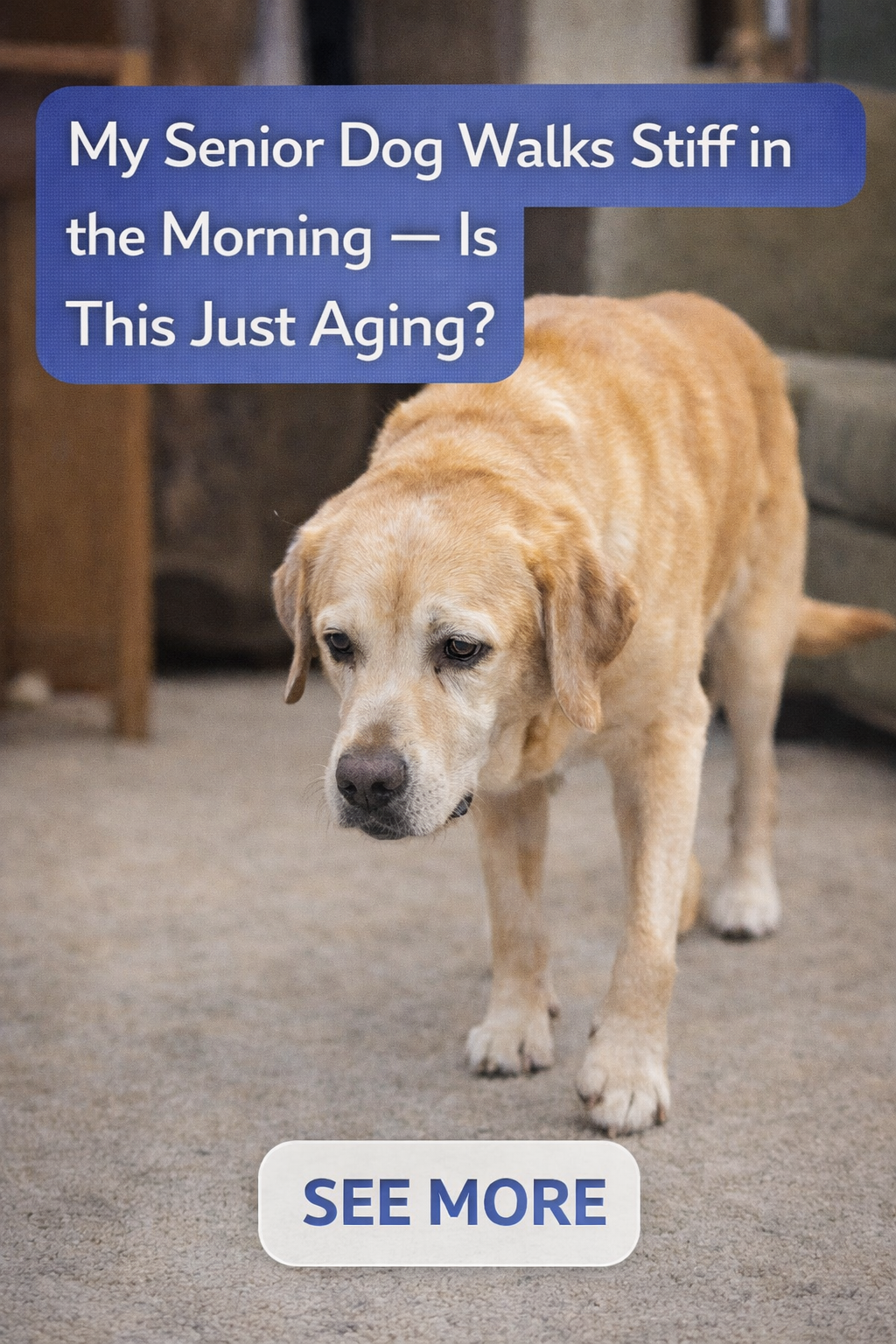
If your senior dog moves stiffly when getting up in the morning, takes short steps, or seems slow and uncomfortable after resting overnight, this is very common—but not something to ignore. While aging does affect joints, morning stiffness is usually a sign of pain, inflammation, or reduced joint mobility, not “just old age.”
This article explains why older dogs are stiff in the morning, when it’s normal vs. concerning, and how you can help your dog move more comfortably.
What Morning Stiffness Looks Like
You may notice your dog:
-
Hesitates to stand up after sleeping
-
Walks stiffly for the first few minutes
-
Takes shorter steps or limps slightly
-
Needs time to “warm up” before moving normally
-
Seems better after gentle walking
👉 The classic sign: stiff at first, improves with movement.
Most Common Causes of Morning Stiffness in Senior Dogs

1. Arthritis (Most Common Cause)
As dogs age, cartilage wears down.
-
Joints become inflamed and painful
-
Stiffness is worse after long rest
Arthritis often affects hips, knees, elbows, and spine.
2. Reduced Joint Lubrication Overnight
When dogs rest:
-
Joints don’t move
-
Synovial fluid thickens
This makes joints feel “rusty” in the morning—movement helps re-lubricate them.
3. Muscle Loss With Aging
Senior dogs lose muscle mass.
-
Less support for joints
-
More stiffness after inactivity
4. Cold or Damp Weather
Cold temperatures increase stiffness.
-
Winter mornings are often worse
-
Damp conditions intensify joint pain
5. Old Injuries or Structural Issues
Past problems can resurface with age.
-
Previous ligament injuries
-
Hip dysplasia
-
Spinal issues
When Morning Stiffness Is a Red Flag

🚨 Contact your vet if your senior dog:
-
Cries or yelps when standing
-
Refuses to walk or climb stairs
-
Gets worse instead of better after warming up
-
Shows sudden severe limping
-
Loses appetite or energy
These signs may indicate advanced arthritis or another serious condition.
What You Can Do Right Now
Help Your Dog Warm Up Gently
-
Short, slow walk in the morning
-
Avoid sudden running or jumping
-
Give your dog time to loosen up
Improve Sleeping Comfort
-
Orthopedic or memory-foam bed
-
Keep sleeping area warm and draft-free
-
Avoid cold tile or concrete floors
Support Joint Health
-
Maintain a healthy weight
-
Use vet-approved joint supplements
-
Keep nails trimmed to improve traction
Modify the Home
-
Non-slip rugs on floors
-
Ramps instead of stairs
-
Elevated food and water bowls
How Vets Diagnose Morning Stiffness
Your veterinarian may:
-
Perform a joint and mobility exam
-
Assess pain response
-
Take X-rays if needed
-
Recommend pain management plans
Modern arthritis care focuses on comfort, mobility, and quality of life.
Can Senior Dogs Feel Better?
Absolutely. With proper support:
-
Pain can be controlled
-
Mobility can improve
-
Daily life becomes more enjoyable
Many senior dogs regain noticeable comfort and confidence once pain is addressed.
Final Takeaway
If your senior dog walks stiff in the morning, it’s not “just aging”—it’s often arthritis or joint discomfort asking for support. Aging should be comfortable, not painful.
🐾 With early care and small daily adjustments, you can help your dog start every morning moving easier and happier.