
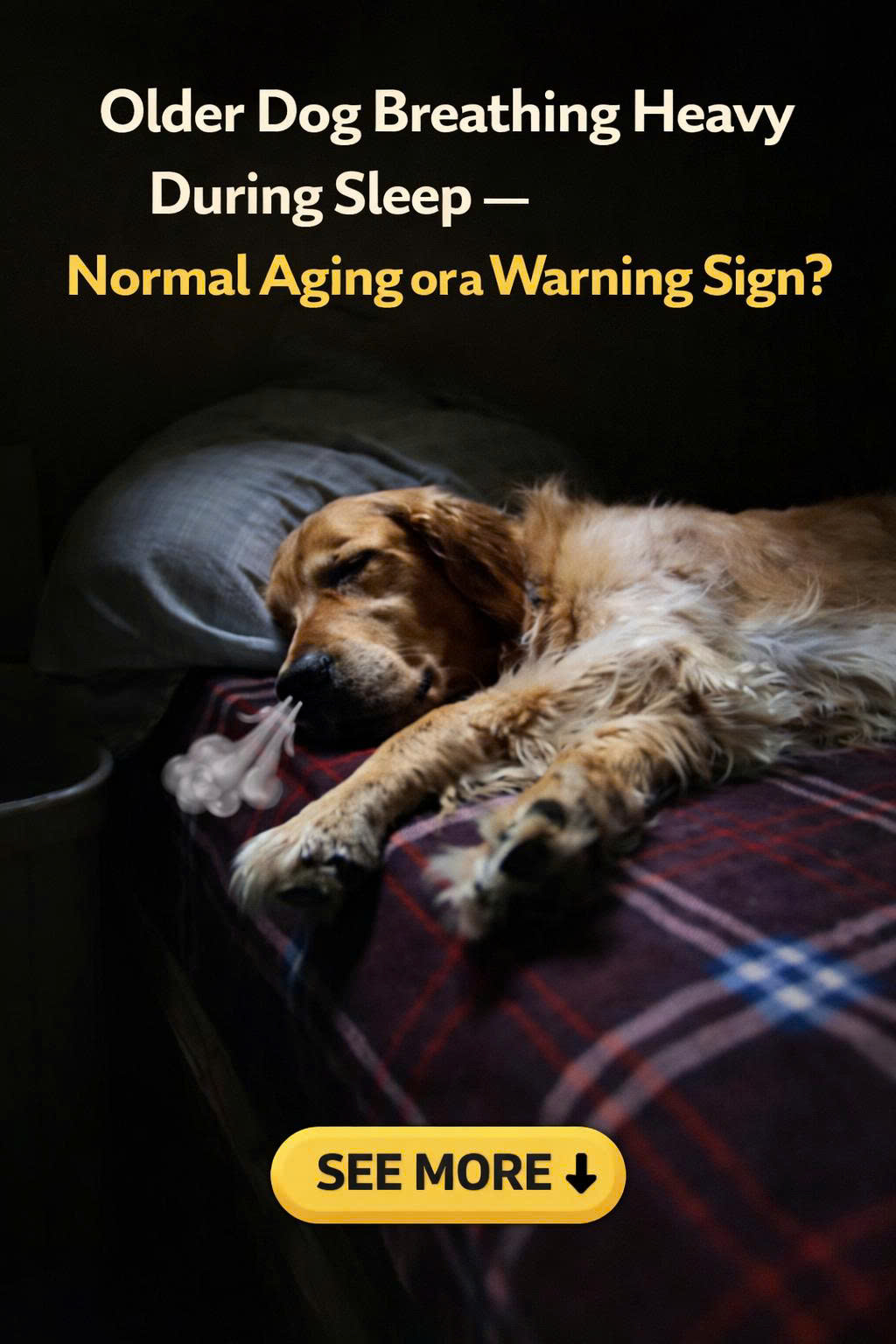
If your senior dog breathes heavily, pants, or breathes fast while sleeping, it can be normal—but it can also signal an underlying health issue that deserves attention. Aging changes how dogs sleep and breathe, yet certain patterns mean it’s time to act.
Here’s how to tell what’s okay, what’s not, and what to do next.
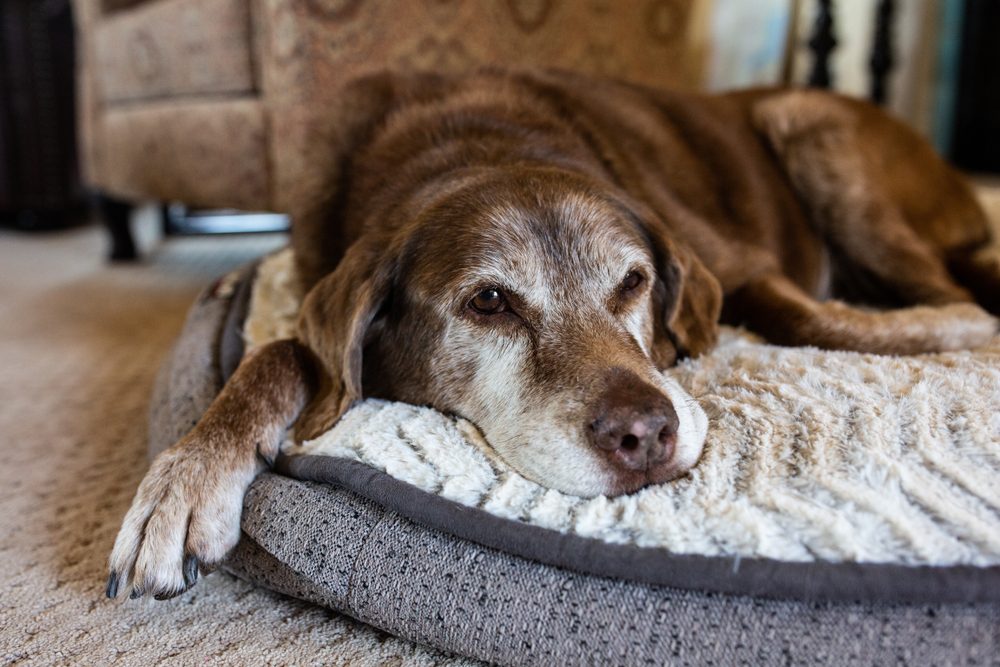
What “Heavy Breathing During Sleep” Looks Like
You might notice:
-
Faster chest movement while asleep
-
Panting during dreams
-
Louder breathing or snoring
-
Pauses, then deeper breaths
-
Normal behavior when awake
👉 Context matters: frequency, intensity, and changes over time.
Common (Often Benign) Reasons
1. Dreaming (REM Sleep)
During dreams, dogs may:
-
Breathe faster
-
Twitch or paddle legs
-
Vocalize softly
If breathing returns to normal when they wake, this is usually harmless.
2. Temperature Regulation
Older dogs may pant more because:
-
They overheat easily
-
Their ability to regulate temperature declines
Warm rooms or thick bedding can worsen this.
3. Body Position
Certain positions compress the chest or airway:
-
Curled tightly
-
Sleeping on the back
-
Head tucked
A simple position change can normalize breathing.
Causes That Need Closer Attention
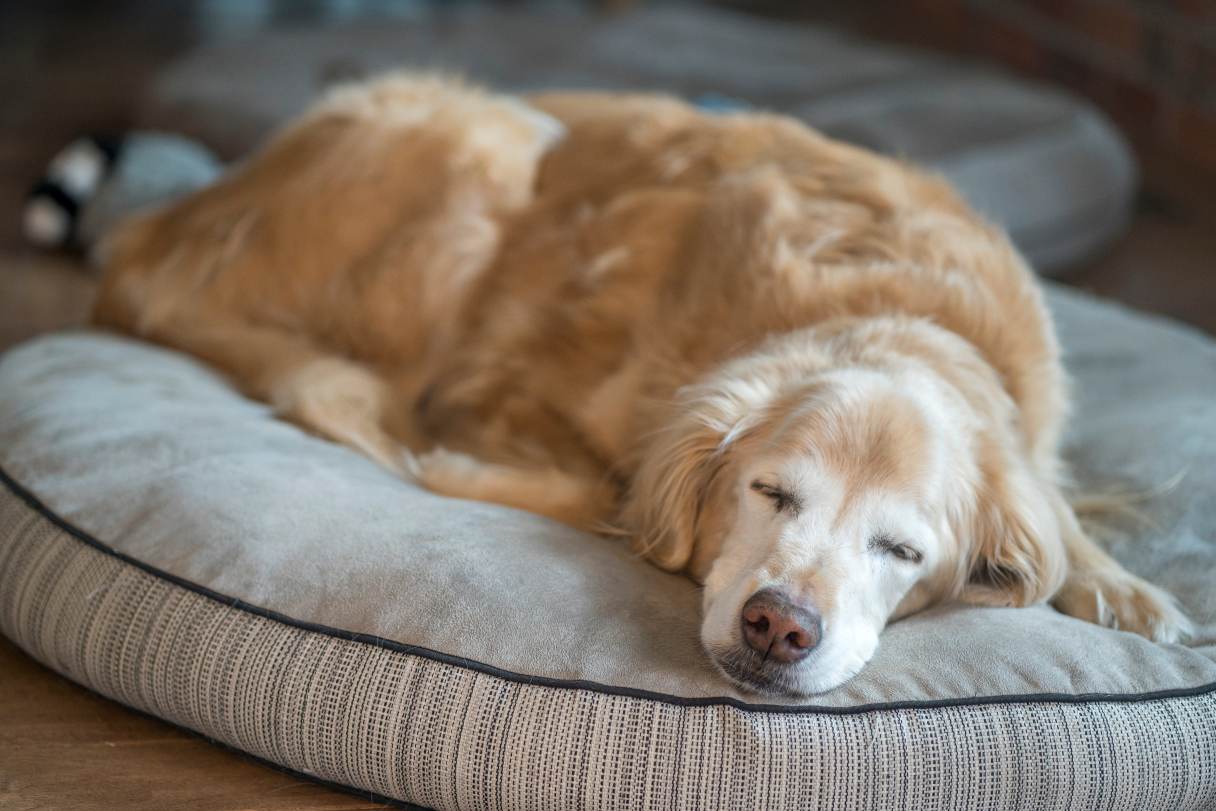
4. Heart Disease (Very Common in Seniors)
Red flags include:
-
Heavy breathing at rest
-
Coughing at night
-
Exercise intolerance
-
Increased sleeping
Heart issues often show up first during sleep.
5. Lung or Airway Disease
Conditions like:
-
Chronic bronchitis
-
Tracheal collapse
-
Lung tumors
can cause labored breathing, especially when relaxed.
6. Pain or Discomfort
Pain can trigger panting—even during rest.
Watch for:
-
Stiffness
-
Trouble getting up
-
Restlessness at night
7. Anxiety or Cognitive Changes
Senior dogs with cognitive decline may:
-
Sleep lightly
-
Breathe irregularly
-
Wake and wander
How to Check If It’s Concerning (At Home)
Count Resting Respiratory Rate (RRR)
-
When your dog is deeply asleep, count breaths for 30 seconds
-
Multiply by 2
Normal: 10–30 breaths/min
🚨 Concerning: Consistently over 30–35 at rest
Track this daily for a few days.
When to See the Vet
📞 Schedule a visit if:
-
Heavy breathing is new or worsening
-
Your dog pants during rest (not just sleep)
-
There’s coughing, weakness, or weight loss
-
RRR is consistently high
🚨 Emergency if you see:
-
Open-mouth breathing while resting
-
Blue or pale gums
-
Collapse or extreme lethargy
What Your Vet May Do
-
Physical exam & heart/lung auscultation
-
Chest X-rays
-
Bloodwork
-
Heart ultrasound (if needed)
Early detection dramatically improves outcomes.
What You Can Do Right Now
-
Keep sleeping area cool and quiet
-
Provide supportive bedding
-
Elevate the head slightly
-
Monitor RRR nightly
-
Avoid strenuous activity until evaluated
❌ Don’t give human meds.
Final Takeaway
Heavy breathing during sleep can be a normal part of aging—but persistent, loud, or fast breathing is often the earliest sign of heart or lung disease in senior dogs. Watching patterns and acting early can add months or years of comfort.
🐾 Sleep is when the body tells the truth—listen carefully.