
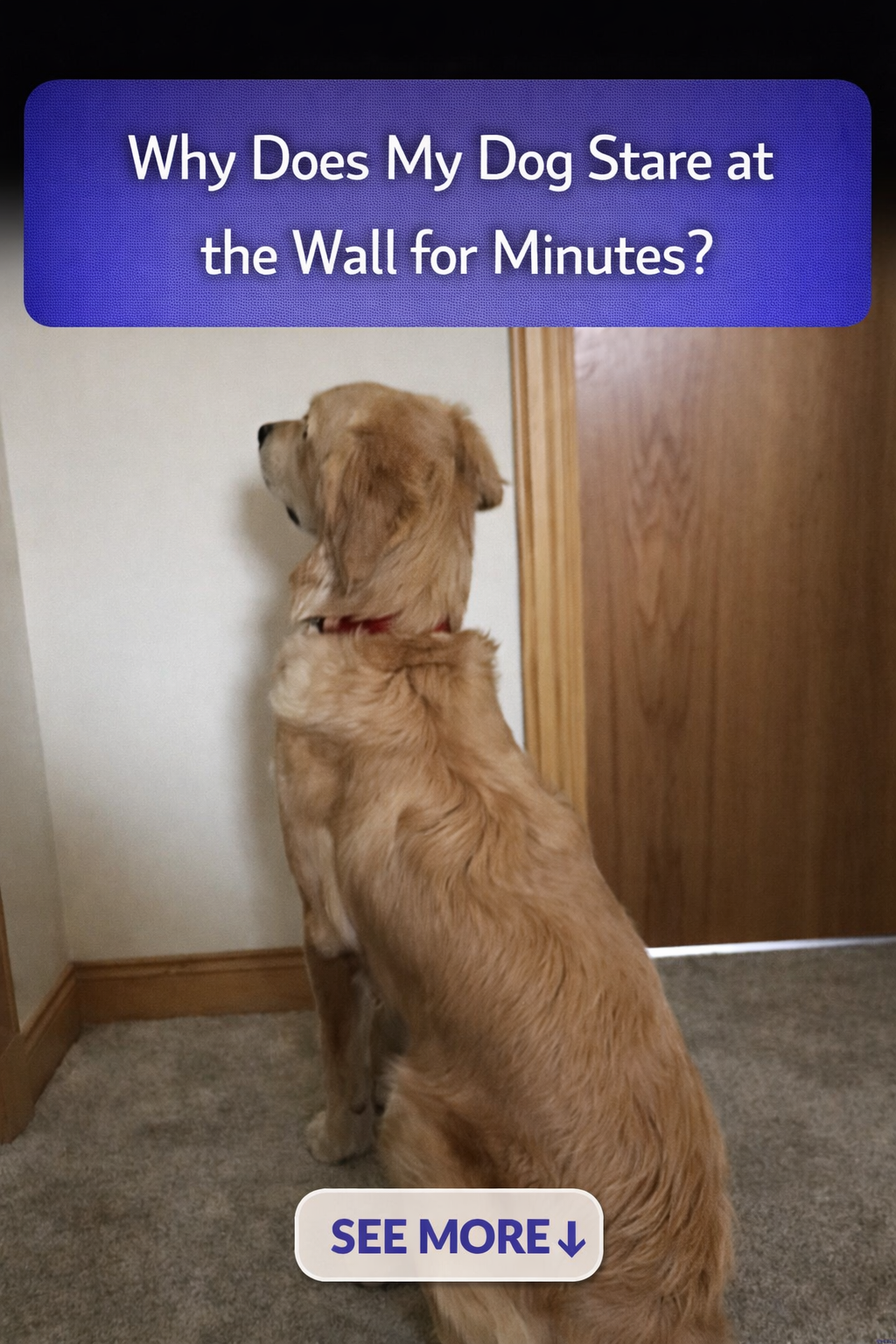
If your dog stands or sits still, staring at a wall for long periods, it can feel unsettling—and for good reason. While brief staring can be harmless, prolonged or repeated wall-staring is not normal behavior and may signal a medical, neurological, or cognitive issue.
This article explains why dogs stare at walls, when it’s harmless vs. concerning, and what you should do next.
What Wall-Staring Behavior Looks Like
You may notice your dog:
-
Standing motionless facing a wall
-
Sitting and staring into space
-
Being unresponsive when you call their name
-
Staring episodes lasting minutes
-
Seeming “checked out” or confused afterward
👉 The biggest concern is duration + repetition, not a single brief moment.
Common Reasons Dogs Stare at the Wall
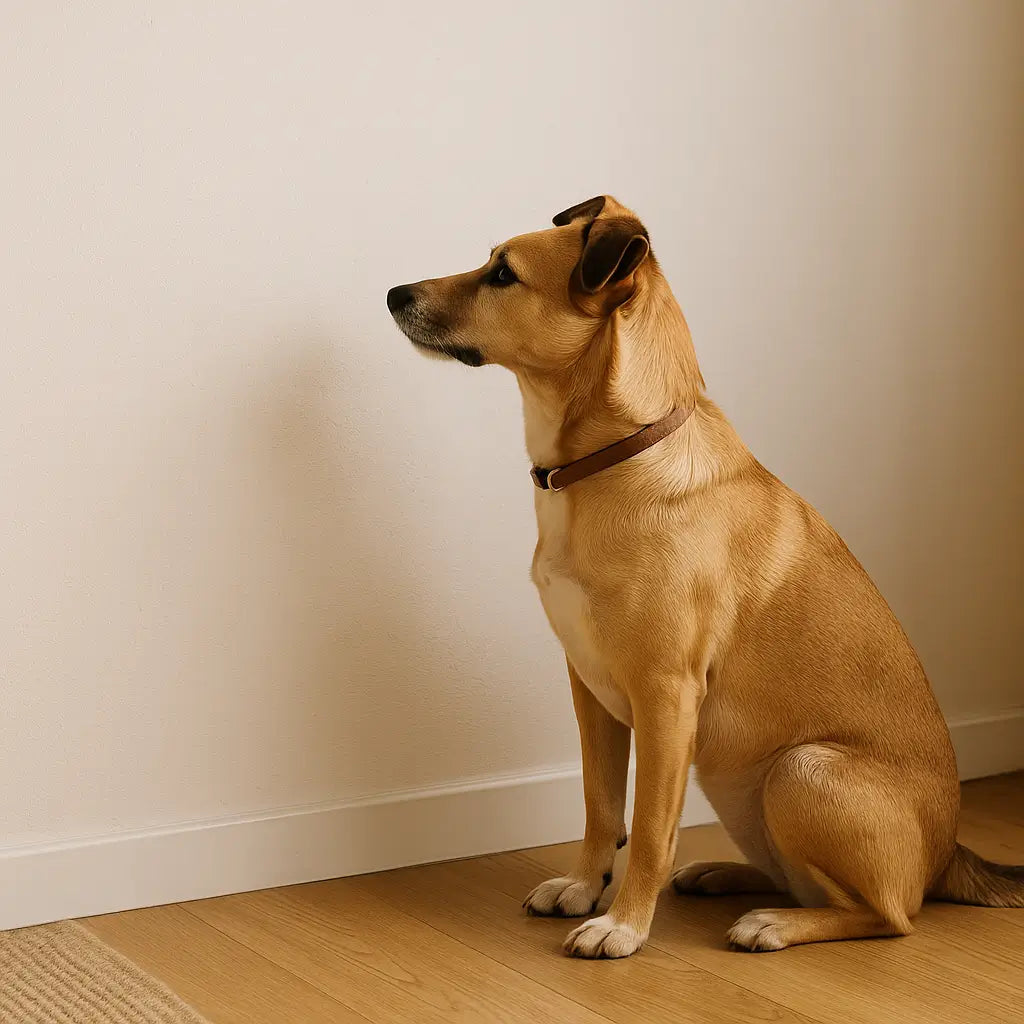
1. Cognitive Dysfunction Syndrome (Dog Dementia)
Common in senior dogs.
-
Brain aging similar to Alzheimer’s
-
Causes confusion and disorientation
Often paired with:
-
Wandering at night
-
Forgetting routines
-
Getting stuck in corners
2. Focal (Partial) Seizures
⚠️ Very important to rule out.
-
Dog may stare blankly
-
Lip licking, swallowing, or twitching
-
Brief unresponsiveness
Episodes may look subtle and easily missed.
3. Neurological Disorders
Conditions affecting the brain can cause:
-
Abnormal focus
-
Altered awareness
-
Repetitive behaviors
Examples include inflammation, tumors, or trauma.
4. Head Pressing (Medical Emergency)
⚠️ Different from casual staring
-
Dog presses head against walls or furniture
-
Often accompanied by pacing or circling
This can indicate serious brain disease or toxin exposure.
5. Sensory or Vision Changes
Dogs with vision loss may:
-
Stare because they can’t interpret what they see
-
Appear frozen or unsure
This is more common in aging dogs.
6. Stress or Anxiety (Less Common)
Some dogs dissociate briefly when overwhelmed.
-
New environments
-
Loud or chaotic settings
This should be short-lived, not minutes long.
When Wall-Staring Is a Red Flag

🚨 Contact your vet promptly if your dog:
-
Stares for more than a minute at a time
-
Has repeated episodes daily
-
Seems confused, lost, or disoriented
-
Is unresponsive during episodes
-
Is a senior dog with new behavior changes
-
Shows circling, head pressing, or seizures
These signs often indicate neurological involvement.
What You Should Do Right Now
Observe and Record
Note:
-
Duration of episodes
-
Time of day
-
Responsiveness
-
Other symptoms (licking, pacing, trembling)
Videos are extremely helpful for vets.
Do NOT
❌ Assume it’s quirky behavior
❌ Scold or startle your dog
❌ Ignore repeated episodes
Schedule a Vet Visit
Your vet may recommend:
-
Neurological exam
-
Blood work
-
Imaging (MRI/CT) if needed
-
Cognitive screening for senior dogs
Early diagnosis can dramatically change outcomes.
Can This Be Treated?
Yes—depending on the cause:
-
Cognitive dysfunction: medication, supplements, routine support
-
Seizures: anti-epileptic treatment
-
Anxiety: behavior plans
-
Medical conditions: targeted therapy
Many dogs improve significantly with proper care.
Final Takeaway
If your dog stares at the wall for minutes, it’s not just daydreaming. It’s often a signal that the brain or senses aren’t processing normally—especially in senior dogs.
🐾 When behavior changes feel strange, trust that instinct. Early evaluation can protect your dog’s comfort and quality of life.