
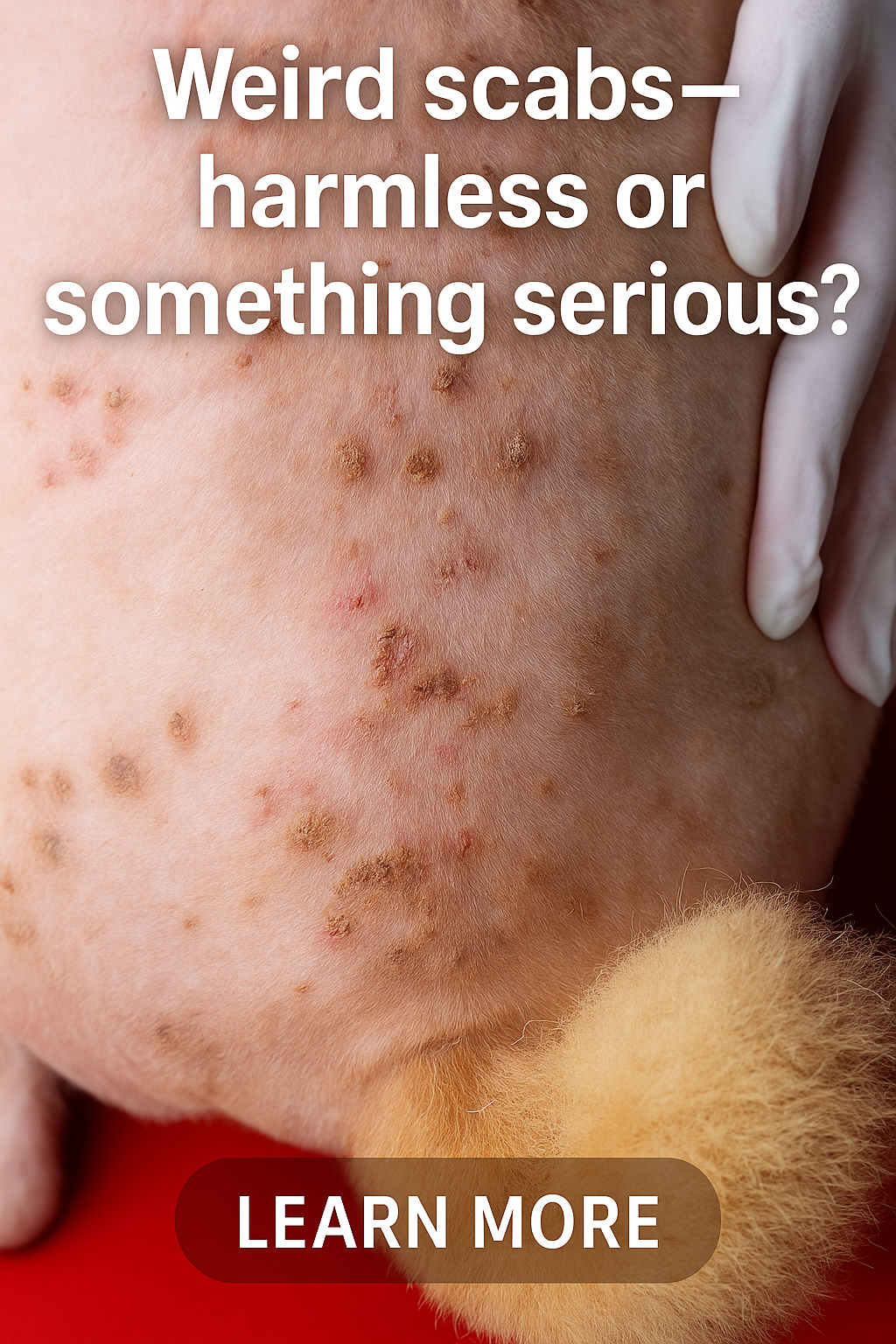
Weird Scabs Appearing on My Dog’s Back — What’s Really Going On?
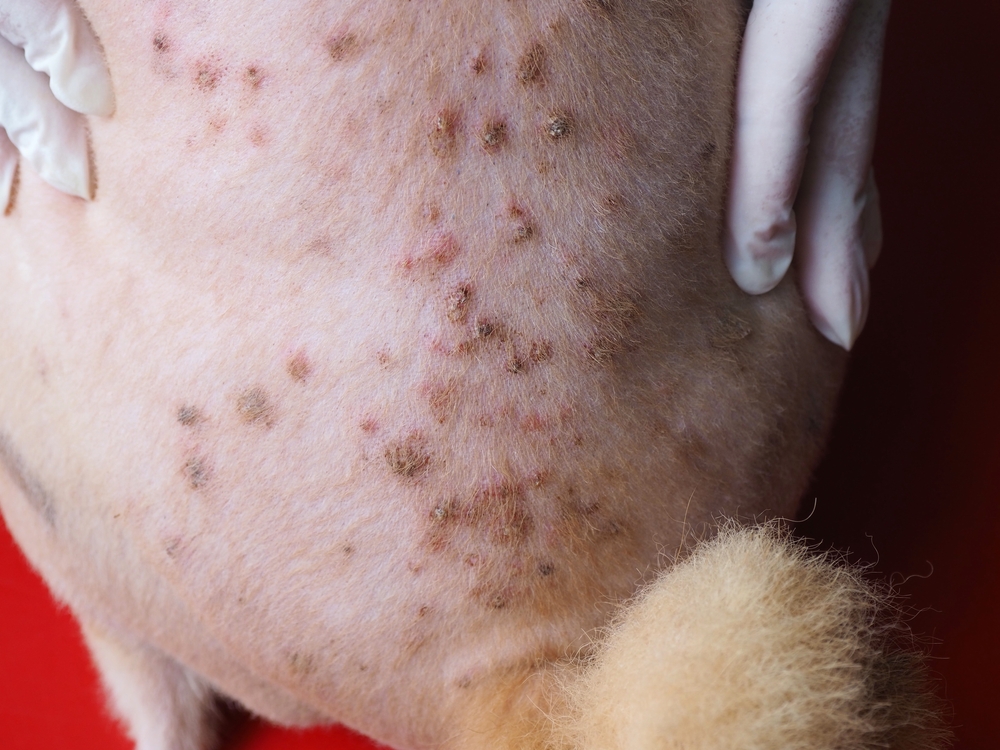
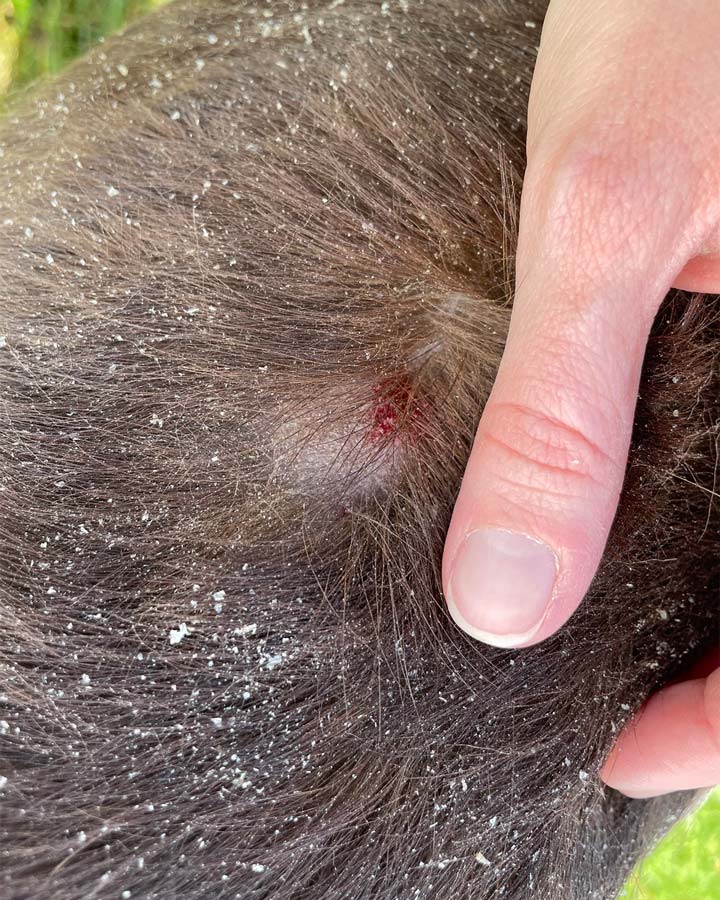
Finding scabs on your dog’s back can be alarming — especially if they seem to appear suddenly or keep returning. These crusty patches are usually a sign of skin irritation, infection, or parasites, but understanding the root cause is the key to treating it properly.
Below are the most common reasons dogs develop mysterious scabs along their back, especially around the spine and tail base.
1️⃣ Flea Allergy Dermatitis (FAD) — The #1 Cause of Back Scabs

Dogs who are allergic to flea saliva can develop large scabs even from one or two flea bites.
Common signs:
• Scabs along lower back and tail base
• Intense scratching or chewing
• Small red bumps
• Thin hair or bald patches
Why it happens:
Fleas thrive in warm weather → dogs scratch → skin breaks → scabs form.
Even if you never see a flea, this can still be the cause.
2️⃣ Mites & “Walking Dandruff” (Cheyletiella)
Microscopic parasites that cause flakes + scabs

These mites cause:
• Heavy dandruff
• Scabs from scratching
• Itching along the back
• Contagious to other pets
Often mistaken for simple dry skin.
3️⃣ Bacterial or Yeast Skin Infection
Once the skin becomes irritated, bacteria or yeast can multiply and form scabs.
Signs:
• Oily or smelly skin
• Red, inflamed patches
• Moist or crusty scabs
• Hair matting around lesions
Infections often follow allergies or parasite bites.
4️⃣ Allergy Flare-Ups (Environmental or Food)
Allergies → scratching → wounds → scabs

Dogs with allergies tend to develop:
• Scabs on the back, belly, or paws
• Repeated ear infections
• Itching after going outside
• Seasonal flare-ups in spring/summer
Food allergies may also cause chronic skin scabs.
5️⃣ Contact Irritation or Chemical Exposure
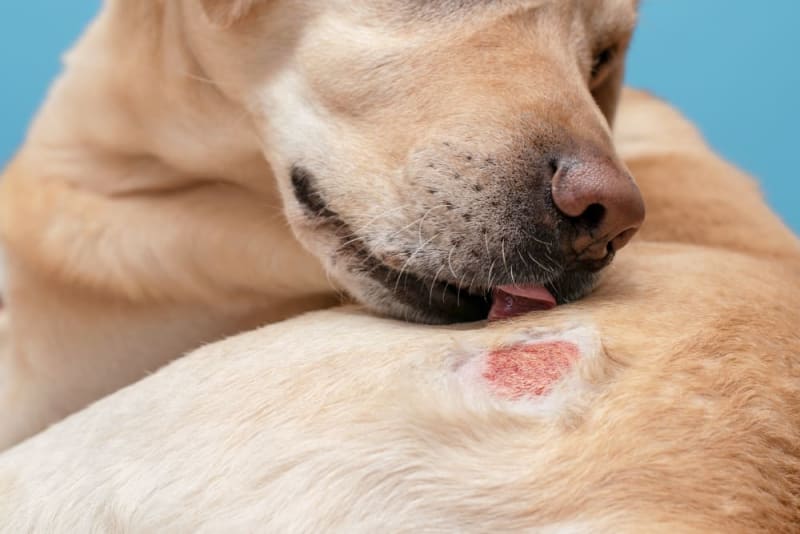
Some dogs react to:
• Grooming products
• Carpet cleaners
• Detergents
• Lawn chemicals
These irritants can cause redness that later forms scabs.
6️⃣ Poor Grooming or Matted Fur

When fur mats tightly against the skin:
• Airflow decreases
• Moisture gets trapped
• Skin becomes irritated → scabs form
This is common in thick-coated or curly-coated dogs.
📌 When Should You See a Vet?
Seek veterinary care if your dog has:
❗ Scabs spreading rapidly
❗ Strong odor (possible infection)
❗ Bleeding or open wounds
❗ Extreme itching or hair loss
❗ Lethargy or fever
❗ Scabs that keep returning
Persistent scabs almost always mean an underlying issue.
📌 How You Can Help at Home
✔ Keep your dog on year-round flea control
✔ Use gentle, hypoallergenic shampoo
✔ Brush regularly to remove loose fur and flakes
✔ Keep the skin clean and dry
✔ Try omega-3 supplements for skin health
✔ Switch to a limited-ingredient diet if food allergy is possible
Your vet may recommend:
• Antibiotics
• Antifungal treatment
• Medicated shampoo
• Allergy medication (Apoquel / Cytopoint)
• Skin scraping to check for mites