
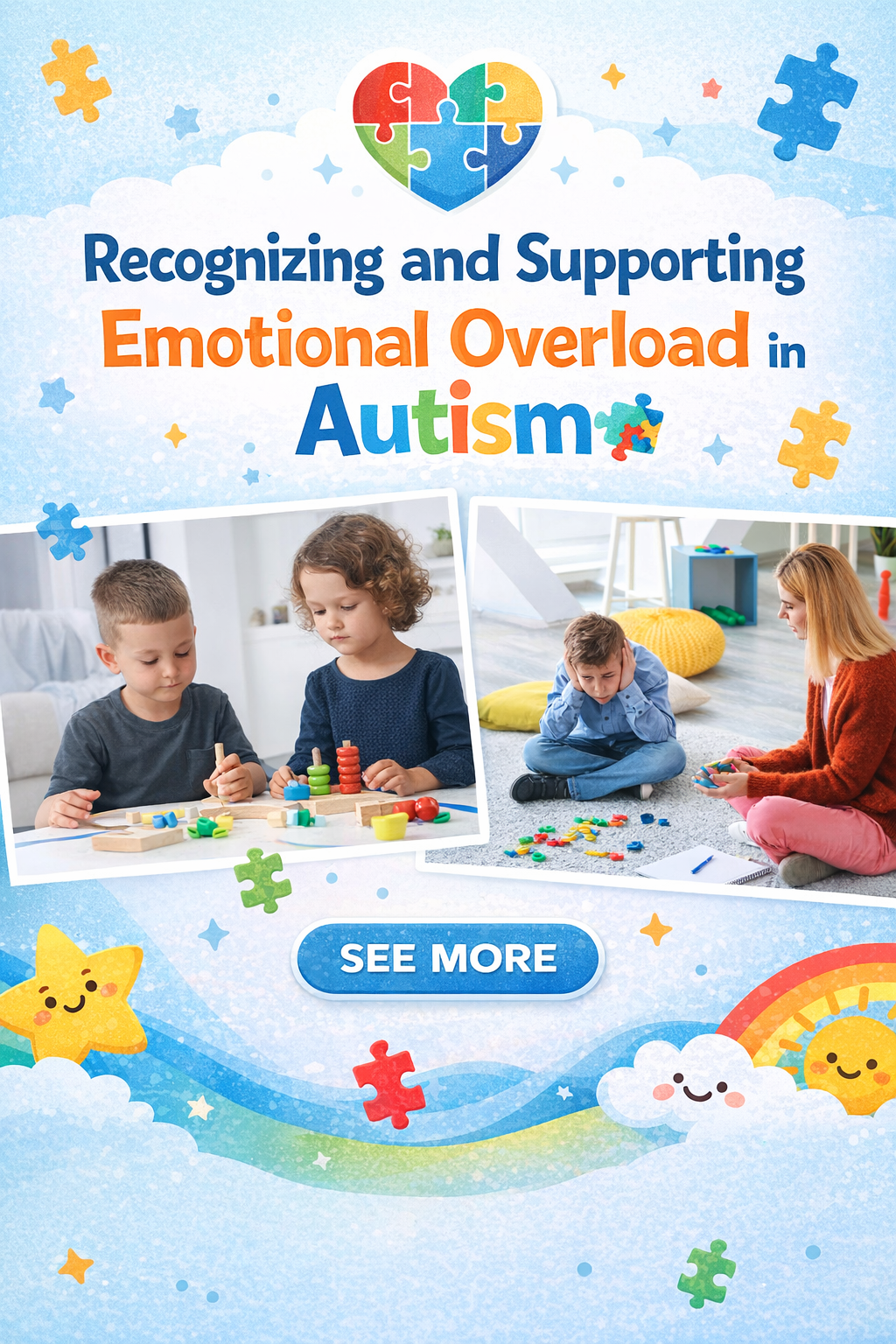
April is Autism Acceptance Month, celebrating and honoring the experiences and identities of Autistic individuals. It emphasizes understanding, inclusion, and support, moving beyond awareness towards meaningful acceptance.

Emotional overload is common, but for autistic individuals, it can happen more often and with greater intensity. It happens when the demands of a situation exceed a person’s ability to cope.
Angela Scarpa, director of Virginia Tech’s Autism Clinic & Center for Autism Research, explains why overload happens, how it presents across different ages, and strategies to recognize and manage it.
In children, whether autistic or not, emotional overload may appear as freezing, crying, hiding, or tantrums.
“It is not about behavior being bad,” Scarpa said. “It is about being overwhelmed and not knowing how to cope with intense feelings.”
Some autistic individuals may show repetitive behaviors, such as rocking or repeating words, while others may experience distress internally in ways that are not outwardly visible.
Because autism exists on a spectrum, not all autistic individuals experience emotional overload in the same way. For example, “some people experience emotional arousal but have difficulty identifying or describing what they are feeling,” Scarpa said.
Challenges with communication, social cues, and heightened sensory input can intensify emotions in everyday situations, making them harder to regulate.
For autistic teens and adults, repeated overload can lead to burnout
“Autistic burnout is the emotional and sometimes physical exhaustion resulting from the chronic stress of trying to fit into environments that do not meet their needs,” Scarpa said.
Biological factors may also contribute. Research suggests autistic individuals have higher, less variable heart rates, indicating a more reactive nervous system.
“The nervous system is not broken,” Scarpa said, “but it does tell us something about a person’s internal state.”
She explained that warning signs of overload may include a pounding heart, rapid breathing, muscle tension, agitation, or increased repetitive behaviors. Internal distress, such as racing thoughts or anxiety, may also be present.
To manage, Scarpa points to a set of strategies she calls PRISM: physical, relaxation, interest, social, and mental tools. These tools highlight different ways individuals can regulate emotions, from movement and breathing techniques to engaging in meaningful activities and seeking support from others. It can be adapted for both children and adults, depending on individual needs and abilities.
“Emotions are our friends,” she added. “There is nothing wrong with feeling them. The goal is learning how to recognize them and respond in ways that support well-being.”
If individuals or families feel overwhelmed beyond what everyday strategies can manage, Scarpa said professional help is available. Anyone can call or text 988 or visit 988lifeline.org for 24-hour support. Additional resources can be found at FindTreatment.gov.
— Written by Carley Thompson
About Scarpa
Angela Scarpa is a professor of psychology at Virginia Tech and founder and director of the Virginia Tech Autism Clinic & Center for Autism Research. She is a licensed clinical psychologist with specialized training in behavioral and cognitive-behavioral therapies, including mindfulness-based approaches, for children, families, and adults. Her work focuses on emotional development and mental health in individuals on the autism spectrum.
Interview
To schedule an interview with Angela Scarpa, contact the Virginia Tech Media Relations Office at mediarelations@vt.edu.