
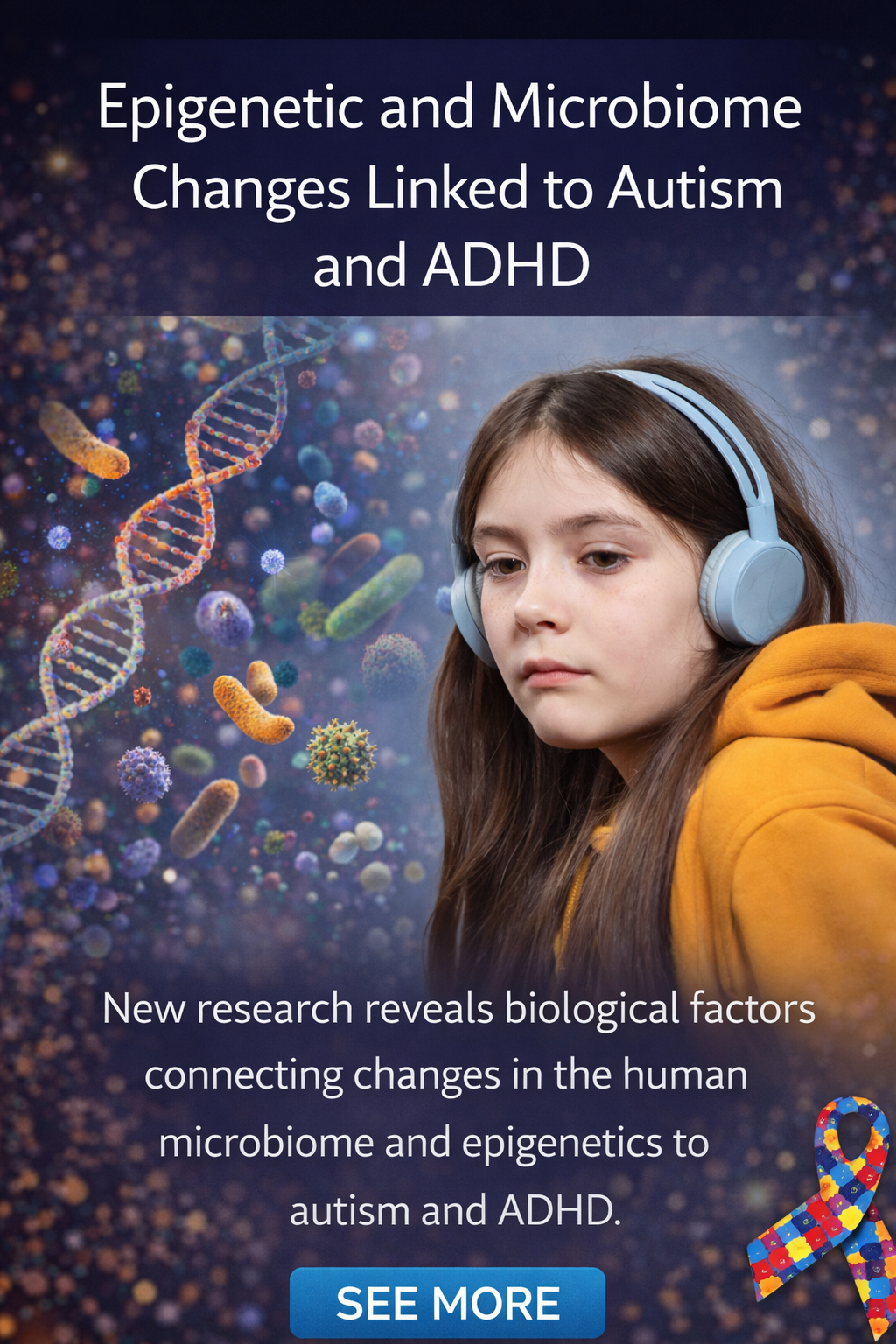
Neurodevelopmental conditions, like ADHD and autism, may be influenced by the epigenome and the gut microbiome in early life.
Credit: iStock.
FacebookTwitterLinkedInRedditChia sẻ
Listen with
Speechify
0:00
Register or log In for free to listen to this article
Read time: 4 minutes
The interactions between the gut microbiome and the epigenome in early life contribute to neurodevelopment. This may influence the risk of neurodevelopmental conditions like autism spectrum disorder (ASD) and attention-deficit hyperactivity disorder (ADHD).
A recent study has pinpointed specific epigenetic and microbiome changes present in the first year of life that were associated with traits of ASD and ADHD when the infants grew up.
Subscribe to Genomics Research updates for FREE and get:
- Daily Breaking Science News
- Tailored newsletters
- Exclusive eBooks, infographics and online events
Multiple factors contribute to neurodevelopmental disorders
Neurodevelopmental conditions are characterized by disruptions to critical milestones in brain development, which lead to functional deficits that cause a wide variety of symptoms and behavioral traits. Several factors, including genetics, metabolic differences, and environmental exposures, have been associated with their development.
Both epigenetics and the gut microbiome are sensitive to perinatal cues and are theorized to influence the development of ASD and ADHD, but little is known about the relationship between these systems in neurodevelopmental disorders.
“We wanted to see how the epigenome and microbiome interact in early life and if their interaction could influence a child’s risk of developing neurodevelopmental conditions like ASD and ADHD,” said co-senior author and public health researcher Prof. Hein Min Tun of The Chinese University of Hong Kong.
Understanding these interactions and how they relate to neurodevelopment could facilitate early detection, intervention, or prevention of neurodevelopmental conditions.
Analyzing the epigenome and the gut microbiome
The researchers studied DNA methylation patterns in cord blood from infants in a longitudinal birth cohort. Gut microbiomes from infants at birth, two months, six months, and one year of age, from mothers in the third trimester, and from fathers, were also analyzed.
DNA methylation
DNA methylation is an epigenetic mechanism that regulates gene expression. When areas of the genome are highly methylated, transcription factor binding is inhibited, or gene repression proteins are recruited, preventing expression.
The researchers also collected data on early-life factors and the demographics of parents and infants during pregnancy and at intervals until 36 months after birth.
When the infants were 36 months old, they were measured for neurodevelopmental outcomes.
“We discovered a kind of conversation happening: a baby’s epigenetic setting at birth can influence their risk for neurodevelopmental disorders, but the presence of certain ‘good’ bacteria in their gut can step in and modify the risk,” said Tun.
What shapes the epigenome and the microbiome?
The researchers found that the cord blood DNA methylome was influenced by birth mode, length of gestation, having older siblings, and maternal allergies.
Implementation of Next-Generation Sequencing in the Clinical Microbiology Lab
Next-generation sequencing (NGS), especially long-read DNA sequencing, is transforming infectious organism detection by providing faster, more detailed insights and enabling more advanced bioinformatics workflows.
View Webinar
Advertisement
The composition of the gut microbiome in the first year of life was shaped by birth mode, having older siblings, being born during the COVID-19 pandemic, breastfeeding, and the administration of prophylactic antibiotics during labor.
Epigenetic configuration at birth was also associated with gut microbiome development. Specifically, infants with greater methylation at the major histocompatibility complex region—which codes for immune genes involved in pathogen recognition—had less diverse microbiomes at 12 months of age.
The influence of epigenetics on neurodevelopment
Using validated questionnaires, the researchers measured predictive risk scores for ASD and ADHD in three-year-olds from the birth cohort and analyzed the differences in epigenetics and microbiome diversity associated with the scores.
Over 12,000 regions of the genome had methylation levels that correlated—either positively or negatively—with ASD scores.
Infants with higher ASD scores had lower methylation in regions encoding genes involved in neuron differentiation, neurogenesis, and response to nerve growth factors. Methylation was also increased in ASD-related genes involved in negatively regulating neuron differentiation, neuron projection development, and neurotransmitter transport.
The researchers suggest that these methylation changes, and the subsequent alterations to gene expression, align with the increase in neural proliferation seen in ASD.
Target Enrichment Approaches for Sequencing Infectious Pathogens
This webinar explores how targeted enrichment approaches, developed through community collaboration, enable more reliable recovery of viral and bacterial genomes from complex clinical specimens.
View Webinar
Advertisement
The study identified 10,615 and 2,603 genomic regions where methylation levels positively and negatively correlated with ADHD scores, respectively.
In infants with higher ADHD scores, methylation was increased in regions of the genome that code for genes involved in neuron projection development, neurotransmitter transport, and dopamine receptor signaling, which are linked to the neurobiology of ADHD. Meanwhile, methylation levels were lower in regions related to genes for neuron fate determination, neurogenesis regulation, and intracellular signaling.
Microbial species were associated with neurodevelopment scores
ASD and ADHD scores were not linked to overall microbiome diversity, but specific microbial species were associated with scores for each condition.
The presence of two bacterial species (Haemophilus parainfluenza and Streptococcus mitis) at 2 months old was associated with higher ASD and ADHD scores, while lower scores were observed when Streptococcus thermophilus was present at 6 or 12 months.
The presence of Lachnospira pectinoschiza or Faecalibacterium prausnitzii at 12 months was associated with lower ASD scores, and greater colonization of Parabacteroides distasonis, a potential probiotic, at 2 months was linked to lower ADHD scores.
Bacteria transmitted to the infant from the parents also shaped ASD and ADHD risk scores.
Crosstalk between the microbiome and epigenome
The researchers found that infants with epigenetic patterns linked to higher ADHD or ASD scores were less likely to present with disorder-linked traits if they acquired Lachnospira pectinoschiza and Parabacteroides distasonis species, respectively, during their first year of life.
How To Obtain Robust Whole Transcriptome Sequencing From FFPE Samples
This app note explores a fast, automation-ready workflow for whole transcriptome sequencing from degraded FFPE tissue. It highlights how optimized library preparation improves fusion detection, strand specificity, and exonic read enrichment while red
View App Note / Case Study
“The foundations for brain health are laid very early, even before birth,” said Tun. “However, we don’t want people to think this means a child’s developmental path is fixed at birth. These are complex conditions with many causes, and we’ve only uncovered a small piece of a very large puzzle.”
By continuing to follow the children in the study, the researchers hope to discern how early-life factors influence their health over time.
The authors emphasize that the findings of this study are observational and highlight that mechanistic studies are needed to establish causality and to identify intervention modalities.
“The ultimate goal is to develop safe, non-intrusive early interventions such as specific probiotics or live biotherapeutics that could help nurture a healthy gut microbiome and potentially reduce the risk of neurodevelopmental challenges,” said first author Prof. Siew Chien Ng from The Chinese University of Hong Kong.
Reference: Ng SC, Peng Y, Zhang L, et al. Epigenome-microbiome interplay in early life associates with infants’ neurodevelopmental outcomes. Cell Press Blue. 2026. doi: 10.1016/j.cpblue.2026.100009