
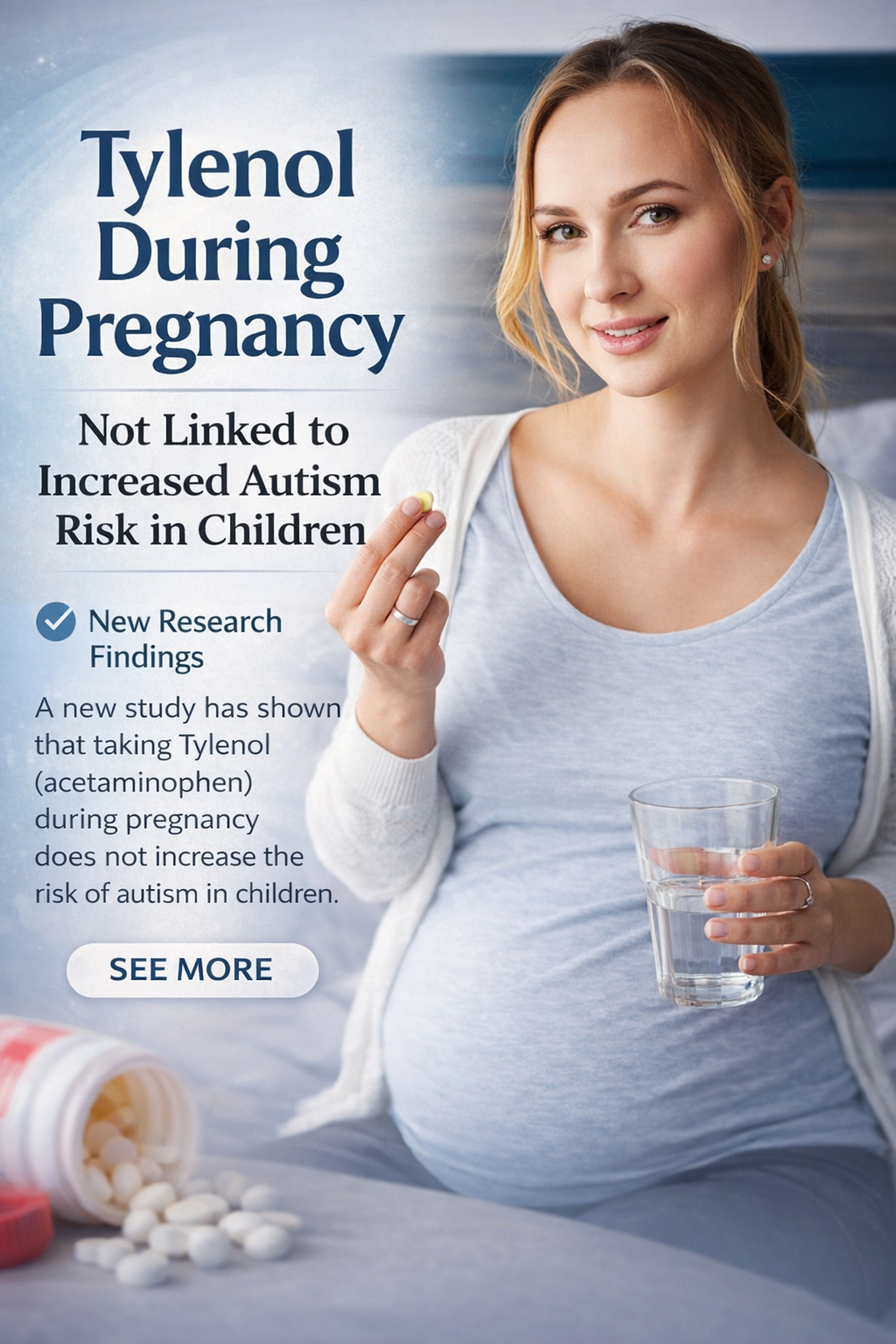
Danish researchers find no link between maternal use of acetaminophen (Tylenol) during pregnancy and excess risk of autism in children, adding to mounting evidence that the drug is safe to use in pregnancy.
For the nationwide study, published yesterday in JAMA Pediatrics, Copenhagen University Hospital investigators linked prospective individual-level data from national demographic and health care registers on singletons born in Denmark from January 1997 to July 2022 who were alive at one year old. Follow-up was one year or until emigration or autism diagnosis.
Exposure to acetaminophen during pregnancy was identified by maternal fulfillment of a prescription for the drug in the National Prescription Register. Another analysis compared sibling groups with discordant acetaminophen exposure in pregnancy.
“Evidence regarding the association between prenatal acetaminophen exposure and risk of autism in offspring remains inconsistent,” the study authors wrote. “One large Swedish cohort study reported a small but statistically significant increase in autism risk among children in a population-level analysis; however, the association was not observed in a sibling matched analysis, raising questions about residual confounding.”
Trump’s unfounded claims spook pregnant women
The researchers initiated the study after US President Donald Trump’s September 2025 remarks discouraging pregnant women from using acetaminophen because of a purported link to autism. He also claimed, without evidence, that leucovorin (folinic acid) can help autistic children.
An umbrella review of nine systematic reviews published in BMJ in November 2025 found no association between maternal acetaminophen use during pregnancy and the development of autism or attention-deficit hyperactivity disorder in children. But despite this evidence, US acetaminophen use in pregnancy has fallen since Trump’s statements, and leucovorin prescriptions have surged.
Experts cite multiple potential consequences from falling acetaminophen use in pregnancy, including higher rates of untreated maternal fevers (a risk factor for neurologic disorders) and the use of fever-reducing or pain-relieving drugs that are less safe in pregnancy than acetaminophen, which is safe.
Higher autism rates in unexposed children
Of more than 1.5 million children in the study, 2.1% were exposed to acetaminophen in utero, of whom 1.8% were later diagnosed as having autism, compared with 3.0% of nearly 1.5 million children in the unexposed group.
In this nationwide cohort study, acetaminophen exposure during pregnancy was not significantly associated with an excess risk of autism.
Women prescribed acetaminophen during pregnancy were generally older (median age, 31.2 vs 30.5 years); had more pregnancies, a higher body mass index, and more underlying illnesses; and used more prescription medicine than unexposed women.
After adjusting for confounding factors and use of other pain relievers, the adjusted hazard ratio of autism after exposure to acetaminophen in utero was 1.03 (95% confidence interval [CI], 0.95-1.12) in the population analysis and 1.09 (95% CI, 0.91 to 1.27) in the sibling analysis, indicating no statistically significant increased risk.
Likewise, the team found no evidence of a significant tie between acetaminophen exposure during pregnancy and the development of autism in stratified analyses of dose-response patterns, exposure in different trimesters, and analyses restricted to pregnancies occurring after 2013.
Study limitations include possible misclassification of the outcome and lack of availability of individual-level information about over-the-counter medication.
“In this nationwide cohort study, acetaminophen exposure during pregnancy was not significantly associated with an excess risk of autism,” the researchers wrote. “Given the upper limits of the CI, a relatively higher risk of more than 12% for autism is unlikely to be associated with acetaminophen exposure.”